Puy du Fou Weather: Best Months to Visit and Wet-Day Plans
Puy du Fou's outdoor shows and gardens make weather part of the planning. See which seasons suit families, what rain does to a day, and how to order the shows.
On this page
Puy du Fou spreads across open ground at Les Epesses in the Vendée, with its biggest shows staged in vast open-air grandstands and its paths threading through gardens and water features. That layout makes the weather part of the planning: a hot July afternoon and a wet October morning call for different show orders and different arrival times. This guide treats weather as a scheduling problem, showing you which seasons suit which travellers and how to reshape a day when the sky changes.
What kind of day Puy du Fou is built for
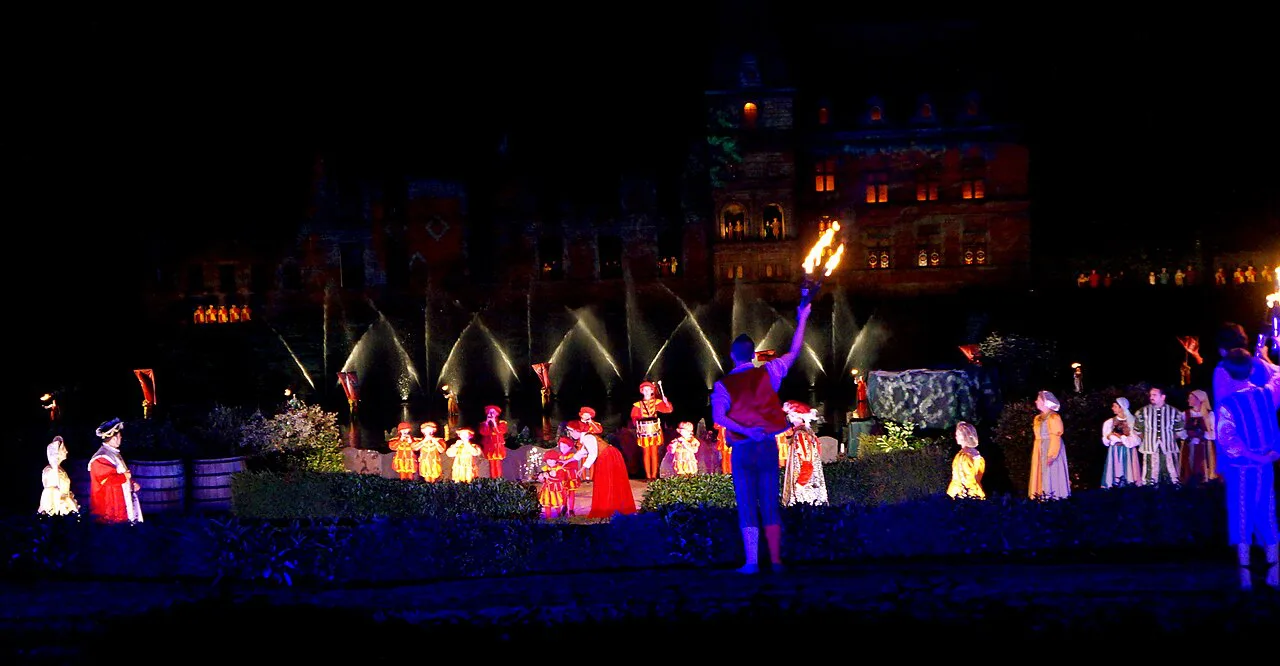
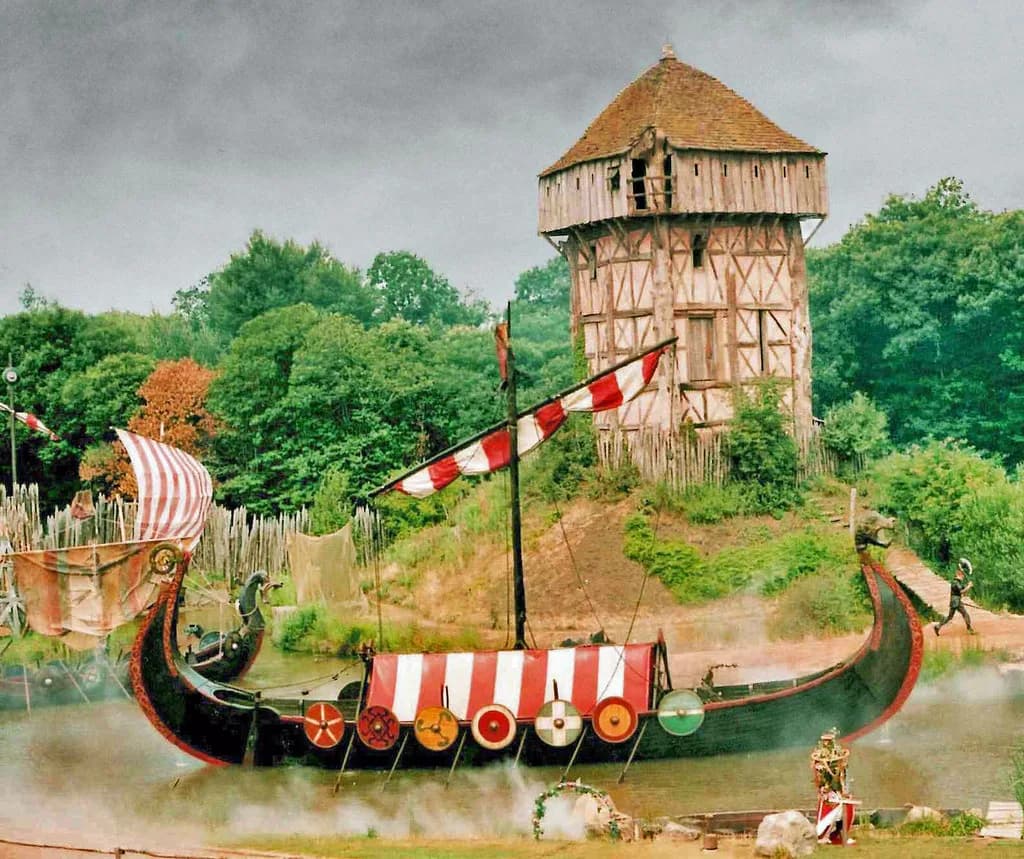
The Grand Parc is an open-air experience first: daytime spectacles such as Le Bal des Oiseaux Fantômes and Les Vikings perform to seated audiences in the open, and the park's villages, gardens and water features sit between them. You walk substantial distances between venues, so the shape of your day depends on how comfortable the walking and waiting conditions are. Plan around a small number of anchor shows and fill the gaps with whatever sits nearest, rather than trying to sprint between opposite ends of the park.
A useful way to think about Puy du Fou weather is in three separate problems: heat, rain and wind. Heat dictates where you sit and when you walk; rain dictates which shows you cluster together and how long you linger indoors; wind matters most for the staging that uses tall sets or flying elements. Treating them separately stops you from cancelling a day over a passing shower that only affects one corner of the plan. The Disneyland Paris weather guide applies the same split between summer heat and rainy-day routing if you are comparing the two parks in the same season.
Season-by-season weather: spring, summer, early autumn and the Christmas season
The Vendée sits in western France with a temperate Atlantic-influenced climate: mild, changeable springs, warm summers, and autumns that swing between bright spells and wet days. The Met Office publishes country-level forecasts and climate context for France that give a sensible baseline before you book, though it is not a park-specific forecast.
Spring is the season of contrast: some days are made for sitting through a full slate of outdoor shows, others send you reaching for shelter between them. Summer brings the most reliable dry, warm conditions and the longest days, which is why evening spectaculars feel natural in July and August. Early autumn can be excellent, with softer temperatures for walking between venues, but it is also the season when Atlantic fronts roll through more often.
The Christmas season is a different visit rather than a scaled version of summer: expect cold conditions and short daylight, so the appeal lies in atmosphere, lights and indoor or evening staging rather than long afternoons in open grandstands. Local forecasts for the wider area, such as the BBC's pages for towns in the region, are a reasonable way to sense the pattern in the days before you travel.
Why summer heat changes your show order
In high summer the constraint is sun exposure rather than rain. Open grandstands can be hot and bright before a show begins, so the sensible pattern is to take the most exposed shows early or late and use the middle of the day for shaded paths, gardens with tree cover and any covered viewing you can find. Arriving at opening gives you the coolest walking hours and the best chance of stringing together two or three big shows before the heat peaks.
Seating choice matters as much as timing. Aim for the rear or side of open stands where you can find shade or a breeze, and keep water with you between venues, since the distances across the park are real even though the map looks compact. If you are travelling with young children or older relatives, front-load the day and leave the longest walks for when the light softens.
Rain at Puy du Fou: how a wet day reshapes the show sequence
Rain rarely wipes out the day, but it does reorder it. The practical response is to cluster your outdoor shows into the drier windows and retreat to sheltered venues when a band of rain settles in, rather than criss-crossing the park to keep a fixed timetable. Check show times when you arrive, build a loose sequence, and be ready to swap two adjacent shows when the sky darkens.
Paths and grass areas become slower going in steady rain, so cut the number of crossings you make. Pick one side of the park for the morning and stay there, then move once. Grandstand seats hold water, so a lightweight sit-mat earns its place; this is about comfort during waits, not about what to wear.
Wind and storm days: which outdoor staging is most exposed
Wind is the weather factor most likely to affect the spectacle you came for. Shows that rely on flying birds, tall sets or suspended staging are the first to be trimmed or paused when gusts pick up, and operators make those calls on the day rather than in advance. Build a wind-day plan around ground-level shows and indoor venues, and treat the airborne spectacles as a bonus if conditions allow.
On storm days, the park's own announcements are the only reliable guide to what is running, which is why the official site is worth opening on the morning of your visit for live hours and any show notices. Keep your plan flexible enough that losing one headline show still leaves a full afternoon.
Indoor and sheltered experiences to slot into a wet afternoon
Puy du Fou's indoor and covered venues are what make a wet day workable. The walk-through and enclosed attractions give you somewhere to be out of the rain while still experiencing the park's storytelling, and they sit close enough to the main show clusters to slot between outdoor performances. Use them as anchors: pick two or three sheltered experiences and build the rest of the day around them.
A good wet-day route alternates rather than batches. Take an outdoor show in a dry window, then move into a covered attraction while the next shower passes, then back out. That rhythm keeps you moving without long, soaked walks, and it means a single heavy downpour costs you one slot rather than the afternoon. The Puy du Fou map helps you group venues by proximity so your wet-weather swaps stay short.
Best months for families with younger children
Families with younger children generally do best in late spring and early autumn, when temperatures are comfortable for walking between venues and the day does not hinge on finding shade. Summer works too, but it demands an earlier start and a midday pause. Whatever the month, the winning pattern is the same: a couple of big shows in the morning, a slower middle, and an early finish before tiredness sets in.
Rainy days are manageable with young children provided you keep the itinerary short and the transitions few. Two sheltered attractions plus one outdoor show is a realistic wet-day total. If your dates are open, the wider question of crowds and seasons is covered in this best time to visit Puy du Fou planning piece, which pairs well with the weather picture.
Best months for couples and evening spectaculars
Couples chasing the evening spectacle do best in the warmer months, when long daylight lets you combine a full afternoon of shows with an evening production without a rushed exit. Late spring and early autumn offer a good balance: enough light for the evening and temperatures that make sitting out comfortable. Summer gives the most choice of dates but also the biggest crowds around the headline shows.
Rain matters less for an evening-focused visit, because you can build the day around fewer, longer blocks and accept a wet afternoon in exchange for a dry evening. Check the official calendar for which evenings the night-time productions run, since they are not a daily fixture across the whole season.
Halloween and Christmas season weather expectations
The Halloween period falls in a season of short days and frequent Atlantic rain, so plan for wet ground, early dusk and colder waits between shows. The atmosphere carries the visit; the practical adjustment is to favour sheltered venues and to keep outdoor time in the middle of the day. Christmas follows the same logic with colder temperatures, making the covered and indoor experiences the backbone of the trip rather than an interlude.
For both seasons, build in slack. A single cancelled outdoor slot on a short winter day is a larger share of your visit than it would be in July, so keep one flexible block you can move without losing anything.
Arrival time and rope-drop strategy on hot versus wet days
On hot days, arriving for opening is the single biggest win: you get the coolest walking conditions and the clearest run at the first big show before stands fill. Head for the most exposed outdoor spectacle first, then work inward toward shade as the day heats up. On wet days, reverse the logic and start with a sheltered attraction so you are not sitting in a downpour at nine in the morning.
Either way, decide your first two shows before you walk through the gate. Wandering first and choosing later is what turns a manageable weather day into a rushed one, because the popular venues set your timetable whether you plan for them or not.
Getting there in wet weather: car, parking and shuttle practicalities
Puy du Fou sits at Les Epesses in the Vendée, reached by road from Cholet, Les Herbiers and La Roche-sur-Yon, with Nantes and Angers further out. Driving is the most weather-proof option because you control the arrival and departure and stay dry between car and gate. In heavy rain, leave more time for the approach and for the walk from parking to the entrance.
If you are coming by public transport, plan the final leg in advance and keep a taxi number ready for the return, since a wet evening is the worst time to improvise. Coach and rail connections serve the wider region rather than the gate, so check the official directions page for current options before you commit to a car-free day.
Accessibility and mobility in rain: paths, surfaces and covered viewing
Wet weather makes surfaces, gradients and distances the main accessibility considerations. Gravel and grass areas soften and become harder work for wheelchairs and pushchairs, and the walk from parking to the first venue is longer in the rain. Check the park's accessibility information before you travel to see which venues and routes are best suited, and allow extra time for every transfer on a wet day.
Covered viewing is the prize on a wet day, so identify which venues offer it and build the route around them rather than around the headline names. Rider swap and baby-care facilities are best sorted at the start of the day, when staff have time to explain the options.
Food, shelter and picnic rules when the weather turns
On a wet day, the indoor food venues fill quickly at conventional lunch times, so eat slightly early or late to get out of the rain without queueing in it. On hot days the opposite applies: take a longer, shaded break at the peak of the afternoon rather than pushing through to the next show. Either way, a fixed meal slot gives your day a spine and stops weather decisions from being made hungry.
Check the park's rules on bringing your own food before you rely on a picnic, and have an indoor fallback in mind for the day the weather makes an outdoor lunch a bad idea. For the wider trip, the Puy du Fou hotels page shows how staying on site shortens the wet walk at either end of the day.
Where to stay nearby and how the weather shapes a two-day plan
A two-day visit is the best insurance against bad weather: if one day is washed out, you still have a full day to catch the shows that matter. Staying on site or in the nearby towns of Les Epesses and Les Herbiers keeps the transfer short, which matters most on wet evenings and cold Christmas-season nights. Book the accommodation for the shoulder seasons early, since the best dates go first.
Use the first day for the headline outdoor shows and the second for sheltered attractions and anything weather interrupted on day one. That structure means a single stormy afternoon costs you a slot rather than the trip. Sort your Puy du Fou tickets and dates before fixing the hotel, since the calendar decides which days you can pair.
What to do if a show is cancelled for weather
Weather cancellations are decided on the day, so the first step is to check the official app or site when you arrive for any notices, then head straight for the nearest alternative rather than waiting at the venue. Keep a short reserve list of sheltered experiences you have not yet done, so a cancellation costs you minutes rather than an hour of replanning.
If the show you came for is cancelled, ask staff whether it is expected to return later in the day and plan around that answer. On windy days, treat the airborne spectacles as optional and let the ground-level programme carry the visit; on wet days, do the reverse and make the covered venues the fixed points.
Plan Your Visit
Puy du Fou rewards planning by season rather than by forecast. Pick late spring or early autumn for comfortable walking and a good balance of light, accept that summer demands an early start and a midday shade break, and treat the Christmas season as an atmospheric indoor-led visit rather than a long day in open grandstands. In every season, choose your first two shows before you arrive and leave room to swap them.
Live hours, show times and any day-of notices sit on the official Puy du Fou site, which is the page to open on the morning of your visit.
Explore more Puy du Fou guides
Frequently Asked Questions
What is the weather like at Puy du Fou in summer?
Summer is the park's most reliable dry, warm season, with the longest daylight of the year. That makes it the natural window for combining a full afternoon of shows with an evening spectacular, but it also means the open grandstands are exposed and bright at midday. Start early, take the most sun-exposed shows at the edges of the day, and use the hottest hours for shaded paths and covered venues.
Does Puy du Fou close when it rains?
Rain is routine in the Vendée and does not normally end a park day; the practical effect is a reordered schedule rather than a closure. Outdoor shows run in dry windows and sheltered attractions absorb the wettest spells, so the sensible approach is to keep a flexible sequence and swap adjacent shows when a band of rain arrives. Anything that does change on the day is posted by the park itself, so open its site or app on the morning of your visit.
Which Puy du Fou shows are indoors?
The park's covered and walk-through venues are what make a wet afternoon viable, and they sit close enough to the main show clusters to slot between outdoor performances. Rather than chasing a fixed list, pick two or three sheltered experiences as anchors and build the rest of the day around them, alternating outdoor shows in dry windows with covered attractions while showers pass. The park's own map and show listings identify which venues are enclosed.
When is the best time of year to visit Puy du Fou?
Late spring and early autumn give the most comfortable walking conditions and a good balance of daylight, which suits families and anyone covering long distances between venues. Summer offers the most dependable warmth and the best odds for evening productions, at the cost of midday heat and bigger crowds around headline shows. The Christmas season is a shorter, colder visit built around atmosphere and indoor staging rather than long afternoons in open grandstands.
Is Puy du Fou open in winter?
The park runs a Christmas season rather than staying open year-round on its summer pattern, and that visit works differently: short daylight, cold temperatures and an emphasis on lights, atmosphere and covered venues. Treat it as a distinct trip rather than a scaled-down summer day, and keep one flexible block in the plan so a single weather-hit slot does not dominate a short visit. The official calendar shows which dates fall inside each season.
What happens to outdoor shows in strong wind?
Wind is the factor most likely to affect the headline spectacles, because shows using flying birds, tall sets or suspended staging are the first to be trimmed or paused when gusts pick up. Those calls are made on the day, so build a windy-day plan around ground-level shows and indoor venues and treat the airborne productions as a bonus. Ask staff whether a paused show is expected to return later, and keep a reserve list so losing one slot still leaves a full afternoon.
Is Puy du Fou good in the rain with children?
Yes, provided you keep the itinerary short and the transitions few. Two sheltered attractions plus one outdoor show is a realistic wet-day total for younger children, and eating slightly outside conventional lunch times keeps you out of the rain rather than queueing in it. A lightweight sit-mat for damp grandstand seats and a fixed meal slot do more for the day than trying to keep to a full timetable.
Sources
Notes for your next park day
Optional updates to our park guides.
You might also like


Continue reading
More guides you'll find useful