Disneyland Paris Guide: Parks, Rides, Tickets and Hotels
Plan a Disneyland Paris trip with this guide to both parks, headline rides and height limits, ticket types, on-site hotels and how to get there by train or car.
On this page
Disneyland Paris packs a castle park, a studio park, a shopping village and a ring of Disney-owned hotels into a compact site at Marne-la-Vallée, east of Paris. The whole resort sits around one railway station, which makes it unusually easy to reach without a car and simple to split a day between two gates.
It suits families with small children, dark-ride fans and coaster riders equally well, because the two parks divide neatly: Disneyland Park holds the classics and the fairytale scenery, while Walt Disney Studios Park leans on Pixar, Marvel and Star Wars set pieces. Deciding how many days you can give the resort is the single biggest planning choice, and it shapes your tickets, hotel and transport. If you are weighing this against another French park, our parc astérix guide applies the same ticket-and-days logic to a very different kind of day out. The same question applies across the continent, which is why our Best Theme Parks in Europe: Which Park Suits Your Trip compares how each park rewards a given number of days.
What Disneyland Paris offers and who it suits
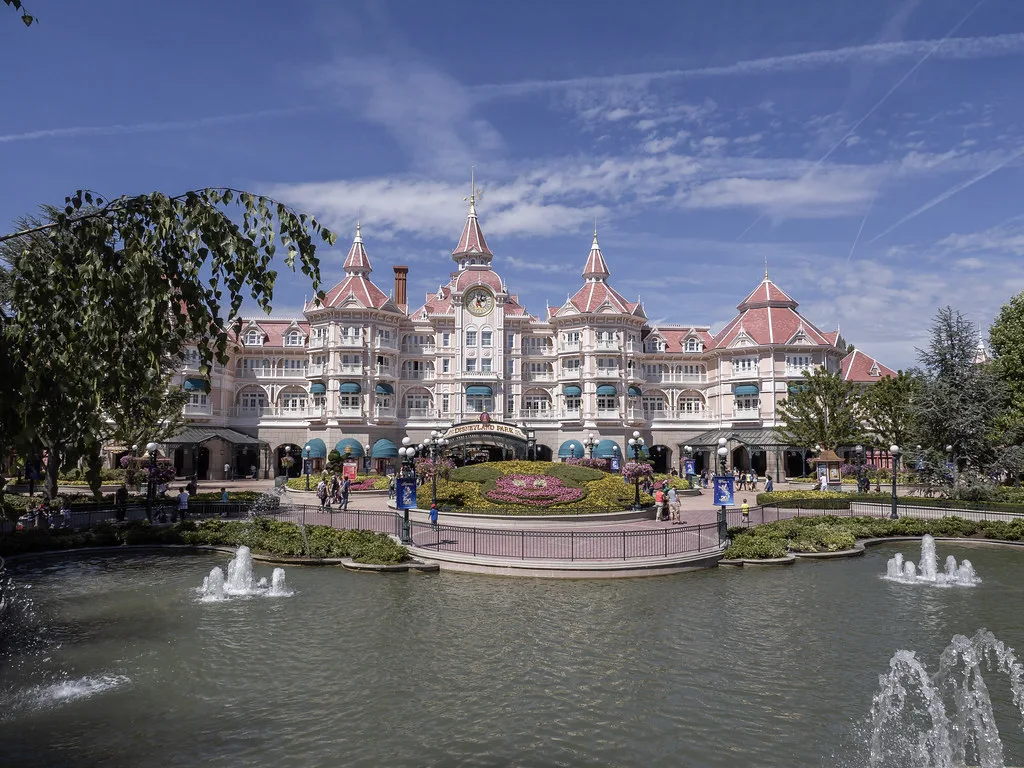
The resort is built around two gated parks that face each other across Disney Village, the dining and shopping strip that links them to the hotels. In practice that means you can walk from a Disney hotel room to either park entrance without a bus, which is why so many visitors treat it as a short-break resort rather than a day out.
Families with toddlers gravitate to Fantasyland's gentle dark rides and the walkthrough attractions tucked inside and under Sleeping Beauty Castle, while teenagers and thrill-seekers head for the coasters in Frontierland, Adventureland and Discoveryland. Couples and adult groups often use the studios park for the bigger, more modern rides and reserve the castle park for atmosphere and evening entertainment.
Because everything sits on one site, a two-park visit rarely means two journeys: you clear security once, walk through the village, and can hop between gates during the day if your ticket allows it. That flexibility is what makes park hopper tickets worth considering even on a short trip.
The two parks: Disneyland Park and Walt Disney Studios Park
Disneyland Park is the castle park, arranged in five areas around Sleeping Beauty Castle: Main Street U.S.A., Frontierland, Adventureland, Fantasyland and Discoveryland. It carries the parades, the character greetings and most of the scenery people picture when they think of Disneyland Paris.
Walt Disney Studios Park is the second gate, home to the Pixar, Marvel and Star Wars rides, including Crush's Coaster and the Avengers attraction. It is smaller and quicker to cover, which is why many first-timers pair a full day in the castle park with a shorter block in the studios.
The two-park ticket lets you move freely between them through the day, while the one-park ticket keeps you in a single gate. With small children or a single day, one park is usually plenty; with two or more days, hopping lets you chase shorter queues and return for evening shows.
Disneyland Park land by land
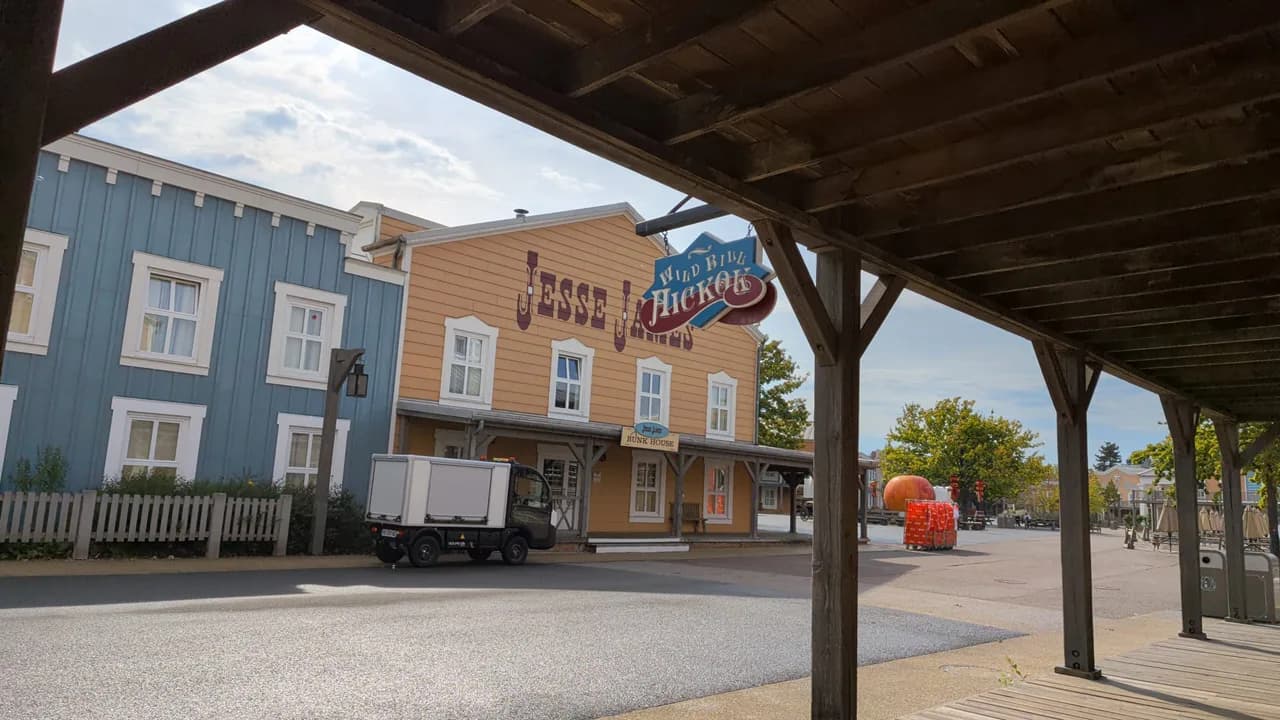
Main Street U.S.A. is the entrance boulevard of shops and food stops leading to the castle hub. Its two covered arcades run behind the shopfronts and work as crowd-beating shortcuts when the street is packed before a parade.
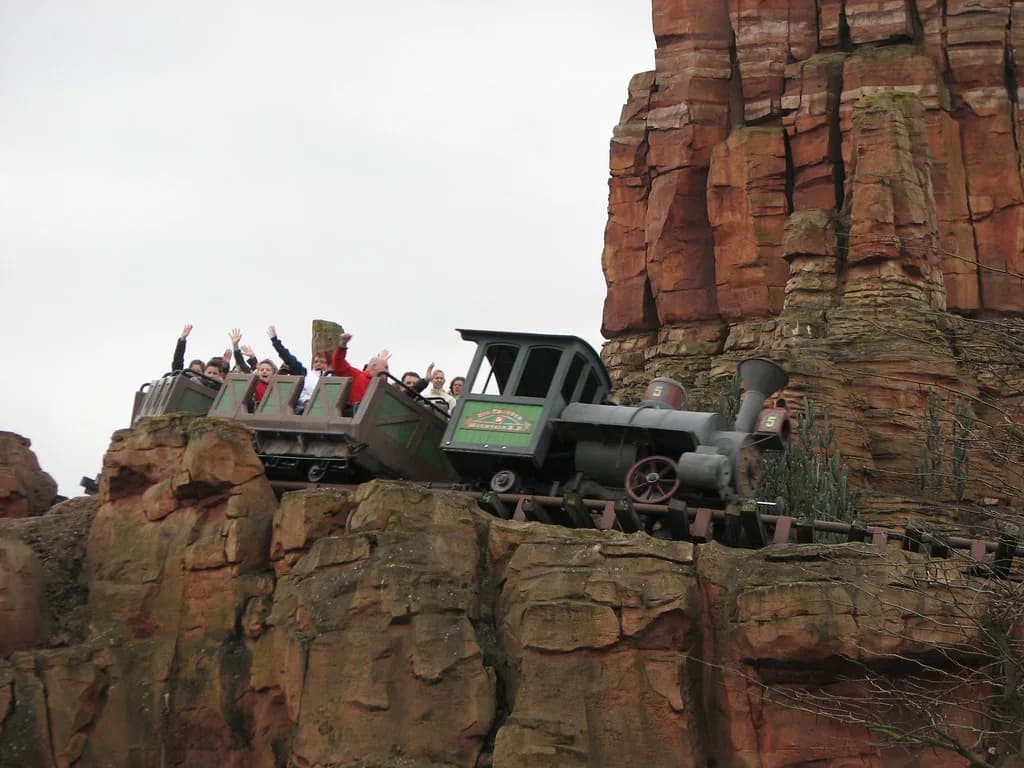
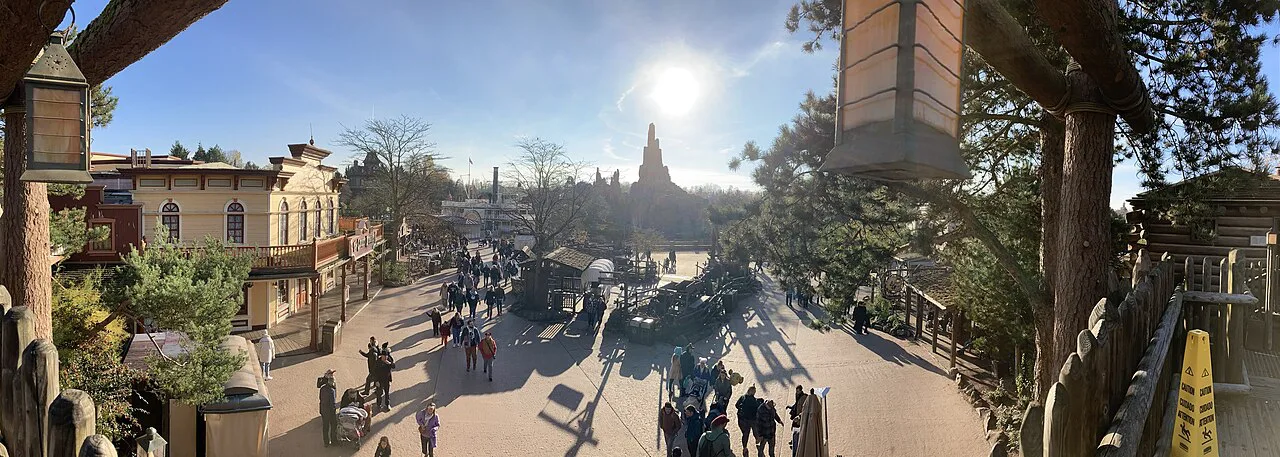
Frontierland is built around the fictional town of Thunder Mesa and holds two of the park's strongest attractions: Big Thunder Mountain, a runaway mine coaster with a 102cm minimum height, and Phantom Manor, a dark ride with no height requirement. The Molly Brown riverboat circles the land for a calmer twenty minutes.
Adventureland is the most tangled and exploratory part of the park, with Adventure Isle's caves and bridges, the Robinson treehouse walkthrough and Pirates of the Caribbean, a boat dark ride with no height limit. Indiana Jones and the Temple of Peril, the land's coaster, requires 140cm and includes an inversion.
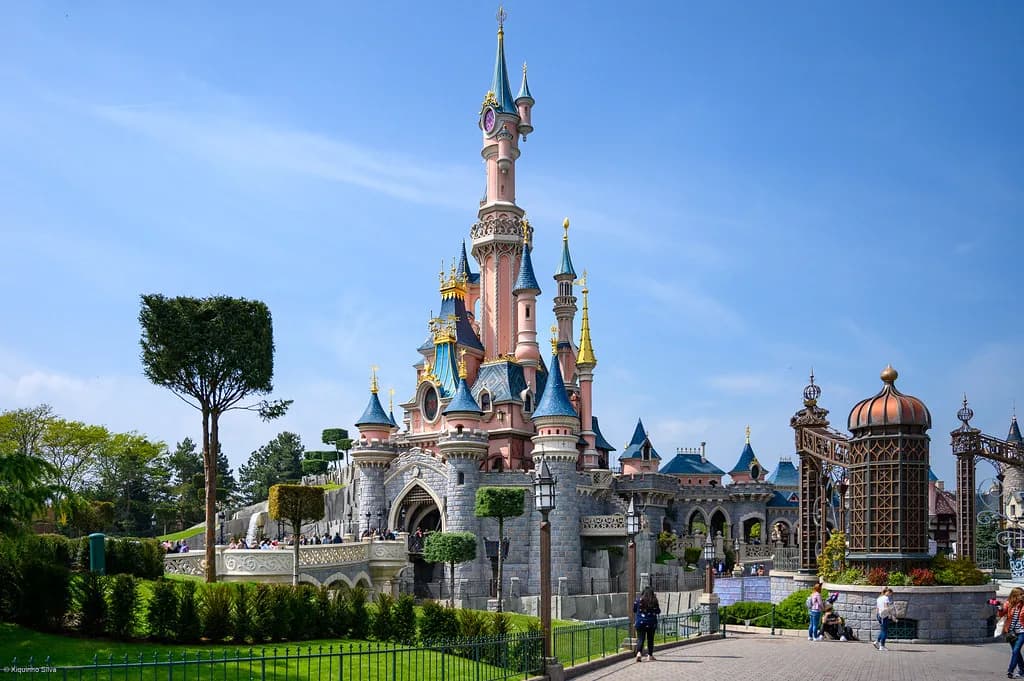
Fantasyland is the young-children heart of the park, where Peter Pan's Flight, Snow White, Pinocchio and the Storybook Land boats all run without a height requirement, alongside the carousel, Dumbo and the Mad Hatter's Tea Cups. The castle itself holds a stained-glass gallery and the Dragon's Lair walkthrough underneath.
Discoveryland takes a Jules Verne view of the future and mixes it with Star Wars and Toy Story. Star Wars Hyperspace Mountain is the headliner, an indoor coaster with a 120cm height limit, while Star Tours requires 102cm and Buzz Lightyear Laser Blast has no minimum at all.
Headline rides for thrill-seekers, with height limits
Four rides set the bar for older children and adults. Big Thunder Mountain and Star Tours both require 102cm, Star Wars Hyperspace Mountain requires 120cm, and Indiana Jones and the Temple of Peril requires 140cm, which makes it the last of the group a growing child will reach.
Big Thunder Mountain is the standout coaster of the castle park, comfortable enough that riders happily repeat it, and it draws some of the longest lines in the resort. Hyperspace Mountain is faster and rougher, with inversions, so it suits riders who already enjoy big coasters rather than first-timers.
Indiana Jones and the Temple of Peril often has short waits because of its tucked-away position in Adventureland, and its single quick inversion makes it a reasonable first upside-down coaster for a child who clears the height bar. Star Tours is a motion simulator, a good option for groups where some members would rather not ride the outdoor coasters.
Rides and areas for younger children
Fantasyland does the heavy lifting for young families, where Peter Pan's Flight, the Snow White and Pinocchio dark rides, Casey Jr. and the Storybook Land boats all run without a height requirement. Casey Jr. behaves more like a gentle kiddie coaster than a scenic train, which makes it a useful first step up for a confident four- or five-year-old.
Outside Fantasyland, young children can ride Pirates of the Caribbean, Phantom Manor, Buzz Lightyear Laser Blast and the Disneyland Railroad, all with no minimum height. Phantom Manor is genuinely spooky in tone, so consider the temperament of the child before boarding.
Walkthrough attractions give families a break from queuing: Alice's Curious Labyrinth ends at the Queen of Hearts' castle with wide views, the Robinson treehouse offers a climb with a panorama, and the Dragon's Lair beneath the castle is a short, dim animatronic encounter. These take minutes rather than half-hours, which helps when attention spans are running out.
Character meets, parades and shows
The two formal character greetings sit in Fantasyland: Meet Mickey Mouse and the Princess Pavilion. Both draw some of the longest lines in the park, neither can be skipped with a paid queue-jump product, and the Princess Pavilion reveals only which princess appears once you are inside.
Parades and evening fireworks concentrate crowds along the parade route and in front of the castle well before start time. Reserved viewing areas are sold for both, giving a roped-off spot with far less waiting on your feet, which matters most when you have small children in the group.
Stage shows fill the gaps between rides, with the Lion King musical staged in the Frontierland theatre on scheduled showings. Arriving twenty minutes early for an early performance is the usual way to secure a seat without paying for reserved seating.
The official app is the practical tool here: it lists daily show times, character appearances and live wait times, so you can build a route around what is actually running that day.
Ticket types and what each includes
Tickets come as one-park or two-park (park hopper) versions, valid for a single day or for multiple days. A one-park ticket covers either Disneyland Park or Walt Disney Studios Park for the day, while the hopper lets you cross between them as often as you like.
If you book an official Disney hotel package, park tickets are bundled into the price alongside the tourist tax, and the ticket usually covers your arrival and departure days as well as the nights between. That bundling is why on-site stays can price more competitively than they first appear against a cheap room plus separate tickets.
Off-site hotels sell rooms only, so you buy park tickets separately and pay the tourist tax at check-in. Check whether a package is dated or flexible before booking, because plans shift and the cheapest rates are usually tied to fixed dates.
Premier Access and how queue-jumping works
Premier Access is Disneyland Paris's paid queue-jump product, sold per attraction or as bundles, and it does not empty the line entirely: you skip the main queue but normally still wait a short while before boarding. Popular rides such as Big Thunder Mountain and Crush's Coaster can command high prices for a single skip.
It can be bought through the app right up to the day of your visit, so there is no need to commit in advance. On quiet winter and early-spring dates, checking live wait times in the app and moving between rides is often enough without paying extra.
Two things it cannot do: skip the character greeting lines, and substitute for early entry. Treat Premier Access as a busy-day tool for one or two must-do rides rather than a default purchase.
Staying on-site: the Disney hotels and Extra Magic Time
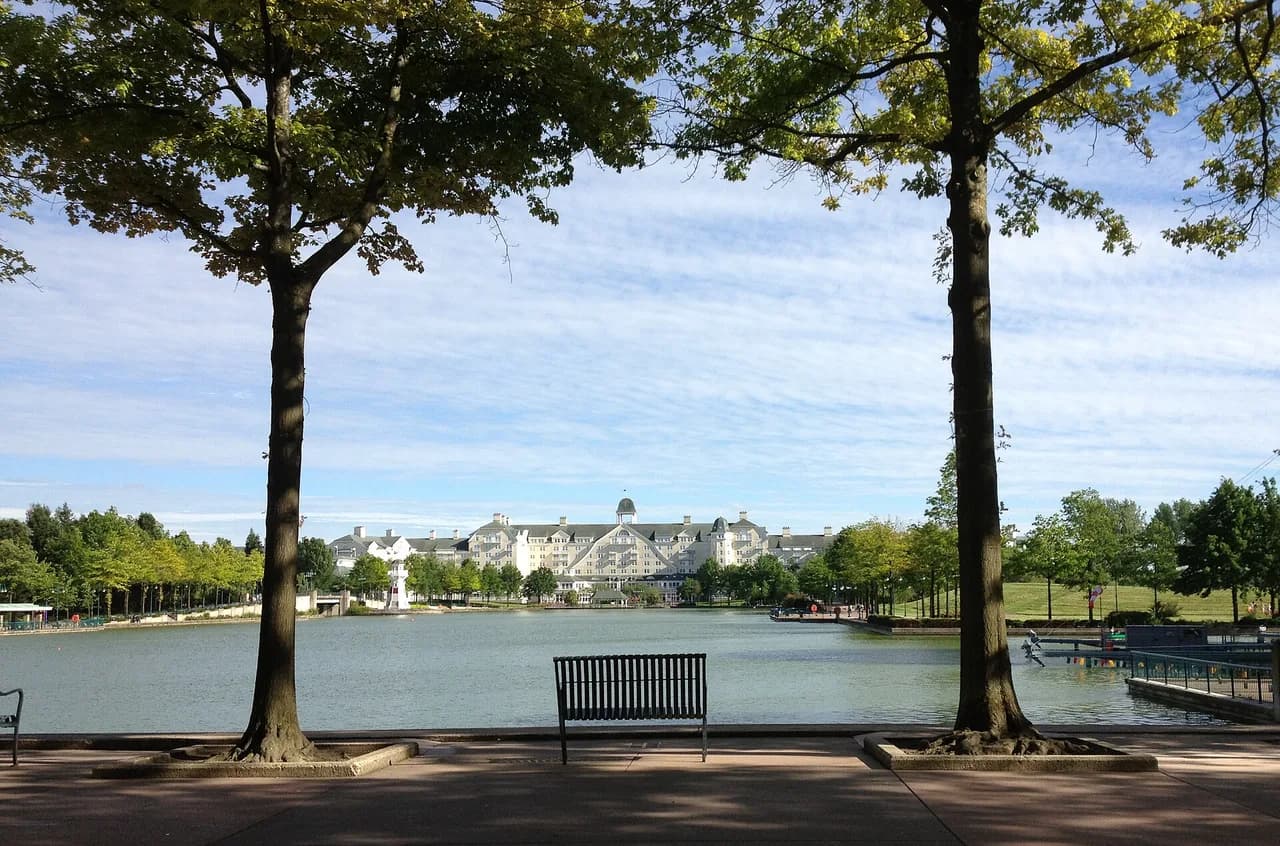
The Disney-owned hotels range from the flagship Disneyland Hotel at the park gates to the value Santa Fe and Cheyenne, with Newport Bay Club, Sequoia Lodge and the Marvel-themed Hotel New York filling the middle. All except the self-catering Davy Crockett Ranch sit within walking distance of the parks, and each runs its own shuttle anyway.
Each hotel carries a theme that shapes the characters who appear at morning meet-and-greets, so a Toy Story fan may prefer the Cheyenne and a woodland setting points to Sequoia Lodge. Room styles run from standard doubles to suites, and the cheaper options are the ones most likely to show their age.
Extra Magic Time gives Disney hotel guests booking direct early entry to the parks before general opening, which is the most reliable way to ride Peter Pan's Flight or Crush's Coaster before queues build. The perk generally does not extend to off-site hotels or third-party bookings of Disney rooms.
Hotel guests also get earlier access to restaurant, character dining and reserved-viewing bookings, plus a character appearance at the hotel most mornings. For families with toddlers, the ability to walk back for an afternoon nap and return for the evening is often worth more than any discount elsewhere.
Outside the Disney portfolio, the self-catering lodges at Davy Crockett Ranch suit drivers who want space and a kitchen, though they are not walkable to the gates. Compare that against the ease of a hotel room a short stroll from the entrance before deciding.
Staying off-site: partner hotels, Val d'Europe and Paris
Partner and independent hotels cluster at Val d'Europe and around Marne-la-Vallée, one train stop from the resort, and many run free shuttles to the parks. They cost less than Disney rooms but come without included tickets and usually without early entry.
Staying in central Paris and commuting works well for a day or two: the RER A train runs from the city to Marne-la-Vallée–Chessy in around 40 minutes, and the station sits at the park entrances. That makes a Paris hotel plus a park day a realistic combination rather than an exhausting one.
If your trip mixes city sightseeing with the parks, base yourself in Paris for the sightseeing days and move out to Val d'Europe or an on-site hotel for the park days. Simply compare total costs, including tickets bought separately and any shuttle timetables, before choosing.
Getting there by Eurostar, RER and plane
Travellers from the UK usually reach the resort by Eurostar with a change at Lille, picking up a high-speed train to Marne-la-Vallée–Chessy, the station at the park gates. Booking a connection with a comfortable buffer between trains avoids a tight cross-platform dash with luggage.
From central Paris, the RER A is the simplest route, and from the airports you can choose between the Magical Shuttle, a private transfer, a taxi app or public transport with changes. Public transport is the cheapest option and the slowest; a private transfer costs more but removes the luggage handling with tired children.
Flying into Charles de Gaulle or Orly keeps transfer options open, while Beauvais is much further out and its transfer cost can cancel out a cheaper fare. Allow extra time at passport control when travelling with children, since family queues can move slowly at peak arrival times.
Passport rules catch people out: France requires a passport less than ten years old on arrival and valid for at least three months after you leave. Check yours before booking anything non-refundable.
Driving from the UK and parking
Driving means crossing the Channel by ferry from Dover to Calais in about 90 minutes or by LeShuttle from Folkestone in around 35 minutes, then a drive of roughly three and a half hours to the resort. Le Shuttle keeps you in the car and is quicker; the ferry gives you a proper break with food on board.
French motorway tolls apply on the route, payable by card at the barriers, and fuel at motorway services is pricier than in town. Plan your stops and keep valuables out of sight when you leave the car.
At the resort, day guests use the paid car parks while Disney hotel guests park at their own hotel. Check the current parking charge on the official site before you travel, as it is not included with standard day tickets.
How many days you need
One day is enough to see one park at a brisk pace, particularly in quieter months, but it leaves little room for parades, character meets and a sit-down meal. Two days lets you cover both parks without racing, and three gives you time to repeat favourite rides and slow down.
A workable split for two days is a full day in Disneyland Park followed by a shorter day in Walt Disney Studios Park, using early entry on the first morning for the busiest Fantasyland rides. If you only have one day, choose the castle park for the classic experience or the studios for the bigger modern rides.
Families with very young children often do better with two shorter days than one long one, returning to the hotel midday. The pace matters more than the count when naps and meals are part of the plan.
Quieter and busier days to visit
Midweek days outside French and UK school holidays are generally calmer than weekends, and January and early spring are consistently the quietest stretch of the year. Summer, Halloween and the Christmas season fill the parks and push up both hotel rates and queue times.
Rain is not a reason to stay away: indoor dark rides, shows and the covered Main Street arcades keep a wet day workable, and wet days often come with shorter lines. Check the official calendar for opening hours and any scheduled ride closures on your dates, since these change through the year.
If your dates are fixed by school holidays, book early and plan to use early entry for the most popular rides. If they are flexible, shifting a trip by a week or two outside peak periods can transform the experience.
Halloween and Christmas seasons
The Halloween season runs from mid-October into early January alongside the Christmas season, with themed decorations, character appearances and seasonal entertainment layered onto the normal programme. It is one of the busiest periods of the year, so expect heavier crowds than in early October.
The Christmas season follows into early January, with decorations along Main Street and seasonal shows and parade content. Both seasons bring their own ride overlays and entertainment, so check what is scheduled for your dates on the official calendar rather than assuming the standard programme.
Food in and around the parks
Eating options run from quick-service counters and snack stands to table-service restaurants and character dining. The most popular table-service venues book out far ahead, with the in-park and hotel restaurants around Marvel and Ratatouille themes among the hardest to secure.
Disney hotel packages can include dining plans covering meals at the hotels or at park restaurants, sometimes with a supplement for pricier venues. Off-site hotels and apartments at Val d'Europe give you the alternative of self-catering and supermarket supplies.
For a cheaper day, eat breakfast before entering and use snack stands at lunch, saving a table-service meal for the evening. Picnic rules and outside-food policies vary by park, so check the official guidance if bringing your own supplies matters to you.
Accessibility, baby care and rider swap
The resort provides accessible entrances and boarding arrangements on most attractions, with information on the official site and at guest services inside the parks. Guests with mobility needs can ask about access passes that reduce time standing in queues, and it is worth arranging these on arrival rather than mid-afternoon.
Baby care facilities with changing areas and feeding space sit inside the parks, and strollers are available to rent at the entrances. Rider swap lets one adult wait with a child too small for a ride while the other rides, then swap without queuing twice, which is the practical way for families with a baby and an older child to cover the coasters.
Plan Your Visit
The decisions that matter most are how many days you can give the resort, whether a Disney hotel package with included tickets and early entry beats a cheaper room off-site, and how you will arrive. Get those three right and the rest, from ride order to restaurant bookings, falls into place around them.
Use the official calendar for opening hours, scheduled closures and entertainment times on your exact dates, then book early for anything that sells out, especially in the Halloween and Christmas seasons.
Explore more Disneyland Paris guides
- Disney Davy Crockett Ranch at Disneyland Paris
- Disney Hotel Cheyenne at Disneyland Paris
- Disney Hotel Santa Fe at Disneyland Paris
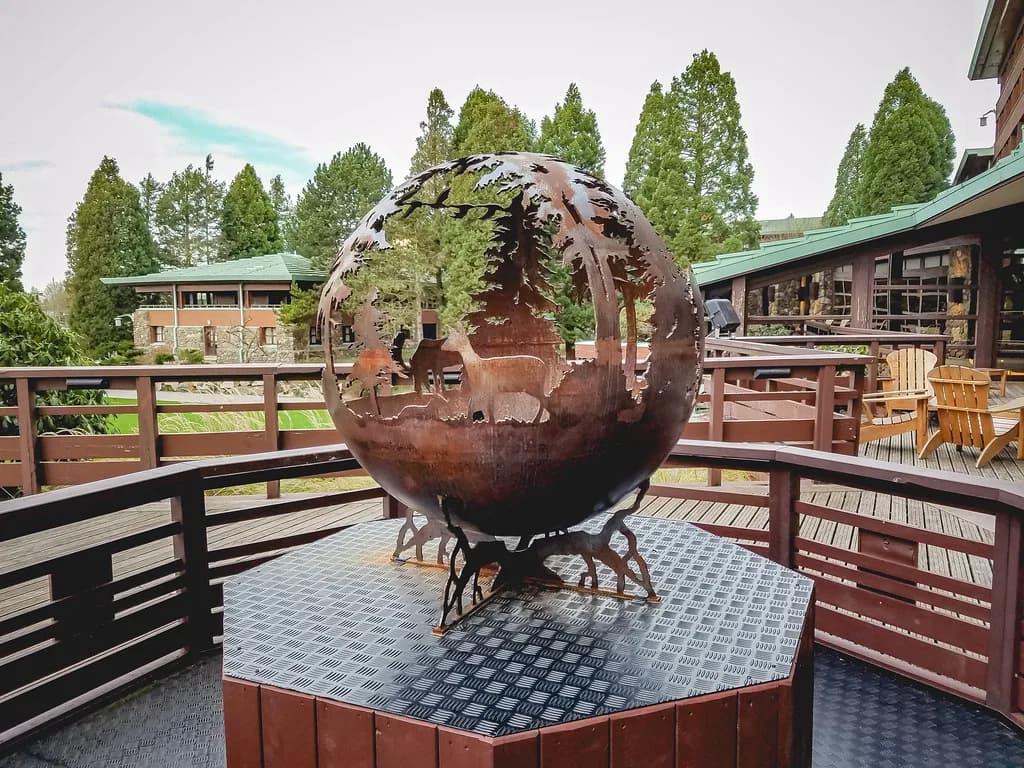
- Disney Sequoia Lodge
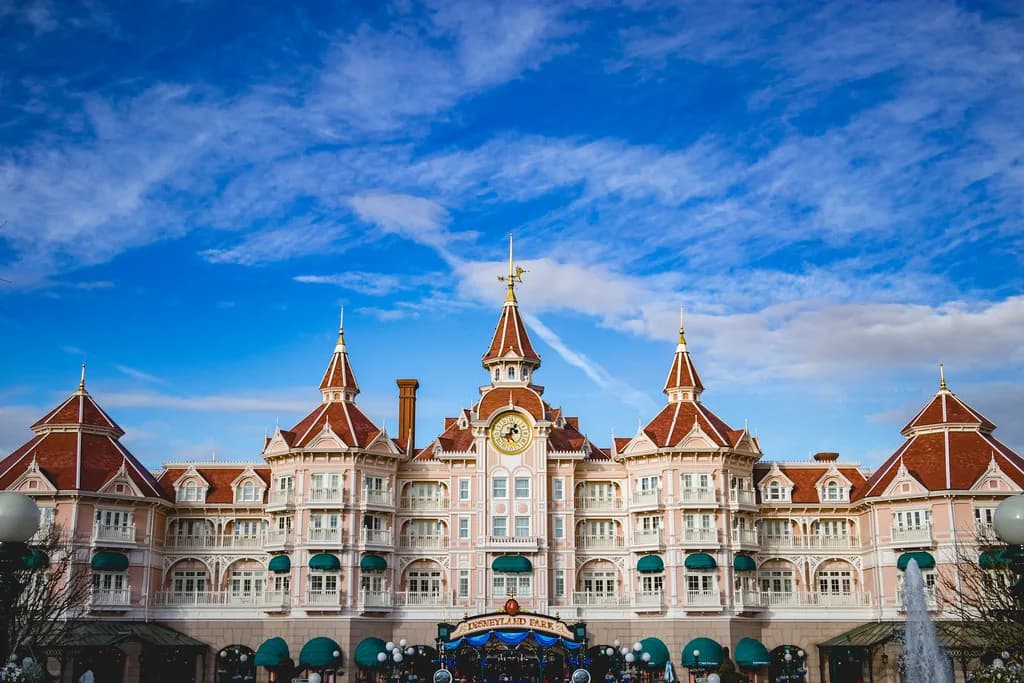
- Disneyland Hotel Paris
- Disneyland Paris
- Disneyland Paris Accessibility
- Disneyland Paris Annual Pass
- Disneyland Paris at Christmas
- Disneyland Paris Breaks
- Disneyland Paris Food
- Disneyland Paris Hotels
- Disneyland Paris Map
- Disneyland Paris Opening Times and How to Plan Your Day Around Them
- Disneyland Paris Rides
- Disneyland Paris Tickets
- Disneyland Paris Weather
- Eurostar to Disneyland Paris
- How to Get to Disneyland Paris from the UK and Paris
- Sleeping Beauty Castle at Disneyland Paris
- Vienna House Dream Castle
Frequently Asked Questions
How many nights do you need at Disneyland Paris?
Two nights gives you parts of three days in the parks and covers both gates without rushing, while three nights allows time to repeat favourite rides and slow down. A single night works for a one-park visit but leaves little room for parades and character meets. With young children, shorter days across two or three nights usually beat one long day.
Which Disneyland Paris rides have height limits?
Big Thunder Mountain and Star Tours require 102cm, Star Wars Hyperspace Mountain requires 120cm and Indiana Jones and the Temple of Peril requires 140cm. Most Fantasyland dark rides, Pirates of the Caribbean and Phantom Manor have no minimum height. Measure children before booking so you know which coasters the family can share.
Is a one-park or two-park ticket better?
A one-park ticket suits a single day or a family with small children who will spend most of their time in Disneyland Park. A two-park hopper earns its extra cost over two or more days, when moving between gates to chase shorter queues and returning for evening shows makes sense. Decide on days first, then match the ticket.
What hotels are available at Disneyland Paris?
On-site options run from the flagship Disneyland Hotel at the park gates through Hotel New York – Art of Marvel, Newport Bay Club, Sequoia Lodge, Hotel Cheyenne and Hotel Santa Fe to the self-catering Davy Crockett Ranch. Off-site hotels cluster at Val d'Europe and Marne-la-Vallée, many with free shuttles, and central Paris is about 40 minutes away on the RER A.
How do you get to Disneyland Paris from the UK?
Most UK visitors take Eurostar and change at Lille for a high-speed train to Marne-la-Vallée–Chessy, the station at the park gates. Flying into Charles de Gaulle or Orly offers shuttle, private transfer or public transport connections, and driving involves a Channel crossing plus roughly three and a half hours from Calais.
When is the quietest time to visit Disneyland Paris?
January and early spring are consistently the calmest periods, with midweek days outside school holidays quieter than weekends. Summer, Halloween and the Christmas season are the busiest and most expensive. If your dates are fixed by school holidays, use early entry for the most popular rides and book restaurants well ahead.
How does Premier Access work at Disneyland Paris?
Premier Access is a paid queue-jump product sold per attraction or as bundles through the app, including on the day of your visit. It shortens the main queue but does not remove waiting entirely, and it cannot be used at character greetings. On quiet dates, live wait times in the app often make it unnecessary.
Sources
Notes for your next park day
Optional updates to our park guides.
You might also like
Continue reading
More guides you'll find useful