Puy du Fou Map: Park Areas and Show Venues Explained
Read the Puy du Fou map the way the day works: separate entrances for the park, hotels and La Cinéscénie, plus numbered shows and village landmarks.
On this page
Puy du Fou is a show park rather than a ride park: audiences move between arenas, period villages and lakeside venues across a large estate at Les Epesses in the Vendée, between the Atlantic coast and the Loire Valley. The site plan reflects that, with numbered show venues, named villages such as Chasseloup and Font-Rognou, and a hotel estate kept apart from the public arrival area. For a park-wide view of what the shows involve, start with the Puy du Fou guide and then use the map to decide the order you see them in.
One point shapes every route: the overview map fixes geography, not timings. Performances vary by opening period and attendance, and Puy du Fou directs visitors to its website and mobile app for the programme and detailed plan shortly before a visit. Treat the map as the place to find where things are and the programme as the place to decide what is possible on your date.
Puy du Fou publishes both a downloadable site plan and an interactive map inside the Puy du Fou application, which is the version that stays current.
What the site plan shows at a glance
Read the full sheet in two passes. First take in the whole estate: the visitor park on one side, the La Cité Nocturne hotel area on the other, and the main public parking along the lower edge. Then zoom in to the numbered venues inside the park.
The illustrated overview is not a measured walking diagram. Large arena roofs, lakes and hotel buildings are drawn to be recognisable, so a straight line between two numbered markers can suggest a crossing over water or planted scenery that is not a visitor path. Follow the pale path network between venues instead and look for the actual signed approach to each one.
If you save an offline copy, keep the whole sheet including the key and the entrance labels. A crop around the central illustration looks tidy on a phone but loses the hotel approaches and the symbol explanations you need when arriving or returning in the evening.
The three entrances and which one your booking uses
The plan marks a daytime park entrance near the lower right of the visitor park, labelled Entrée du Puy du Fou, and a separate Entrée de La Cinéscénie for the night performance. Neither is the vehicle approach to La Cité Nocturne, which serves the hotel estate. Keeping those three labels distinct prevents following the right destination from the wrong starting point.
If you are staying on site, begin with the arrival directions for your named hotel and then use the mapped guest connections into the park. The map explicitly shows access to the daytime park from La Cité Nocturne and access to La Cinéscénie from La Cité Nocturne, which helps hotel guests keep a daytime walk separate from an evening one. Day visitors should head for the public parking and pedestrian signs rather than driving through the accommodation area.
Show venue numbers and names: how the legend works
The right-hand key groups experiences by type and number. Le Signe du Triomphe is 1, Les Vikings is 2, Le Bal des Oiseaux Fantômes is 3 and Le Secret de la Lance is 4, with Mousquetaire de Richelieu at 5 and Le Dernier Panache and Le Mime et l’Étoile at 6 and 7. The numbering continues through the immersive experiences and other attractions.
Use the printed name and its marker together. A gap in the consecutive numbers is not a sign that a venue or path has gone; it simply reflects how the legend is organised. Write down the venue name, its number and a nearby landmark when building a plan, because directional signs in the park may lean on names rather than numbers.
The entrance-side cluster: Mousquetaire de Richelieu and the château area
Near the daytime entrance, Mousquetaire de Richelieu sits on the right-hand edge of the visitor park. Bourg Bérard, Les Automates Musiciens and the château area give you further reference points in this lower part of the park, which makes them a useful first cluster to recognise even when your first chosen performance is farther in. Find the entrance label and one of these landmarks before heading along the main paths so the group shares a sense of which way leads back to arrival.
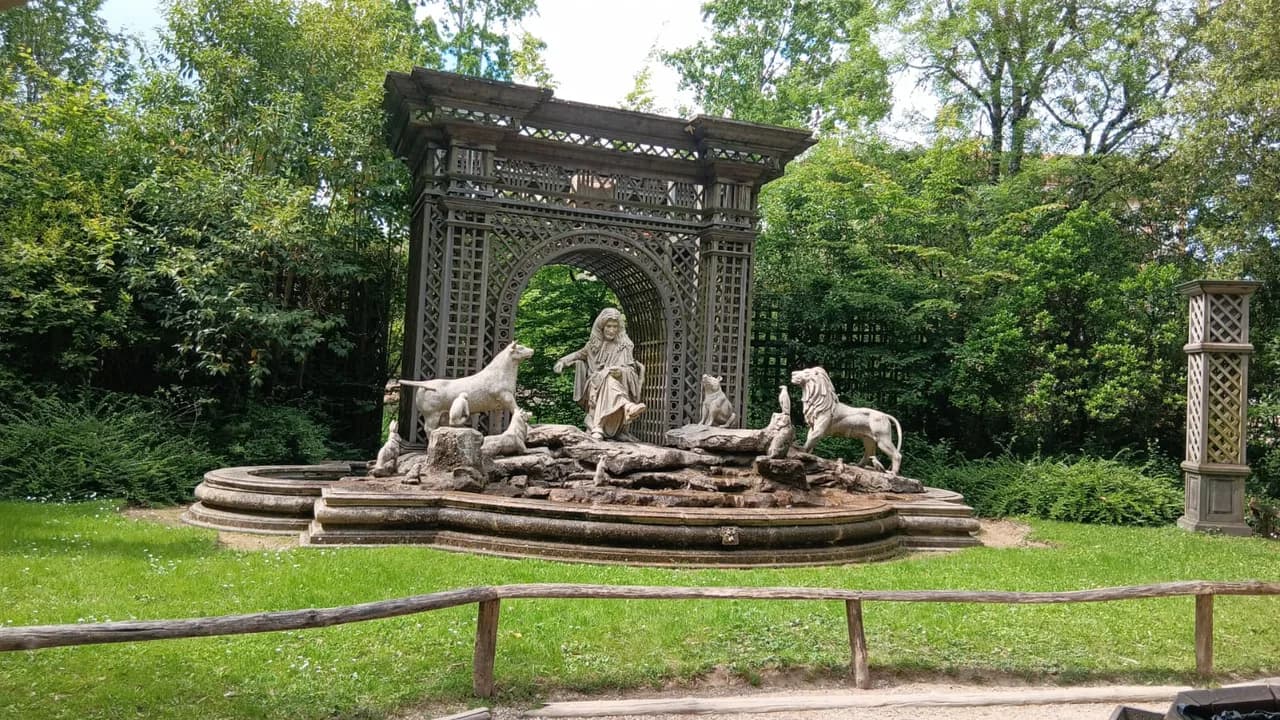
Le Secret de la Lance appears above the château area, while Le Monde Imaginaire de La Fontaine lies toward the right of the lakes. If you plan to explore La Renaissance du Château as well as attend the show, locate both separately instead of treating them as sharing an entrance, because each is identified on its own in the legend.
Upper show venues: the arena circuit
Le Signe du Triomphe forms the clearest visual anchor at the top of the visitor park. Les Vikings sits lower and to its right on the illustration, and Le Bal des Oiseaux Fantômes lies nearer Font-Rognou and the central pathways. Grouping these three names before you arrive makes the upper part of the sheet quick to read.
On the opposite edge, the large buildings marked Le Dernier Panache and Le Mime et l’Étoile make another recognisable pair. They are not next door to the arena shows just because all three appear among the major productions in the legend, so if the day’s programme tempts you to alternate between them, trace the full connection first and note which villages and junctions lie in between.
Central villages, lakes and immersive experiences as route anchors
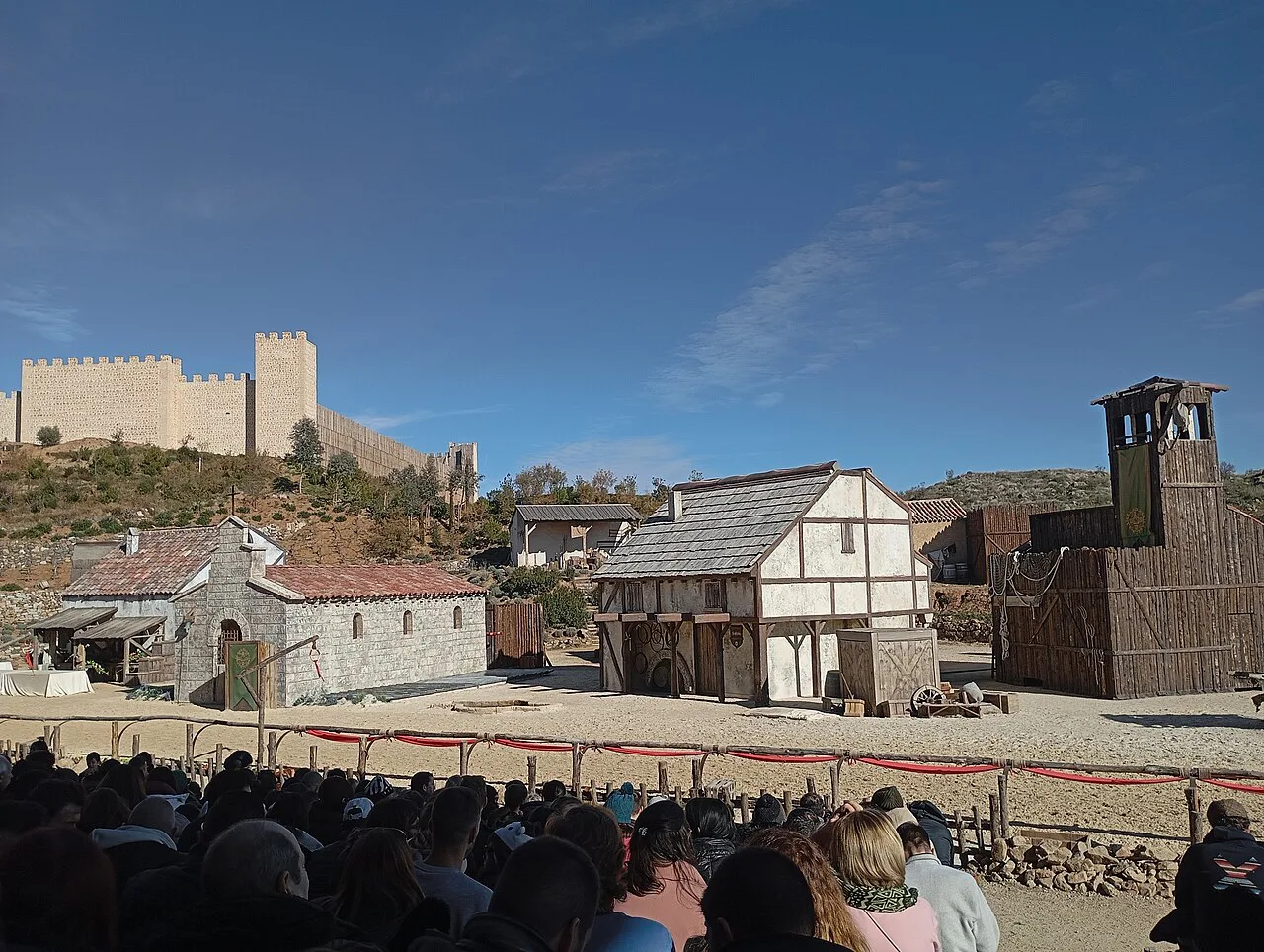
Chasseloup sits toward the upper right of the central illustration with Le Grand Carillon beside it, Saint-Philbert-le-Vieil lies above the central immersive-experience buildings, and Font-Rognou appears toward the upper left. A route described by the village it passes through is far easier to follow than an instruction to cross the middle of the park, especially where several paths branch around landscaped water.
Le Mystère de La Pérouse, Le Premier Royaume and Les Amoureux de Verdun are identified separately in the central group. They are good candidates to slot in when your programme brings you through this part of the park, but the overview gives no duration for any of them, so use the current operating information before squeezing one into a gap between fixed performances.
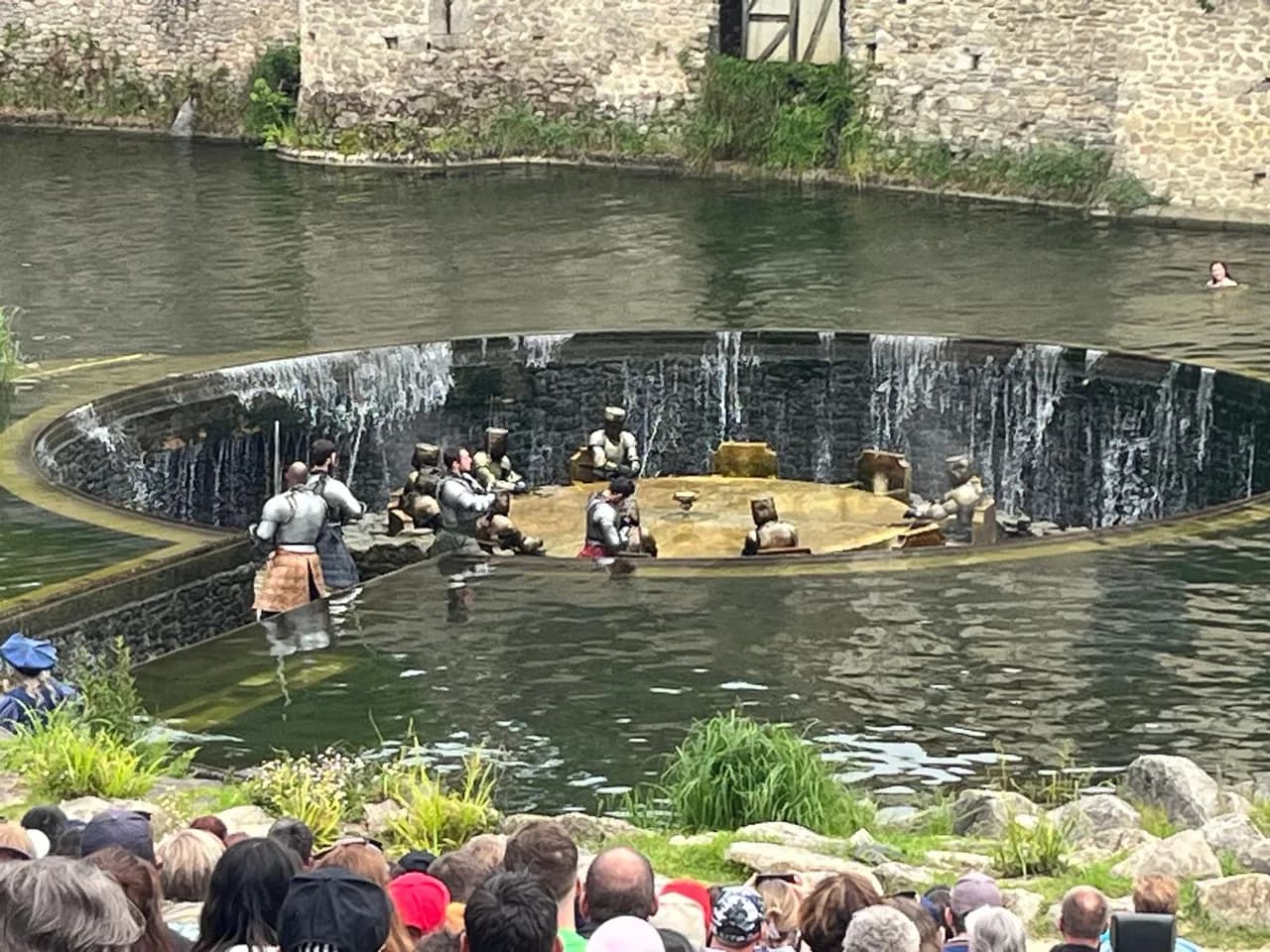
The lakes are strong orientation anchors, though the names around them are not interchangeable. Les Noces de Feu is marked in blue on the central lake, Les Grandes Eaux is numbered nearby, and La Cinéscénie is labelled on a separate water-and-seating area toward the lower left of the visitor park. Agree on the exact performance name and approach before arranging an evening meeting point rather than saying everyone will meet at the lake.
La Cité Nocturne: the on-site hotels and their connections
La Cité Nocturne is enclosed as a distinct hotel area on the left-hand side of the complete map. Its named properties include Le Grand Siècle, La Citadelle, Les Îles de Clovis, La Villa Gallo-Romaine and Le Camp du Drap d’Or, so keep your own hotel name with any saved directions for the return leg. The park’s official site lists its hotels and partner accommodation alongside the day programme and map, and Puy du Fou hotels compares what each one includes.
Because the hotel estate has its own vehicle approach and its own guest connections to the park, a party mixing hotel guests and day visitors can end the daytime together and then split at the exit. Agree before the evening whether you are heading back to the hotel estate, to the public parking or to a night performance, and mark that destination on the same sheet you used all day.
Les Noces de Feu and La Cinéscénie: two evening destinations
These are different places with different arrangements. Les Noces de Feu has its central lake marker inside the visitor park, while La Cinéscénie has its own labelled performance area and entrance connection. Planning an evening around a generic night-show label risks mixing the two.
La Cinéscénie is a separately scheduled night performance with its own booking conditions, so it is not an assumed part of a daytime visit. Check the exact ticket product and the date-specific programme before making it the end of your route.
Food, craft and service symbols and where they appear
The legend distinguishes several kinds of support. A green cross marks the Centre de soins, shown toward the lower right of the visitor park near the entrance-side paths. A black transport symbol indicates the Service de navette, and a separate red symbol marks the Colporteuse service for visitors with disabilities.
Because those symbols mean different things, do not assume any shuttle marker represents the same service, destination or eligibility arrangement. Locate the marker nearest the area you expect to visit and ask staff about how it operates and where it boards; the map shows an advertised facility, not a timetable or a capacity guarantee.
Restaurant-and-bar and artisan symbols are also spread through the villages, which lets you place a meal or a craft stop near your next venue instead of trekking back to the entrance between performances. For a specific dietary need, use Puy du Fou’s current restaurant information and speak to the venue, since a dining symbol alone tells you nothing about the menu.
Planning a walking order around the day's programme
Start with the performances that matter most to your group on the programme for your actual date, then find each one on the full map before adding smaller experiences. A day built around Le Signe du Triomphe, Les Vikings and Le Bal des Oiseaux Fantômes has a quite different shape from one built around Mousquetaire de Richelieu, Le Secret de la Lance and the château. Doing this on paper first exposes repeated crossings while the plan is still easy to change. The same exercise works for a ride-based park, as the Parc Astérix map shows where its areas and attractions sit.
For the opening window, decide whether your first priority sits near the entrance, in the central villages or among the upper show venues, then follow one clear outward route and keep the intermediate landmarks in mind. That reduces how often you need to unfold the whole sheet at a junction, and it makes recovery easier if a performance changes, because you can pick an alternative in the same part of the park.
Building a family route with reunion points
A group with children can pair a handful of major performances with exploring the villages and Le Monde Imaginaire de La Fontaine. Locate dining and the next necessary service stop along the same path rather than attaching a separate journey to every break, and commit to a manageable set of destinations rather than every attraction printed on the sheet.
When members of the party want different shows, use the central villages as reunion anchors and compare the approach from both directions. Say exactly where to stand, such as a named village or a specific venue entrance, rather than naming the broad central area, and record the next destination too so both groups can carry on along the same route. If heavy weather looks likely, the Puy du Fou weather guide covers how a wet or windy day usually reshapes a show schedule.
Choosing the date matters as much as the route: the best time to visit Puy du Fou explains how school holidays, weekends and event periods change the feel of the park, which in turn affects how much slack to leave between fixed performances.
Getting from the car park and hotel estate to the daytime entrance
Parking staff assign arriving vehicles to a lot, so note or photograph the lot letter before walking in; the illustrated overview shows where parking sits but cannot tell you which row your car is in. From there, follow pedestrian signs to the daytime entrance rather than the hotel estate approach.
The park sits at Les Epesses in the Vendée, and Puy du Fou’s site sets out the options for arriving by train, car or plane alongside free parking for a stay. For ticket types and how dated admission works, see Puy du Fou tickets.
Where the map, programme and calendar each fit in
The site plan answers where things are; the date-specific programme answers what is on and when; the calendar answers which dates the park and the night performances operate. Keep all three, plus your ticket confirmation, together so no single document has to answer every question on the day. Downloading the app gives you the interactive map and the day’s programme in one place.
Check the official Puy du Fou map and programme pages before you travel for the current layout and show schedule, since venue availability and programme content change through the season.
Plan Your Visit
The Puy du Fou map rewards a little homework: separate the daytime entrance, the La Cinéscénie entrance and the hotel estate approach, pair each show number with its name and a nearby village, and group the arena shows apart from the entrance-side venues. Then build the walking order around the programme for your date rather than around legend order, and write meeting points that name a village or a venue entrance.
Before booking, settle the ticket product and the date, then check the day’s programme and the interactive map in the app so the plan matches what is actually running.
Explore more Puy du Fou guides
Frequently Asked Questions
Where is Puy du Fou?
Puy du Fou is at Les Epesses in the Vendée, in western France between the Atlantic coast and the Loire Valley. Visitors usually arrive by car, and train and plane options are published on the park's practical information pages.
Do you need a printed map for Puy du Fou?
Not strictly, but a printed copy of the full site plan is handy for planning a route and for anyone in the group without a phone. Keep the whole sheet, including the legend and entrance labels, and use the app for the day’s programme and interactive map.
Is La Cinéscénie included in the normal park ticket?
Treat it as a separate product. La Cinéscénie is a night performance with its own dates and booking conditions, so check the exact ticket you are buying before you plan an evening around it.
How do you plan a route around the shows at Puy du Fou?
Choose the performances that matter most from the programme for your date, find each venue on the map, and group them by area so you are not crossing the park repeatedly. Use named villages as landmarks and reunion points, and leave slack between fixed performances.
How many days do you need at Puy du Fou?
That depends on how many shows and villages you want to see and whether you are adding an evening performance, so there is no single answer. Build a shortlist from the programme for your dates and decide whether one day covers your priorities or a short break with an on-site hotel suits you better.
Where should you stay to visit Puy du Fou?
The on-site hotels in La Cité Nocturne have their own approach and guest connections into the park, which simplifies evenings. Nearby gîtes, bed and breakfasts and partner hotels are alternatives if you prefer to stay off the estate.
What else is there to do around Puy du Fou?
The park sits between the Vendée coast and the Loire Valley châteaux, so many visitors pair it with a wider western France trip. Regional ideas are listed in the tourist office and brochure pages.
Does the map show live waits and closures?
No. The site plan shows locations only; the day’s programme, the app and signs in the park carry the operating information for your visit.
Sources
Notes for your next park day
Optional updates to our park guides.
You might also like


Continue reading
More guides you'll find useful