Puy du Fou Guide: Tickets, Shows and Where to Stay
Plan a Puy du Fou visit with this guide to the headline shows, ticket and Emotion Pass options, on-site themed hotels and how to get there from Nantes or Paris.
On this page
Puy du Fou is a historical theme park in the Vendée that runs on live spectacle instead of machinery: Roman arenas, Viking battles, falconry and stage sets that rise out of lakes, with no rollercoasters in sight. That makes it a different kind of planning job from a conventional park day, because your schedule is built around show times and walking distances between arenas rather than queue lines. It suits families with children old enough to sit through 25 to 40 minute performances, history-minded adults and anyone who wants a full day out without ride height charts.
The park sits at Les Epesses, between Nantes, Angers, Cholet and La Rochelle, with Nantes the usual gateway at roughly an hour by car. Most visitors drive or take the train to Angers or Cholet and continue by shuttle or taxi, a connection worth building into the plan early. Once inside, the day is a sequence of fixed performances, so the practical skill is mapping the arenas and leaving enough walking time between them.
What Puy du Fou is
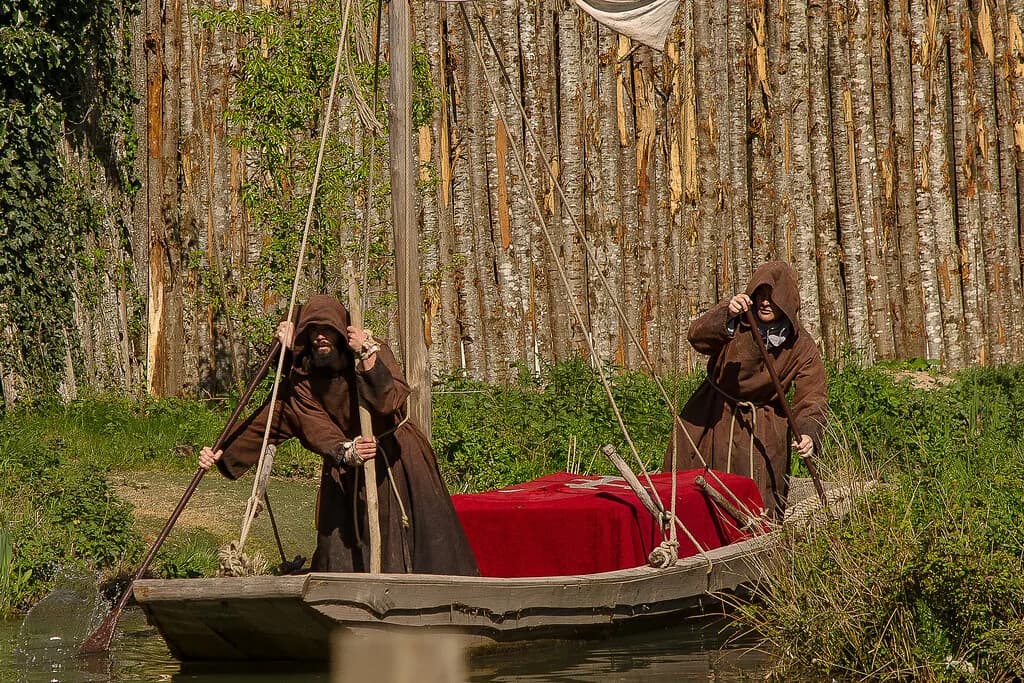
The park is a collection of large-scale historical productions staged across 55 hectares of forest, with several villages rebuilt using traditional techniques and craftsmen working in them. The shows mix stunt riding, acrobatics, pyrotechnics and moving sets, and most run outdoors, going ahead in rain or shine, while a number of productions are indoors. The villages, including a medieval quarter, a Viking fort and a turn-of-the-century town, work as the connective tissue between shows, with the shops deliberately kept inside them rather than at show exits.
That layout matters more than it would at a ride park: the main arenas are spread out, and the park's own advice is to reach each one 20 to 30 minutes before the start. Build the day around three or four blockbuster shows rather than trying to tick off everything, because the six headline productions alone can fill a day once you add walking and waiting time.
The headline daytime shows
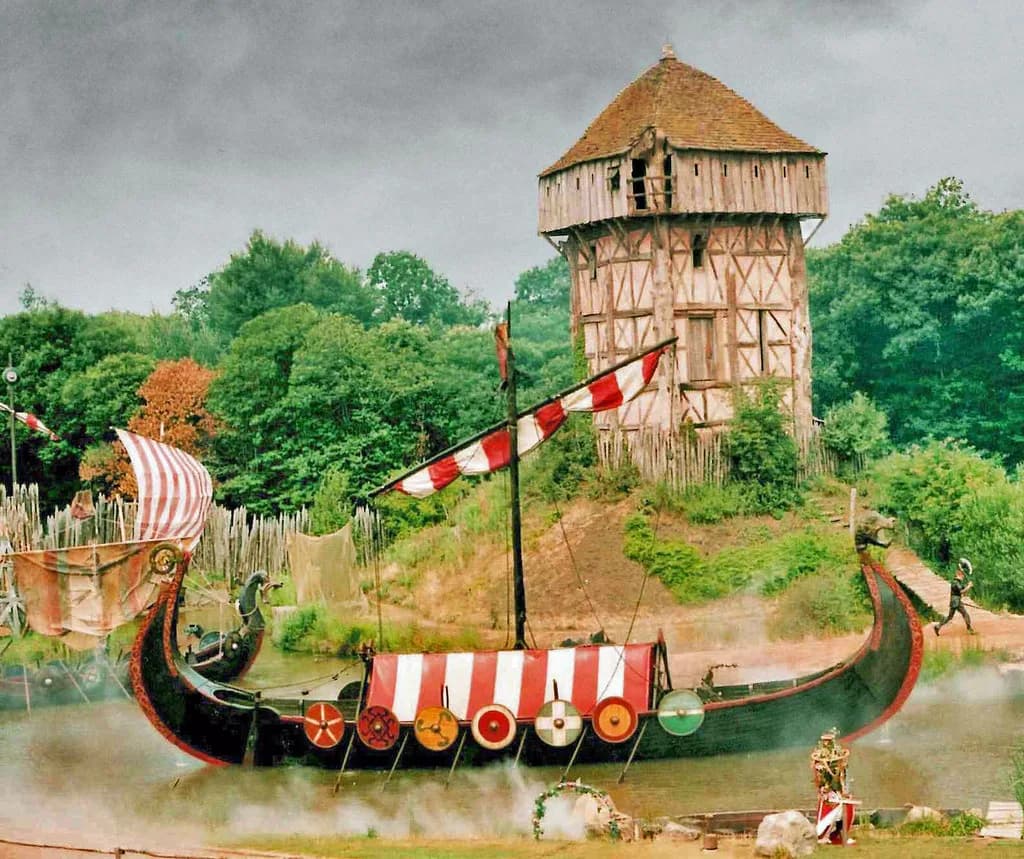
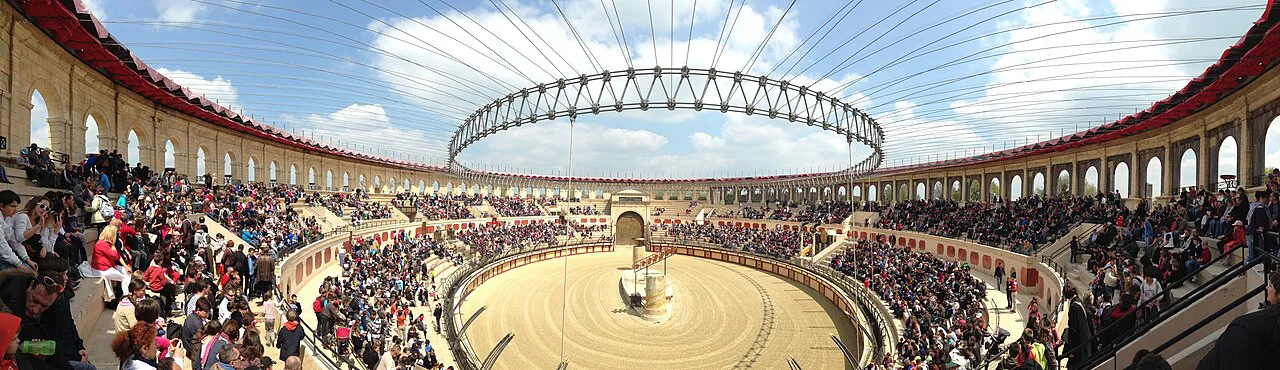
Le Signe du Triomphe fills a Gallo-Roman stadium with gladiator combat, a chariot race and a finale in which a huge imperial galley appears and the arena becomes the scene of a naval battle. Les Vikings stages a village wedding interrupted by longships and flames, with acrobatics and special effects at the foot of a feudal mound. Le Secret de la Lance follows a young shepherdess defending a castle during the Hundred Years' War, with horseback stunts and explosions, while Mousquetaire de Richelieu mixes sword fights, flamenco choreography and equestrian work on a stage equipped with an enormous curtain. Le Bal des Oiseaux Fantomes is the falconry show, with more than 330 birds including eagles, falcons and vultures flying close over the audience.
Le Dernier Panache is the most technically ambitious of the set, following a Vendée military figure through the French Revolution across 360-degree staging that moves around the audience. For a first visit, prioritise Le Signe du Triomphe, Les Vikings and Le Bal des Oiseaux Fantomes, since these give the clearest sense of the park's range, then add the others as the timetable allows.
Immersive walk-through attractions and side shows
The immersive attractions differ from the seated shows because they have opening windows rather than fixed start times, so you walk through at your own pace as scenes play out around you. Le Premier Royaume covers the Frankish king Clovis in a journey that includes a descent into Norse mythology, Les Amoureux de Verdun puts you in a First World War trench through a soldier's correspondence, and Le Mystère de La Pérouse boards you on an eighteenth-century expedition ship facing storms. La Renaissance du Château is the exception, since its tour starts in batches rather than continuously, so treat it as a timed slot rather than a wander-in.
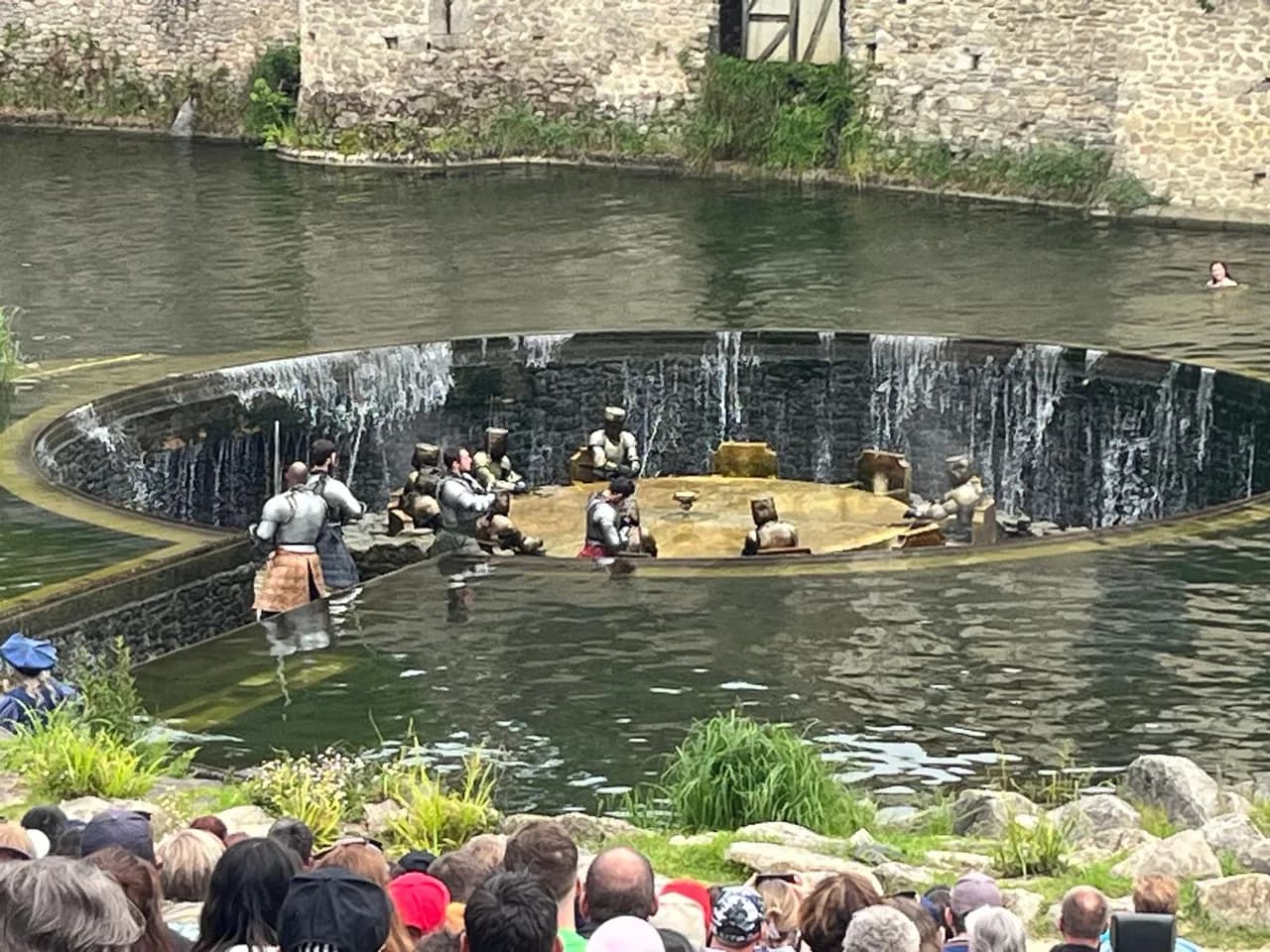
Smaller performances work well as fillers between the blockbusters. Le Grand Carillon rings a 16-metre carillon of 70 bells with aerial acrobatics for around ten minutes, Les Chevaliers de la Table Ronde plays out the Arthurian legend at the foot of the Font-Rognou ramparts, and the villages themselves stage short interventions such as the Automa Musicians appearing from windows. Use these when you have a gap rather than planning the day around them.
The evening shows: Les Noces de Feu and La Cinéscénie
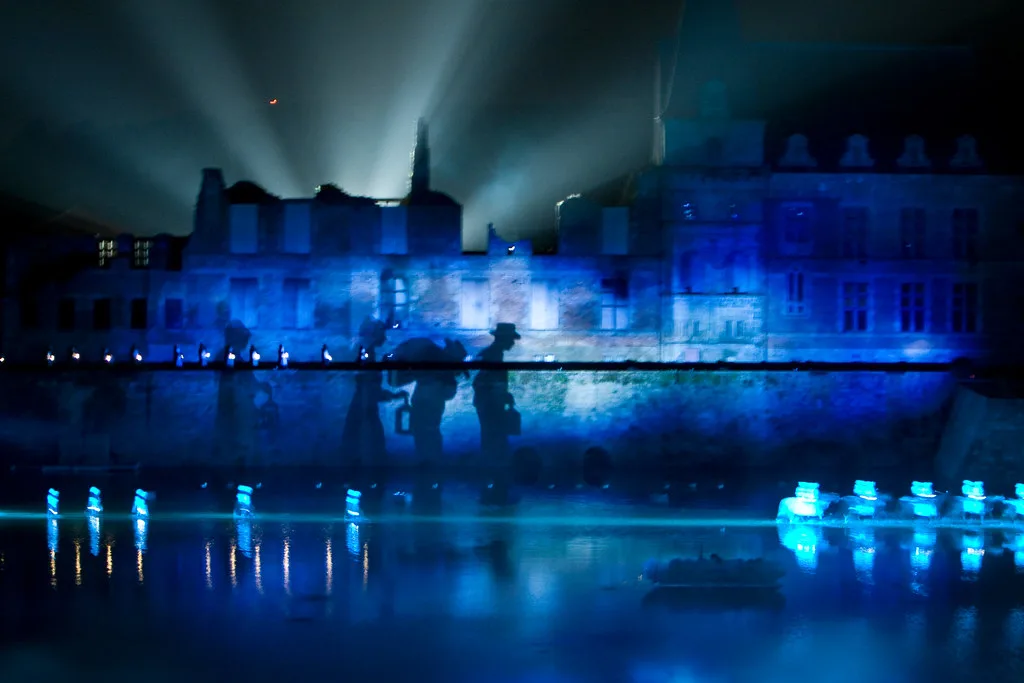
Les Noces de Feu runs at nightfall around the lake, with dancers, music and giant sets emerging from the water in a love story between a violinist and a pianist. It is the evening show most day visitors can add, and it is distinct from La Cinéscénie, the park's original production, which runs on Friday and Saturday evenings and needs booking well ahead because it sells out.
La Cinéscénie traces the history of the Vendée across a vast outdoor stage with a very large cast, and because it depends on absolute darkness its start time shifts through the season. Standard daytime tickets do not include it, and you can also buy a La Cinéscénie-only ticket if you are in the area for the evening. If your trip hinges on seeing it, plan around a Friday or Saturday night and book the show and any on-site room together.
How many days you need
Two days is the right answer for most first-time visitors. A single day is workable but tight: you can reasonably fit three or four blockbusters plus one or two immersive attractions and a village walk, and trying for more turns the day into a march between arenas. Two days lets you see the six headline shows without sprinting, add the walk-through attractions and still leave time to eat properly and watch an evening show.
For a one-day plan, arrive for opening, take the timetables from the park app, and anchor the morning around two of the biggest arenas that sit near each other. Put a shorter show or an immersive walk-through in the middle of the day when the fixed timetable leaves a gap, and finish with an outdoor blockbuster and, if you are staying, the evening show. For two days, split the park roughly in half so you are not crossing it repeatedly in the heat.
Ticket types and what each includes
Entry comes as a one-day ticket or as two- and three-day tickets, and day tickets cover the daytime shows, the villages and the standard night show Les Noces de Feu. La Cinéscénie is priced and booked separately from daytime entry, and advance online booking is normally cheaper than paying at the gate. Current prices vary by date and ticket length, so compare them on the Puy du Fou tickets page before you commit to a multi-day option.
The arithmetic is straightforward: a two-day ticket costs less than two separate one-day tickets, so if you are already planning to return the next morning, buy the multi-day version at the outset. Families with very young children should weigh a single day first, since the fixed show timetable is the hard constraint rather than the ticket price.
The Emotion Pass and priority seating
The Emotion Pass is the park's answer to fast track: it gives access to each show through a separate line and reserves you one of the best seats, so you can arrive a few minutes before curtain-up instead of joining the general queue half an hour early. For a short trip it effectively buys back the waiting time between performances, which is exactly where a one-day visit loses ground.
The trade-off is cost against time saved, and the case is strongest for one-day visitors in high season, when the general seating fills early. On a two- or three-day visit with a relaxed schedule, the standard queues are usually manageable, so put the money towards an on-site hotel night or a La Cinéscénie seat instead. Check the current price and what the pass covers on the official ticket page before adding it.
On-site hotels in the Cité Nocturne
The park's five themed hotels sit within La Cité Nocturne, its on-site complex, with more than 400 rooms spread across settings that run from Ancient Rome to the Renaissance. Les Îles de Clovis places thatched huts on stilts over water, with family rooms that include curtained bunk beds and terraces over a carp lake, while Le Camp du Drap d'Or offers royal tents with four-poster beds. Other options include a citadel behind ramparts, a Grand Siècle house styled on the court of the Sun King and an eighteenth-century Logis de Lescure. Staying on site means no drive at the end of a long show day and easy access to the evening programme.
Book these early, because the on-site rooms are the first thing to go around weekends and La Cinéscénie nights. Room types differ sharply in capacity and style, so decide whether you want the novelty of the stilt huts or the space of the larger lodge rooms before comparing rates on the Puy du Fou hotels page.
Nearby accommodation and hotel-plus-park packages
Hotels in surrounding towns such as Cholet give you a cheaper base and more choice of restaurants, and the park sells combined stay-and-park packages with town hotels that bundle entry, parking and shop discounts. The trade-off is the drive in and out each day, which costs you the flexibility of an evening show followed by a short walk to bed. For a two-day visit with La Cinéscénie, staying on site is usually worth the premium; for a single day, a town hotel works well.
If you combine the park with a wider Loire or Vendée trip, treat Les Epesses as a two-night stop rather than a day trip from Paris, given the roughly three-hour rail journey from the capital. That gives you a full show day, an evening, and a second morning without hauling luggage between arenas.
Getting there by car, train and air
By car, the park is reached via the A87 motorway and signed from the surrounding towns, with Nantes about an hour away, La Rochelle under two, and Paris around three hours by road. Coming by train, the practical stations are Angers and Cholet, from which shuttle services or taxis run to the park, and Nantes is a useful rail hub for arrivals from Paris, with high-speed trains taking just over three hours. Nantes Atlantique is the nearest airport, roughly an hour by car, which makes a hire car the simplest option for fly-drive visitors.
Shuttle seats and taxi availability are the weak link in a car-free plan, so confirm the transfer when you book your rail ticket rather than on arrival. Coach and organised group tours from several French cities bundle transport with entry, which removes the transfer problem entirely for groups and families.
Parking, arriving for opening and moving between arenas
Parking is available on site, and arriving before opening is the single most useful habit: the first shows fill more slowly, you can collect timetables and a map without a crowd, and you can walk the park's layout before committing to a route. Each arena is a separate walk, and the park's own guidance is to be at the entrance 20 to 30 minutes before the start, so build in more time than you think you need.
Because most shows are outdoors and go ahead whatever the weather, it pays to know which productions are under cover before you build a rainy-day plan; the Puy du Fou weather guide sets out which shows offer shelter. The park is open from April to November, and the calendar drives everything else, so check the official calendar for your dates before fixing a travel day.
Where to eat
There are 27 places to eat, from kiosks to sit-down restaurants, and the strongest options sit inside the villages: Le Bistrot in Le Bourg 1900 and Le Café de la Madelon, where you eat during a cabaret performance. The restaurants lean on local produce rather than burgers and pizza, and reserving a table ahead is recommended in peak season, when a reservation can also bring a per-person discount. Eating at an off-peak time protects your show schedule better than queueing at the busiest hour.
If anyone in your group has dietary restrictions, plan around the sit-down restaurants rather than the kiosks and ask directly when you reserve, since the fast-food counters offer less flexibility. The villages also make good lunch stops because you can eat and then walk to the next arena without crossing the park.
Language: translation headsets, the app and enjoying shows without French
You do not need French to enjoy the park. Translation headsets are available at the main shows, and the Puy du Fou app carries the same audio commentary in your chosen language, with the app version often delivering better sound quality than the headsets. Bring your own headphones if you want to use the app as an audio guide.
The practical point is that these shows are built to carry visually: chariot races, shipwrecks, horse stunts and birds flying overhead need no translation, even where the storyline is thin. Families with mixed language abilities should lean on the visual blockbusters and use the app for the more dialogue-heavy immersive attractions.
Accessibility and facilities for families with young children
The park is well set up for visitors with disabilities or mobility issues, with dedicated seating areas at each show for guests who need assistance. Use that as a way to shorten the walk between performances, since the route between arenas is often longer than the show itself.
With young children the constraint is attention span, and the show lengths work in your favour: most performances run under 40 minutes, which is about right for primary-age children. Families tend to do well with the animal and crowd-pleasing shows first, then use an immersive walk-through as a break where a child can move rather than sit, and anchor the day with an on-site hotel so an early finish is easy.
Seasonal programming, including La Frairie de la Toussaint
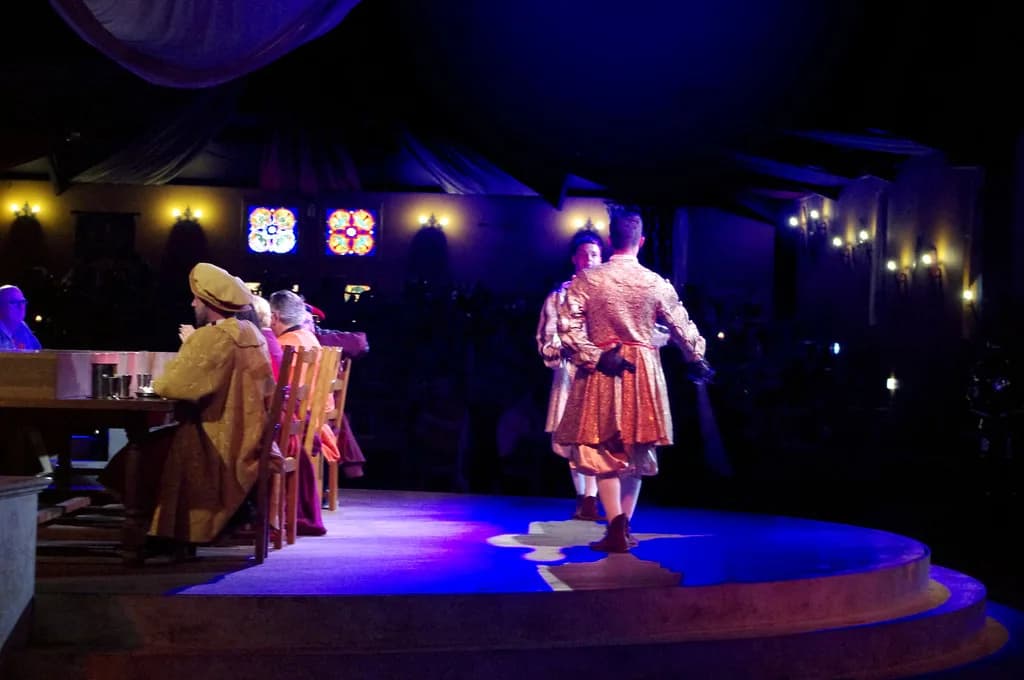
In late October and into early November the park adds La Frairie de la Toussaint, a royal procession and banquet show with François I, a live orchestra and more than 150 artists, followed at nightfall by a torchlit procession of horses to the lake and Les Noces de Feu. The autumn programme keeps the signature stunt shows and the indoor productions running alongside the seasonal event, which makes it a comfortable time to combine both.
Weekdays during the Frairie tend to be calmer for workshops and shows, while weekends are livelier and busier, so pick your day by what you want from the event. Exact autumn dates shift each year, so confirm them on the official calendar before booking travel around the event.
Quieter and busier days
Spring and autumn are the sweet spot: milder temperatures, fewer people and easier access to the shows, with summer bringing heat and longer queues at the fixed show times. Within any week, midweek days around the school calendar are more relaxed than weekends and French school holidays. Events such as La Frairie and Friday and Saturday La Cinéscénie nights pull the biggest crowds.
The official calendar is the deciding document, because it shows which days the park is open and when La Cinéscénie runs, and those two facts govern everything else in your plan. Build your dates around the calendar first, then book trains and hotels.
Where to go next: nearby Vendée and Loire Valley add-ons
Puy du Fou sits within reach of several other major days out. Nantes, Angers and the Loire châteaux make natural add-ons, and La Rochelle is under two hours by car for a coastal finish. If you are touring parks rather than history, Futuroscope near Poitiers offers a screen-and-motion park with headline attractions such as Arthur and the Minimoys and L'Extraordinaire Voyage, while Disneyland Park and Walt Disney Studios Park near Paris work as a very different final stop on the same trip. The same comparison between fixed show schedules and ride-based parks is worth making before you commit, and our Disneyland Paris guide covers tickets, hotels and park planning in detail.
A sensible routing is Nantes or Angers as your arrival hub, two nights at Les Epesses, then onward to the Loire or the coast, which keeps driving distances short and lets you use the park as the anchor of the trip rather than a detour.
Plan Your Visit
Treat Puy du Fou as a show schedule rather than a ride list: arrive for opening, work the arenas in clusters, leave 20 to 30 minutes before each performance, and accept that two days will always beat one. Book a multi-day ticket if you are staying over, add the Emotion Pass if you are short on time, and choose between a Cité Nocturne room and a town hotel based on whether La Cinéscénie features in your plans.
Before you book, open the official Puy du Fou calendar for your dates and ticket page for current prices, since both change by date and season. Then sort transport: a car for flexibility, or a train to Angers, Cholet or Nantes with a confirmed shuttle or taxi transfer.
Explore more Puy du Fou guides
- Puy du Fou Hotels
- Puy du Fou Tickets
- Best Time to Visit Puy du Fou
- How to Get to Puy du Fou by Car, Train or Plane
- Puy du Fou Accessibility
- Puy du Fou at Christmas
- Puy du Fou at Halloween
- Puy du Fou Fast Track
- Puy du Fou Food and Restaurants
- Puy du Fou Map
- Puy du Fou Opening Times
- Puy du Fou Rides and Shows
- Puy du Fou Weather
Frequently Asked Questions
How many days do you need at Puy du Fou?
Two days suits most first-time visitors. A single day covers three or four of the biggest shows plus one or two immersive attractions, while two days lets you see all six headline productions without rushing between arenas and still fit an evening show.
Is Puy du Fou worth visiting if you don't speak French?
Yes. The blockbuster shows rely on stunts, animals, pyrotechnics and moving sets that need no dialogue, and translation headsets are available at the main productions. The park app carries audio commentary in your chosen language and often sounds clearer than the headsets, so bring headphones and use it as a guide.
What does Puy du Fou mean in French?
It names the place and the original hilltop site rather than describing a concept. Pronounce it roughly Pwee du Foo, and you will be understood when asking for directions or buying tickets.
Do you need the Emotion Pass at Puy du Fou?
It makes most sense on a one-day visit in high season, when it gets you into each show through a separate line and reserves a good seat so you can arrive just before the start. On a two- or three-day trip with a relaxed schedule, standard seating usually works and the money is better spent on a hotel night or a La Cinéscénie seat.
What is the difference between La Cinéscénie and Les Noces de Feu?
Les Noces de Feu is the regular nightfall show around the lake and is included with daytime entry. La Cinéscénie is the park's original production, runs on Friday and Saturday evenings in peak season, needs booking well ahead, and is sold separately from daytime tickets.
Are there any rides at Puy du Fou?
No. The park is built entirely on live shows, immersive walk-through attractions and reconstructed villages, so there are no rollercoasters and no ride height requirements. Days are organised around fixed show times and walking distances between arenas.
How do you get to Puy du Fou without a car?
Take the train to Angers or Cholet, where shuttle services and taxis connect to the park, or to Nantes for high-speed arrivals from Paris, with the rail journey taking just over three hours. Confirm your transfer when you book the train, because it is the part of a car-free plan most worth securing in advance.
When is the quietest time to visit Puy du Fou?
Spring and autumn are calmer and cooler than summer, and midweek days around school holidays are quieter than weekends and French school breaks. Late October brings La Frairie de la Toussaint, which is livelier at weekends and easier to navigate on weekdays.
Sources
Notes for your next park day
Optional updates to our park guides.
You might also like


Continue reading
More guides you'll find useful