Best Water Parks in Europe: How to Choose One for Your Trip
Compare Europe's standout water parks by ride mix, location and family fit, from Tenerife's Siam Park to campsite pool complexes in France, Italy and Croatia.
On this page
Europe's water parks fall into two very different groups: standalone destination parks built for a full day of slides, and pool complexes inside holiday villages and campsites where the water is part of a longer stay. Choosing between them is the first decision, because it changes everything about timing, transport and who the day suits.
A family with teenagers will want drop slides and a wave pool; a family with toddlers will get more from a shallow lagoon and a paddling area within walking distance of a mobile home. This guide sets out the well-documented options in each category and how to plan a day around them.
Destination water parks versus campsite pool complexes
A destination water park is a ticketed attraction you visit for a day, with separate ride areas, changing facilities and a gate price. A campsite or holiday-village pool complex is part of the accommodation: you swim where you sleep, usually alongside restaurants, entertainment and other facilities. Deciding which you want determines whether you are booking a ticket or a short break.
The practical difference shows up in transport and flexibility. A destination park needs a planned journey and a full day blocked out, while a campsite complex lets you swim in the morning and do something else in the afternoon. If your group cannot agree on a whole day of slides, the holiday-village model usually wins. Where a single park combines water with other attractions, our Zoomarine guide shows how to plan that kind of split day.
Siam Park, Tenerife: the award-winning headline park
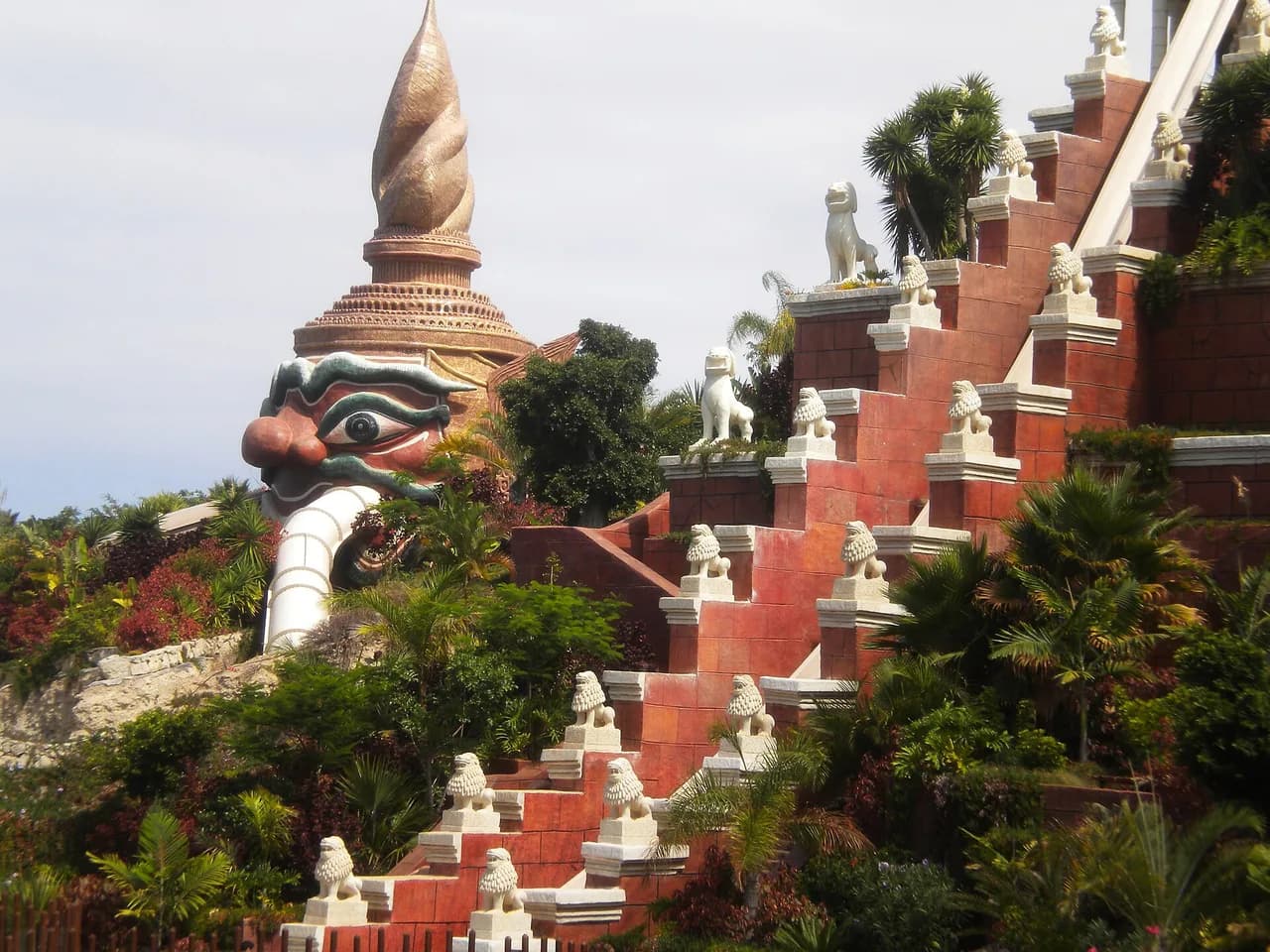
Siam Park near Playa de las Américas is the best-documented standalone water park in Europe, and it has the awards to justify the reputation: a European Star Award and a separate honour from Kirmes & Park Revue, which named its Dragon slide Europe's best water slide. The Thai-themed park is built as a full-day attraction rather than an add-on to a beach holiday.
Its headline features are the Wave Palace, which produces waves of many different types and sizes, a children's area called Lost City, and Siam Beach, described as the whitest sandy beach in the Canary Islands. Kinnaree is a long tornado-style slide, and Sawasdee adds a children's zone that includes a miniature version of the Dragon. Between them they cover thrill-seekers and young children in one park.
You do not need a car to get there. The park runs a free shuttle from Los Cristianos, Playa de las Américas and Costa Adeje, which covers the main resort strip on the island's south coast. If you are staying in one of those resorts, base your day on the shuttle rather than on parking.
Tenerife's climate makes Siam Park a realistic winter-sun option as well as a summer one, which is why it pairs naturally with a beach holiday. For a broader look at how Europe's ticketed parks compare across the continent, the best theme parks in Europe guide covers the big names, including our Europa-Park guide for another full-day ticketed park.
Ride types to expect: wave pools, drop slides, raft slides and children's areas
Most large European water parks are organised around the same handful of ride families. Wave pools generate timed swell for mixed ages, drop slides deliver the steepest single-rider thrill, raft slides carry groups together, and children's zones use shallow water, small slides and spray features. Knowing which family your group cares about lets you skip the areas you will not use.
Siam Park illustrates how a big park splits those categories: the Wave Palace for shared wave sessions, the Dragon and Kinnaree for slide seekers, Lost City and Sawasdee for younger children. Use that structure as a template when comparing other parks, checking which of the four families each one actually has.
If you want to browse beyond the big names, Aquaparks.eu is a locator that lists water parks, swimming pools and thermal baths across Europe and lets visitors rate them. Treat it as a directory for finding candidates in a region, not as an authoritative ranking, and then go to the park's own site for what it actually offers.
Campsite water parks in France, Italy and Croatia
Holiday-village pool complexes are where many European families actually swim, and several are substantial in their own right. Pra'delle Torri near Caorle on Italy's Adriatic coast has a swimming area of more than 36,000 square metres with slides, plus a mini amusement park and a campsite train to the resort. Bella Italia on Lake Garda has eight pools and sits next to Gardaland, making a combined water-and-theme-park break easy to plan.
In Croatia, Valamar Camping Lanterna near Poreč pairs a large pool complex with multiple slides and accommodation close to the family pool, while Bijela Uvala, also near Poreč, offers three pool complexes with newer slides and a tourist train into the town. Park Umag near Umag has two pool complexes and is marketed alongside the Istralandia aqua park.
France contributes large complexes of its own: Domaine de la Yole at Valras-Plage combines slides with a lagoon beach pool, La Chapelle at Argelès-sur-Mer has slides and a water playground with peak-season entertainment, and Saint Avit Loisirs in the Dordogne emphasises fast slides. These sites work best as the base for a week rather than a single day out.
The trade-off is that slide access usually comes with the accommodation booking rather than a separate day ticket, so the pool becomes part of the cost of the stay. If you are weighing the Netherlands instead, the theme parks in Netherlands guide covers the wider park landscape around resorts such as De Schatberg in Limburg, which has indoor and outdoor pools with slides and a swimming lake.
If your holiday plans lean toward Belgian parks and attractions, the theme parks in Belgium guide is the companion read for pairing a water day with a coaster day.
Indoor and thermal aqua parks for out-of-season swimming
Not every European water park depends on Mediterranean weather. The Aquaparks.eu directory lists indoor pools and thermal baths alongside outdoor summer parks, including entries such as Aqualand Moravia, Océade and Aqualibi in Belgium and Gino Paradise Bešeňová in Slovakia. For a trip outside the summer months, an indoor or thermal complex is the realistic choice.
Filtering the directory by indoor pool, thermal water or sauna facilities narrows the list quickly. Check the park's own site for which pools are open in your travel window, since indoor complexes often run reduced areas outside peak periods.
Matching the park to your group
Thrill-seekers should prioritise parks with named drop and raft slides and a wave pool, and head for the biggest slides at opening. Siam Park's Dragon and Kinnaree fit that profile, and a group of teenagers can spend most of a day circulating between them and the Wave Palace.
Families with toddlers and young children get more from shallow lagoon pools and dedicated children's zones. Bella Italia's eight-pool complex and Park Albatros in Tuscany, with three large shallow lagoon pools and a wide slide, are built around that kind of swimming, and Park Albatros is within walking distance of the beach.
Mixed-age groups do best at parks that combine a wave pool, a children's area and at least one big slide, so nobody is stranded. Set a meeting point and a fixed regroup time, then let the older children queue for slides while the younger ones stay in the shallow water.
If you are building a longer theme-park trip around the water day, the best theme parks in Europe covers the headline parks, and the best theme parks in UK guide covers the British options for a separate trip.
Tickets, opening seasons and how the official calendars work
Destination water parks sell dated or flexible day tickets through their own websites, and some offer reduced entry later in the day. Prices and hours change with the season, so the park's official ticket page is the only reliable source for your date. Campsite complexes are different: access is normally included in the accommodation booking, so what you are choosing is the site, not a ticket type.
Season matters more than anything else in this decision. Mediterranean outdoor parks run a summer season, Tenerife's Siam Park operates year-round for winter sun, and indoor thermal complexes run all year. Check the official calendar for the park you choose before booking flights, because a park that is closed on your dates changes the whole plan.
If your trip includes UK parks as well, a Merlin annual pass can cover several attractions across a year, with the Merlin Essential Pass and Merlin Gold Pass differing in the days and benefits they include.
Quieter versus busier days and seasonal timing
Summer weekends and local school holidays are the busiest days at any outdoor water park, and slide queues build fastest in the middle of the day. Arriving for opening and riding the biggest slides first is the most reliable way to cut waiting times, wherever you go.
Shoulder months are the sweet spot for Mediterranean parks, with warm enough water and shorter queues than August. Indoor and thermal parks follow different patterns, filling up at weekends and during local holidays, so midweek visits are usually calmer.
Food, shade and what to expect inside the park
Large water parks typically have several food outlets and bar areas, while campsite complexes often sit alongside restaurants and a shopping promenade, as at Zaton Holiday Resort near Zadar. Check each park's own rules on bringing food and drink before you rely on a picnic.
Shade is the detail that decides whether a full day works with young children. Book a sunbed or cabana in advance where the park offers them, and plan a midday break out of the sun rather than pushing through from opening to close.
Getting there: shuttles, transfers and public transport
Siam Park's free shuttle from Los Cristianos, Playa de las Américas and Costa Adeje makes a car-free day straightforward for anyone staying on Tenerife's south coast. Elsewhere, check whether your hotel or campsite runs a shuttle before booking a taxi or hire car.
For campsite complexes, transport is usually part of the stay: several Croatian sites run tourist trains into nearby towns, and some Italian resorts sit within walking distance of the beach. Confirm the shuttle or train timetable with the site when you book, since seasonal services do not always run all year.
Accessibility, baby care and rider swap
Water parks generally publish accessibility information, accessible changing facilities and rider-swap arrangements on their own websites, and it is worth reading those pages before you book if anyone in your group needs them. Ask specifically about pool access, since steps and lifts vary between complexes.
For babies and toddlers, look for shallow lagoon pools, paddling areas and family changing rooms. Park Albatros's shallow lagoon pools and the children's zones at Siam Park, Lost City and Sawasdee, are designed around exactly that need.
Where to stay near Europe's main water parks
Staying close to a destination water park turns a tiring day into a relaxed one. On Tenerife, the resort strip served by Siam Park's shuttle covers Los Cristianos, Playa de las Américas and Costa Adeje, so any of those bases works without a car.
At Europe's holiday villages, the accommodation and the water park are the same booking: mobile homes and lodge tents sit inside the site, and premium zones position you closer to the pools. Pra'delle Torri, Bella Italia and Valamar Camping Lanterna all work on that model, with the pool complex included in the stay rather than ticketed separately.
Plan Your Water Park Trip
Start with the type of day you want: a ticketed destination park for slides and a wave pool, or a holiday village where the pool is part of the stay. Then fix the season and check the park's official calendar for your dates before booking anything else.
Once the park is chosen, sort transport and accommodation around it: shuttle resorts on Tenerife, on-site mobile homes in France, Italy and Croatia, and indoor thermal complexes for out-of-season swimming. That sequence keeps the water day, the travel and the beds pointing in the same direction.
Explore more Europe guides
Frequently Asked Questions
Which European water park is the best known?
Siam Park in Tenerife is the most decorated standalone water park, holding a European Star Award and a separate award for its Dragon slide. Its wave pool, children's areas and free resort shuttle make it a full-day destination in its own right.
Are campsite water parks worth choosing over a standalone park?
They suit a different kind of trip. Campsite and holiday-village complexes in France, Italy and Croatia include the pools in the accommodation booking and work best as a week-long base, while standalone parks are ticketed day visits with bigger individual slides.
Which European water parks work outside summer?
Tenerife's Siam Park operates for winter sun, and indoor and thermal aqua parks across Europe, including Aqualand Moravia, Océade and Aqualibi, run regardless of the season. Confirm the open areas on each park's own site for your travel dates.
How do I get to Siam Park without a car?
Use the park's free shuttle, which serves Los Cristianos, Playa de las Américas and Costa Adeje. Staying anywhere along that stretch means you do not need a hire car for the water park day.
Which water park suits young children best?
Parks with shallow lagoon pools and dedicated children's zones work best. Siam Park's Lost City and Sawasdee areas, Park Albatros's three shallow lagoon pools and Bella Italia's eight-pool complex are all built for younger swimmers.
How do I check opening dates and ticket prices?
Water parks publish their calendars and ticket pages on their own websites, and prices and opening hours change with the season. Use the official calendar for the park you are considering before booking flights or accommodation.
Sources
Notes for your next park day
Optional updates to our park guides.
You might also like
Continue reading
More guides you'll find useful