Parc Astérix Rides: Pick by Height and Thrill Level
Plan Parc Astérix rides by thrill level, with minimum heights for OzIris, Goudurix and the family coasters, plus which rides suit young children.
On this page
Parc Astérix mixes genuine white-knuckle hardware with a large stock of family coasters, water rides and gentle spin rides, so a single day can serve a thrill-seeking teenager and a nervous six-year-old. The headline lineup includes an Intamin launch coaster, an inverted Bolliger & Mabillard coaster and a tall wooden coaster, while the rest of the park is built around junior coasters, boat rides and dark attractions.
The park sits at Plailly in the Oise department north of Paris, which makes it an easy add-on to a Paris city break or a Disneyland trip rather than a standalone destination. Treat the ride list as a series of decisions: which coasters justify the biggest queue, which height band each child falls into, and where water rides fit around the rest of the day.
What Parc Astérix rides offer and who the park suits
The park's ride inventory spans roughly twenty tracked attractions in the public database, covering rollercoasters, water rides, flat rides, dark rides and walkthroughs, with a range of manufacturers represented across the lineup. That spread means the park works for mixed-age groups: thrill-seekers get multi-inversion coasters, younger children get junior coasters and play areas, and families can share the water rides and gentle transport attractions.
Couples and adult groups tend to build the day around the big coasters, while families with primary-school children spend more time on the water rides and the central family areas. Because the headline coasters sit at opposite ends of the park, planning a route matters more than at compact parks where everything is a short walk apart.
The headline coasters for thrill-seekers
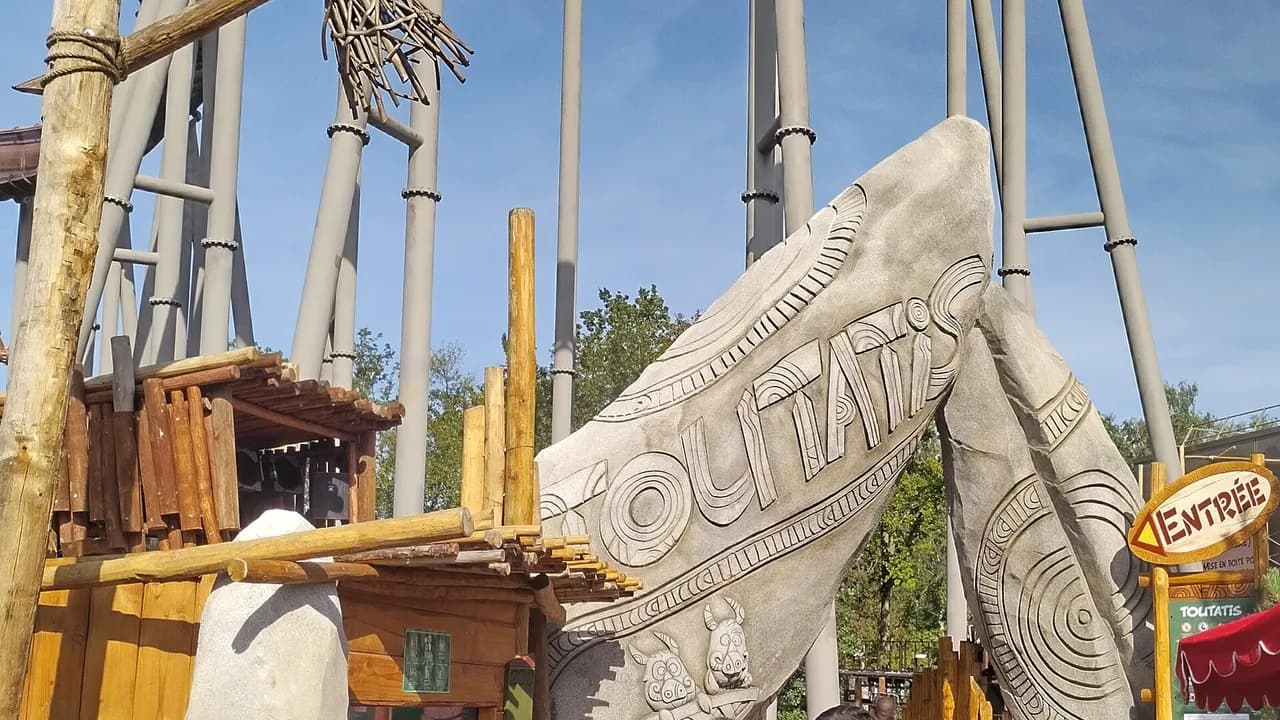
Toutatis is the park's most recent major coaster: an Intamin launch ride reaching 167 ft with three inversions and a top speed around 66 mph. It is the obvious first stop for anyone chasing the biggest thrill, and it anchors the newer end of the park.
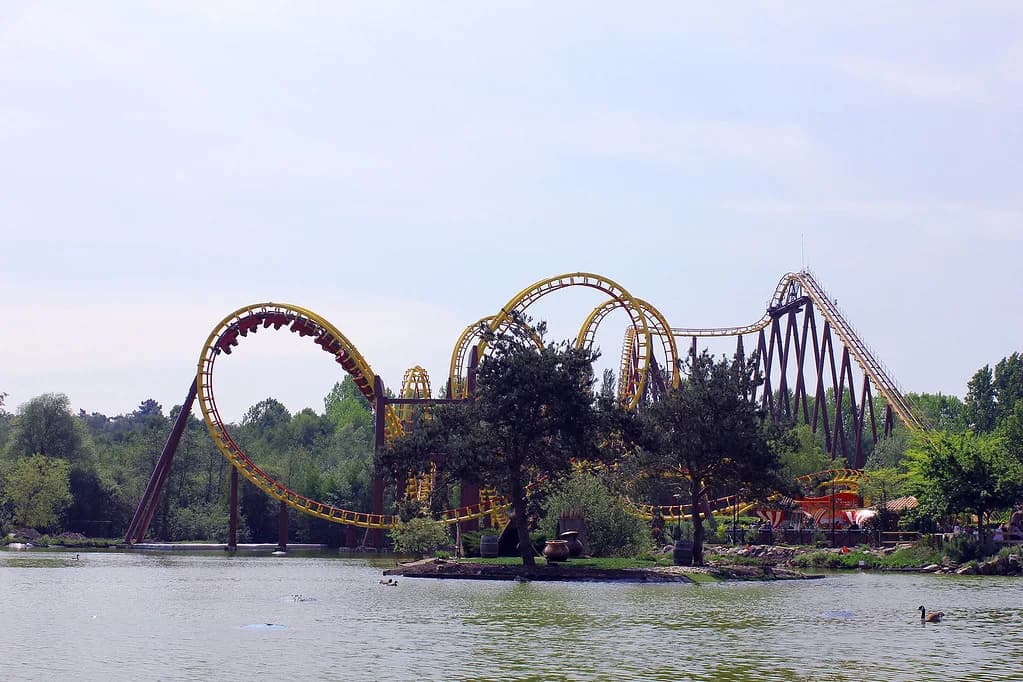
OzIris, a Bolliger & Mabillard inverted coaster from 2012, carries riders through five inversions over a 131 ft layout with a minimum height of 1.3 m. Because the track runs above the paths, it is also one of the easiest coasters for non-riders in the group to watch.
Goudurix, a Vekoma multi-inversion coaster dating from 1989, has seven inversions and the park's highest minimum height at 1.4 m, so it is the coaster that excludes the most children. Tonnerre 2 Zeus, the wooden coaster, runs a 98 ft layout at around 52 mph with a 1.2 m minimum, making it a more accessible step up for older children who meet the lower threshold.
For a first taste of serious coaster riding, Trace du Hourra from 2001 is a Mack bobsled-style coaster with a 1.3 m minimum and a gentler 37 mph top speed. It bridges the gap between the family coasters and the inverting machines, which helps when a child is tall enough for the bigger rides but not yet ready for them.
Rides for younger children and first-timers
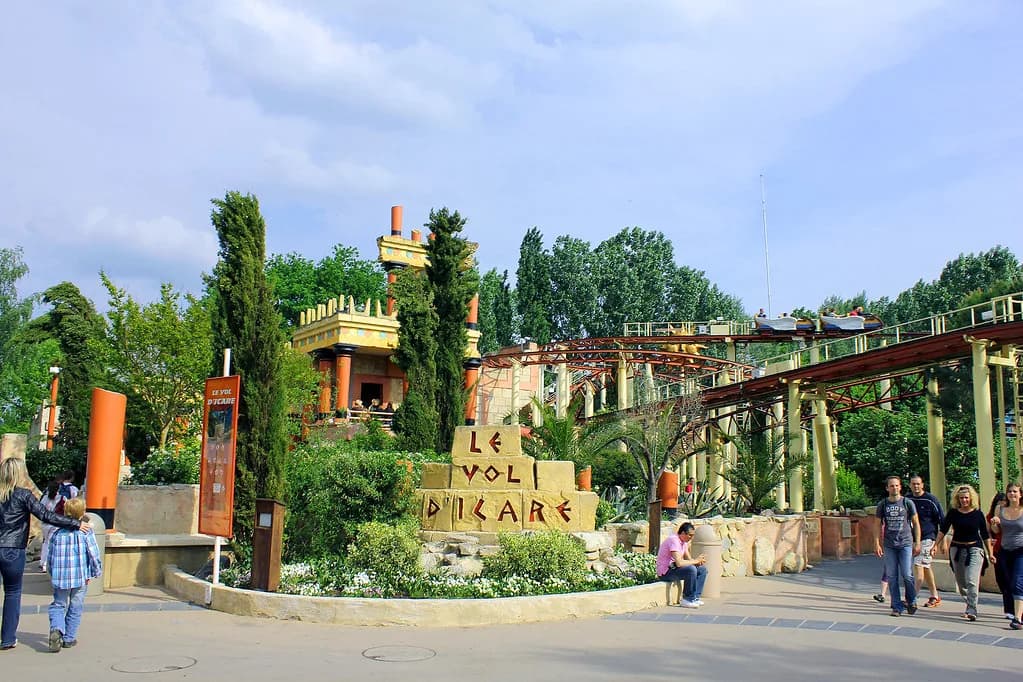
SOS Numérobis, a small Zierer coaster with a 1.2 m minimum, is the natural first coaster for younger riders, alongside Le Vol d'Icare, which has the same height requirement and a low 23 mph top speed. Both give children a real coaster experience without the intensity of the headline rides.
Pégase Express, a 2017 Gerstlauer family coaster with a 1.3 m minimum, is the strongest family coaster in the park and the one older siblings and parents can ride together. It sits comfortably between the junior coasters and the inverting rides, so it is often the best shared choice for a family split across height bands.
Parents of very young children should look at the Spanglier d'Or playground, and at the dark rides and walkthroughs that carry no minimum height, since these absorb time without a height check at the entrance. Le Défi de César, L'Aventure Astérix and Les Espions de César all list a minimum of 0 m, which makes them the fallback for any child who measures under the coaster thresholds.
Minimum heights at a glance
The park's height bands fall into clear groups. Goudurix is the outlier at 1.4 m; OzIris, Trace du Hourra, Pégase Express, Menhir Express and Le Vol d'Icare sit at 1.3 m; Tonnerre 2 Zeus, Discobélix, La Rivière d'Elis and SOS Numérobis sit at 1.2 m; and L'Hydre de Lern is the lowest coaster-area threshold at 1.0 m.
Measure children before booking, because a child just under a threshold gains nothing from a long queue and the split-group problem repeats all day. The practical approach is to plan around the lowest height in your group and slot the taller riders into the bigger coasters while younger children work through the junior rides nearby.
Rides by land and theme
Parc Astérix is organised into themed zones drawn from the Gaulish and Roman world of the comics, and the coasters are spread across them rather than clustered in one thrill area. That layout rewards a plan: hitting Toutatis and OzIris early means crossing the park before the paths fill, then working back through the family zones in the middle of the day. Reading the layout before you arrive saves wasted walking, so start with the parc astérix map and fix the two or three zones that matter most to your group.
The water rides sit in different zones too, so it helps to treat them as a route rather than a single stop. Menhir Express, L'Oxygénarium and La Rivière d'Elis are spread out, and pairing each with a nearby coaster keeps the walking down.
Water rides and how wet you get
Menhir Express is the park's log flume, a 1995 Hopkins ride with a 1.3 m minimum that ends in the usual splashdown, so expect damp clothing rather than a soaking. L'Oxygénarium, a 1999 Whitewater West ride, is a shorter, brisker water attraction; La Rivière d'Elis is the gentler boat ride with a 1.2 m minimum and suits families with younger children.
Epidemaïs Croisière, a 1989 Mack boat ride with a ten-minute cycle, is the calm option for a midday break. In hot weather the water rides draw the longest waits of the afternoon, so riding them in the morning or late in the day keeps the queue time down.
Dark rides, simulators and walkthroughs
Attention Menhir is a 2019 indoor simulator, and Le Défi de César is a 2008 Vekoma dark ride, both useful when the weather turns or when the group needs a sit-down attraction between coasters. Les Espions de César is a short transport-style ride from 1998, and L'Aventure Astérix is the long-running walkthrough that dates back to the park's opening year.
These attractions work well as queue-fillers in the middle of the day, when the major coasters peak. They also give non-riders in a group something to do while the rest of the party queues for Goudurix or Toutatis.
Flat rides and family spin rides
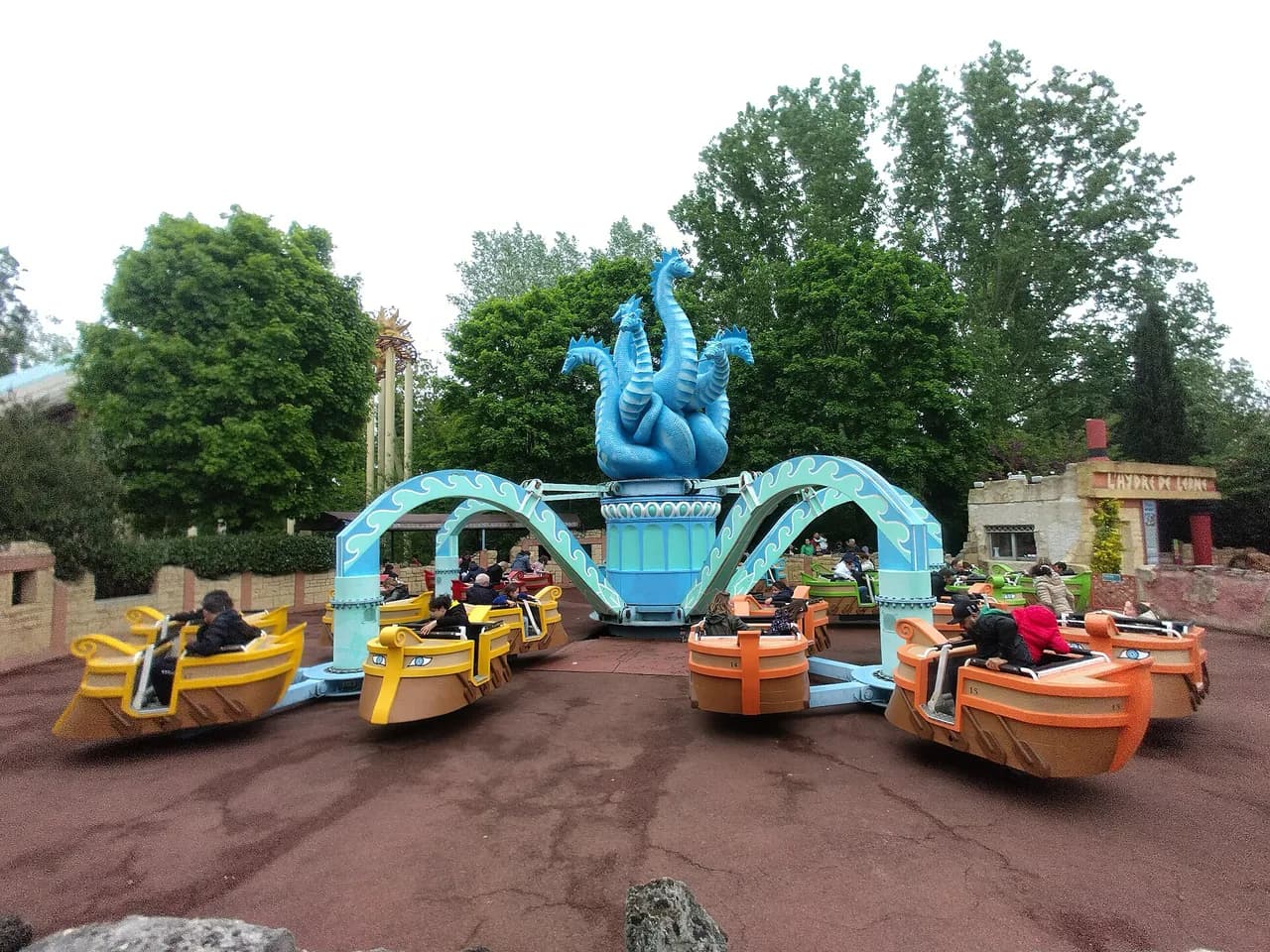
Discobélix is a Zamperla flat ride from 2016 with a 1.2 m minimum, and L'Hydre de Lern is a Schwarzkopf flat ride with the lowest threshold at 1.0 m, which makes it accessible to most primary-school children. Chez Gyrofolix is a Zierer flat ride in the newer part of the park.
Flat rides matter on a busy day because their queues move differently from coaster queues, and they often absorb a group when the coaster waits climb. Pairing a flat ride with a nearby coaster keeps everyone moving without long walks between stops.
Which rides to prioritise on a busy day
Start with Toutatis and OzIris, the two coasters most likely to build long waits, then move to Goudurix and Tonnerre 2 Zeus before lunch. The family coasters and water rides hold steadier waits through the middle of the day, so they suit the afternoon when the headline queues are at their worst.
If the group splits by height, use Pégase Express and Trace du Hourra as the meeting points, since both sit at 1.3 m and work for older children and adults alike. Riding them once together early means the split group still shares a coaster before separating.
Newest rides and what they add
The most recent additions were Toutatis, the Chez Gyrofolix flat ride and the Spanglier d'Or playground, which between them added a headline coaster for thrill-seekers and two attractions aimed at younger visitors. That combination is typical of how the park has expanded: a major coaster paired with family capacity so the whole group gains something from the investment.
Before Toutatis, the most recent coaster was Pégase Express in 2017, followed by the Attention Menhir simulator in 2019. That pattern of coasters roughly every few years makes the newest ride the reliable draw on any first visit, so budget time for it early.
Accessibility, baby care and rider swap
Parc Astérix publishes its own accessibility and rider-swap arrangements, and the practical version is to ask at guest services on arrival for the current procedure rather than relying on secondhand descriptions. Families with a child too small for a coaster can use rider swap so both adults ride without queuing twice, and the park's baby care facilities sit alongside the main family zones.
Height checks happen at each ride entrance, so the published minimum heights are the ones that matter on the day. The official Parc Astérix site lists each ride's current requirements alongside its accessibility guide, which is where to confirm anything that affects your group before you travel.
Quieter days and how the season affects ride availability
Parc Astérix operates a seasonal calendar rather than year-round opening, and the busiest periods track French school holidays and weekends. Midweek days outside school holidays are consistently the better bet for getting through the headline coasters, while peak summer weekends push waits on Toutatis and OzIris to their longest.
The official Parc Astérix calendar is the only reliable source for which days the park opens in a given month, and it also shows the seasonal events that reshape the ride mix. Check the calendar before fixing dates, since an out-of-season Tuesday may simply not be an operating day.
Getting there and planning your day
The park sits at Plailly in the Oise, north of Paris, and the standard route is by road from the capital or by the shuttle coach that runs from the city. Drivers reach it via the A1 motorway, while visitors combining the park with a Paris trip often use the RER B and the connecting shuttle service; the parc astérix guide sets out both options with journey times.
Visitors flying in typically arrive via Roissy CDG Airport, which is closer to Plailly than central Paris and works well for a park-first itinerary. On-site hotels let you start earlier, and staying over also removes the morning transfer on the day you tackle the coasters.
Buy parc astérix tickets before you travel so you can go straight to the gate, and choose between dated and flexible options depending on how fixed your plan is. The ticket comparison sets out what each type includes and how the park prices different dates.
Plan Your Parc Astérix Day
Build the day around two or three headline coasters, then fill the rest with family rides and water attractions rather than trying to cover everything. Toutatis and OzIris first, Goudurix and Tonnerre 2 Zeus before lunch, then the water rides and family coasters in the afternoon works for most groups.
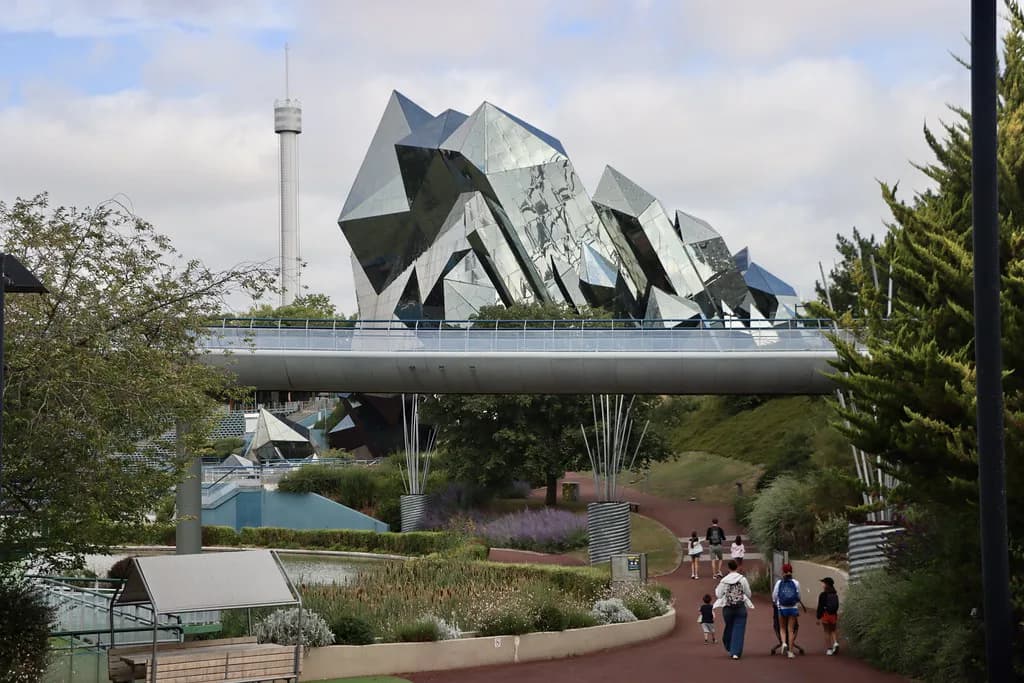
If you are weighing this park against other options, the neighbouring alternatives include the Disneyland Park near Paris and Futuroscope further south, both of which suit different age mixes and trip lengths. For a French park day built on big coasters plus family attractions, Parc Astérix holds its own, and the Disneyland Paris rides and Futuroscope rides comparisons help you judge which fits your group.
Explore more Parc Astérix guides
Frequently Asked Questions
What are the best Parc Astérix rides for thrill-seekers?
Toutatis is the headline for anyone chasing speed and inversions, with OzIris close behind for its inverted layout and five inversions. Goudurix adds seven inversions and the park's strictest height requirement, while Tonnerre 2 Zeus gives a wooden coaster alternative with a lower threshold of 1.2 m. Ride these four before lunch if you want the shortest waits.
Which Parc Astérix rides suit young children?
SOS Numérobis and Le Vol d'Icare are small coasters with a 1.2 m minimum that give younger riders a real coaster experience. Le Défi de César, Les Espions de César and L'Aventure Astérix list no minimum height, and the Spanglier d'Or playground absorbs time between rides. Pégase Express at 1.3 m is the shared family coaster for older siblings and parents.
Are there water rides at Parc Astérix?
Yes. Menhir Express is the log flume with a 1.3 m minimum and a typical splashdown, while L'Oxygénarium is a shorter, brisker water ride. La Rivière d'Elis is the gentler boat ride for families with younger children, and Epidemaïs Croisière is a calm ten-minute boat circuit with no listed height restriction. Ride them in the morning or late afternoon when the queues are shorter.
How should a group split by height plan the day?
Measure children in advance against the park's bands, which run from 1.0 m on L'Hydre de Lern through 1.2 m and 1.3 m up to 1.4 m on Goudurix. Plan around the lowest height in the group, then use rider swap at the taller coasters so both adults ride without queueing twice. Pégase Express and Trace du Hourra, both at 1.3 m, make natural meeting points for mixed-age groups.
Sources
Notes for your next park day
Optional updates to our park guides.
You might also like
Continue reading
More guides you'll find useful