Tibidabo Opening Times: Park Season and Closed Days Guide
Tibidabo's amusement park keeps seasonal hours while the free Panoramic Area opens for most of the year. See how the calendar works before you plan a visit.
On this page
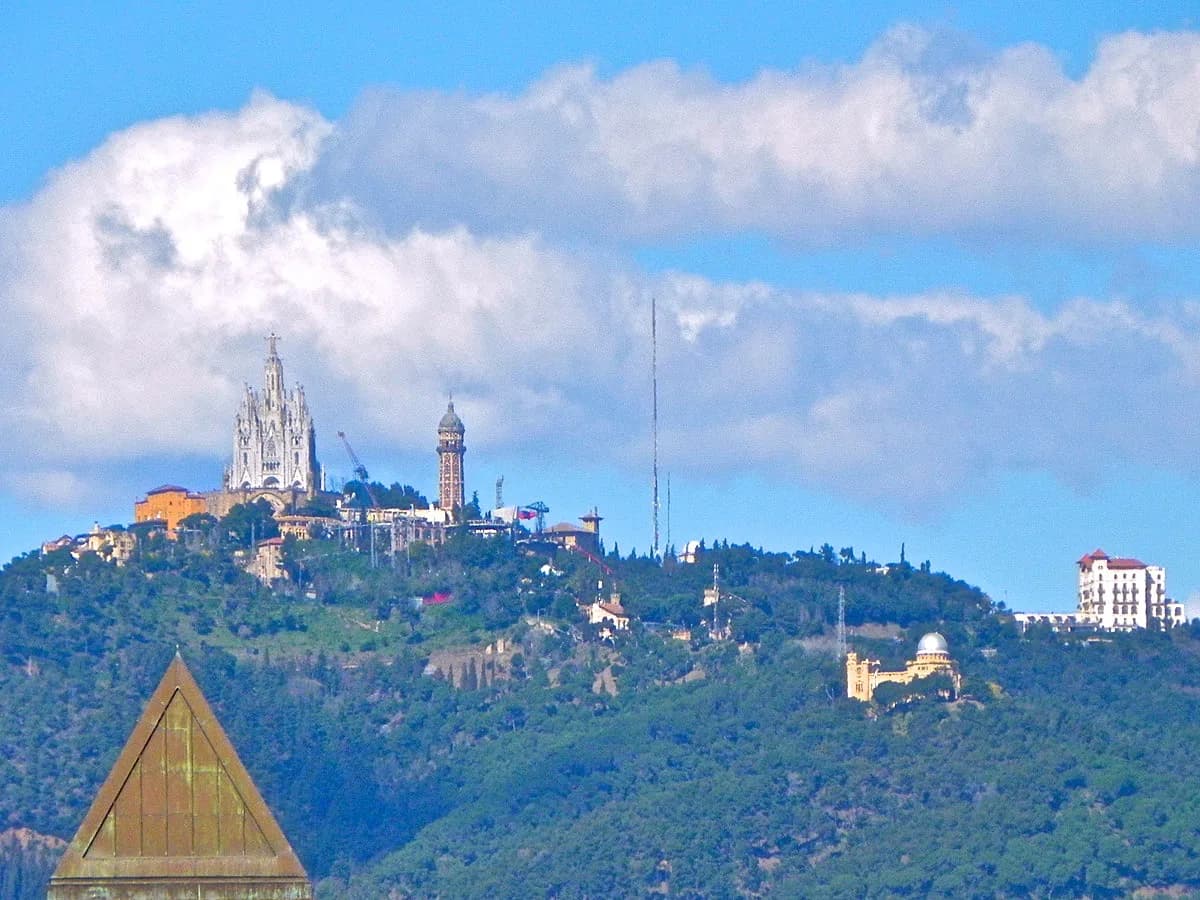
Tibidabo sits on the highest point of Barcelona's Serra de Collserola, and the mountain holds two separate attractions with two separate sets of hours. The amusement park runs a seasonal calendar, while the Panoramic Area is free to enter and open for most of the year. Knowing which of the two your travel dates fall into is the single most useful thing to settle before booking anything.
This guide explains how the season is usually structured, how to read the official calendar, and how the funicular and shuttle buses shape your arrival time. It is built for families and photographers working around a short Barcelona break rather than a full resort day.
What is open at Tibidabo: the amusement park and the free Panoramic Area
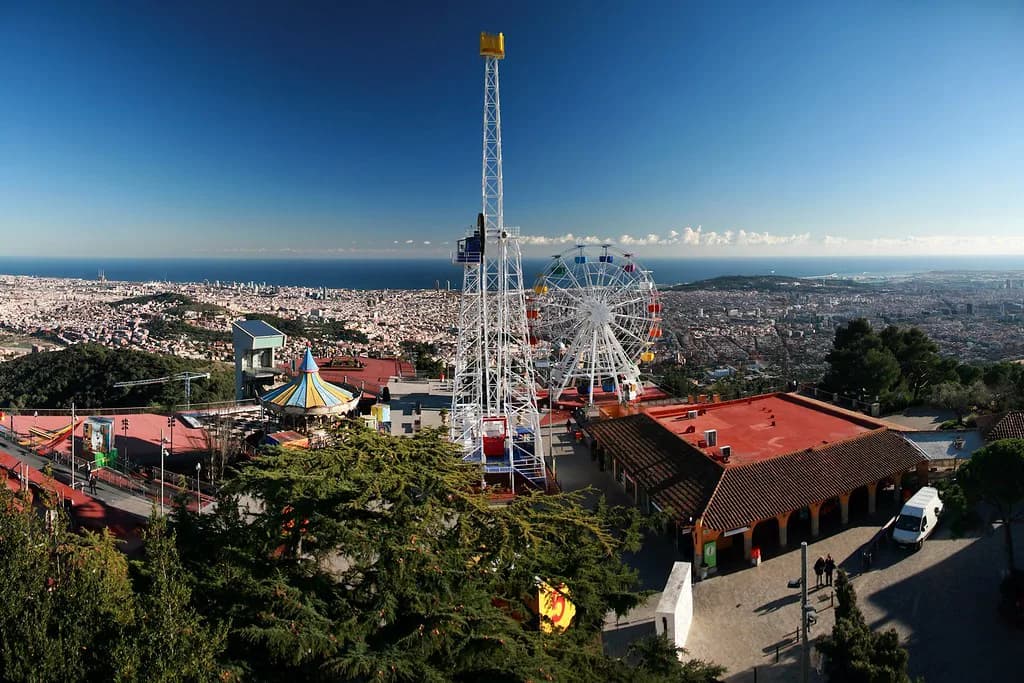
The summit is not one gate but two distinct zones. The amusement park is the ticketed attraction with the classic rides, and the Panoramic Area is an open terrace at around 500 metres above sea level that you can walk into without a wristband. The Panoramic Area has its own access and operates independently of the full amusement park.
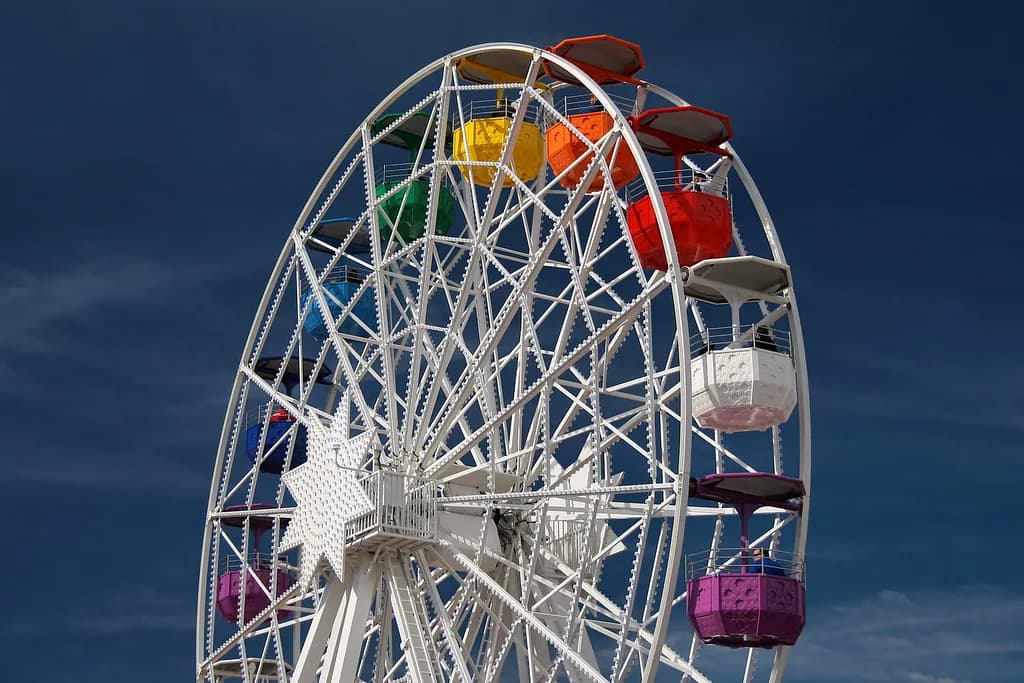
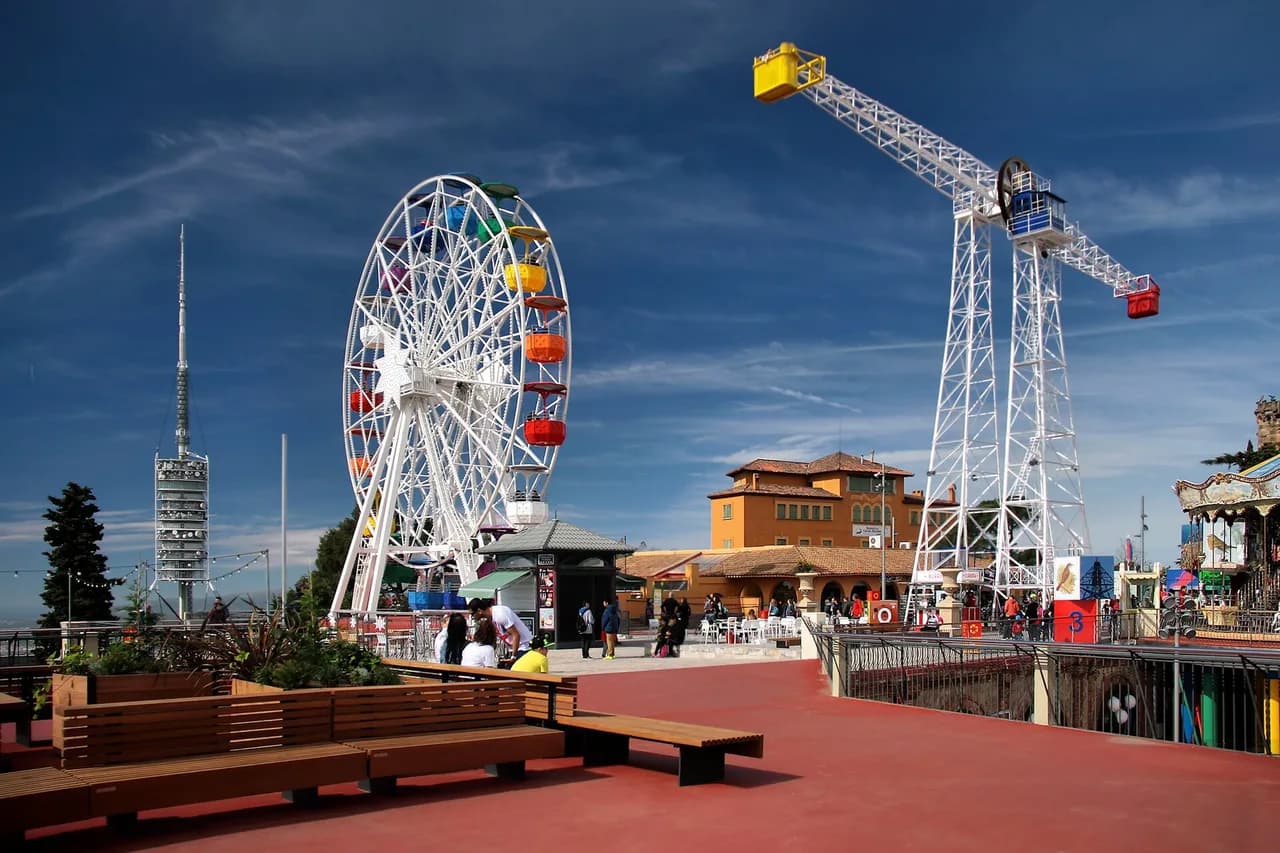
That separation matters when you are planning around opening times, because a date when the rides are shut can still be a good day on the mountain. Entry to the Panoramic Area is free and rides there need either the Emblematic Rides Pass or individual tickets bought on site. If your dates only overlap the Panoramic Area, you can still ride the Ferris wheel, walk the terraces and take in the skyline.
How the Tibidabo season works: weekends in low season, daily in high season
Tibidabo's amusement park follows the pattern of a historic city park rather than a year-round resort: expect fuller daily operation in the warmer high season and a reduced pattern of weekend opening in the low season. The Panoramic Area stays accessible for most of the year even when the rides are not running.
The practical consequence is that a midweek visit in a shoulder month may give you the views but not the rides. If riding is the point of the trip, anchor your dates to a period the calendar shows as fully open, and treat the quieter months as a photography or viewpoint outing instead. The same seasonal logic applies when comparing calendars, as with Parque Warner Madrid opening times, where the grid of open days matters more than a single hours line.
The official calendar and how to read it before you travel
Tibidabo publishes a live calendar that shows which days the amusement park operates, and it is the only reliable source for the hours on your specific dates. Read it as a month grid, not a general opening-hours line, because the pattern of open days changes through the year and around events.
Check the grid against your flight or train dates before you commit to accommodation near the mountain, and note that a full-day listing on the calendar means the rides are scheduled, not that every attraction runs all day. The one page to bookmark is the official Tibidabo site, where the calendar and any scheduled closures appear first.
Typical opening times and why they shift through the year
Opening times on the mountain shift with daylight and season, which is why a fixed 'opens at' line is misleading. The Panoramic Area is an outdoor terrace, so its useful hours track the light: early morning gives soft, quiet conditions and late afternoon gives the warm golden-hour tones that photographers plan around.
Rather than memorise a time, build your day around the shape of the light and the published calendar for your date. On a short October day the usable window on the summit is much tighter than in midsummer, so a late arrival can leave you with a rushed visit.
Opening hours on the Panoramic Area and the attractions inside it
The Panoramic Area is the flexible part of Tibidabo: free to enter, open for most of the year, and separate from the amusement park's ticketed gates. Its layout is mostly paved and flat, so it works well for a short stop of an hour and a half to two hours if you are combining it with somewhere else in the city.
Inside the zone, the rides and the Museum of Automats each have their own height rules. Giradabo, the Ferris wheel at the top of the mountain, requires 130 cm unless accompanied, Avió and Talaia both start at 120 cm, Carrusel, Tasses and the Museum of Automats sit at 90 cm, Pony Rodeo at 100 cm and the Beyond virtual reality experience at 140 cm.
Beyond runs on limited slots distributed on the day, so treat it as an early stop rather than a late add-on. If you are mapping the terraces and ride positions before you go, a Tibidabo map helps you see how the zones connect.
Getting up the mountain: Cuca de Llum funicular and TibiBus shuttles
The Cuca de Llum funicular is the fastest and most scenic way up, connecting Plaça Doctor Andreu with the summit in just a few minutes through forest. It is the route most visitors should build their timing around, because everything downstream depends on when you reach the top.
Two shuttle buses feed the lower funicular station rather than the summit itself. TibiBus T2B runs from the BSM Sant Genís–Vall d'Hebron car park, which suits drivers parking at the city edge, and TibiBus T2C starts at Plaça Kennedy, a useful public transport connection point. Both leave you at the funicular, so allow for that final leg.
Drivers can go all the way to the Top of Tibidabo car park on Camí de Vallvidrera al Tibidabo, a short walk from the Panoramic Area. Spaces are limited and fill quickly at weekends and on holidays, which is the main argument for the funicular on a Saturday.
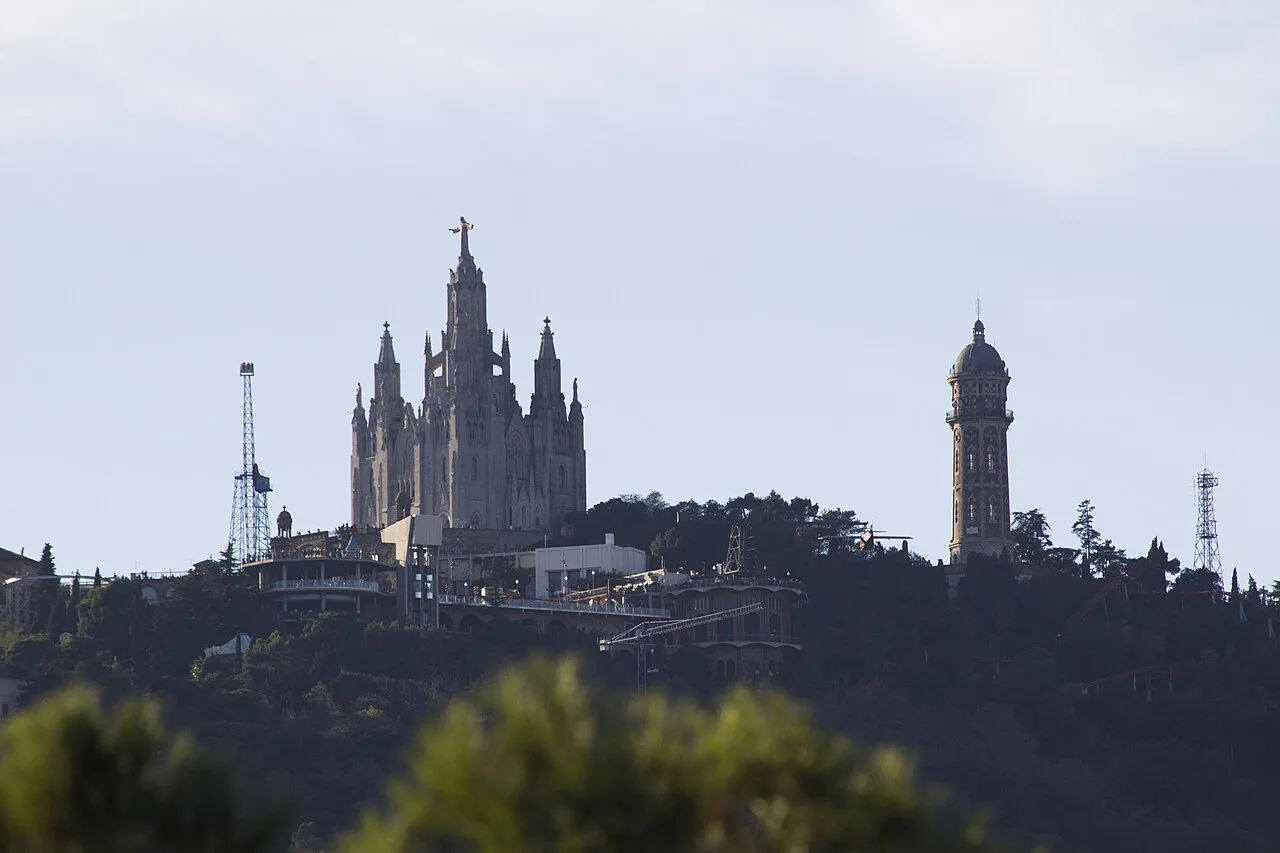
Arrival timing: first hour after opening, tour bus peaks and golden hour
The first hour after opening is the best window for empty rides and clear photographs, and tour buses typically arrive mid-morning. Arriving at opening rather than late morning changes the character of the visit, particularly on the Ferris wheel and the upper terraces.
Golden hour, the first and last hour of sunlight, is the strongest time for photographs across the skyline. Early morning gives soft light and thinner crowds, while late afternoon washes the terraces in warm tones. Either end of the day beats the middle.
Quieter days and months, including the February weekends
Weekends in February are a quieter stretch, with crisp mountain air and low-angle sunlight that suits photography. It is a good month for the Panoramic Area if your priorities are views and atmosphere rather than a full ride session.
Outside those windows, weekends and holidays are the busiest on the mountain, and coach traffic concentrates in the middle of the morning. Building your day so you are on the first funicular gives you the terraces and the quieter corners near the Museum of Automats before the groups arrive.
Weather and seasonal closures on an exposed mountain-top park
Tibidabo is an exposed summit, and wind is the practical factor in ride operation up there. The Talaia observation arm lifts riders into open air more than 550 metres above sea level, so a breezy day makes the ascent feel considerably more dramatic.
Build a weather margin into your plan rather than treating a summit visit as fixed. If the mountain looks marginal on your chosen day, swap it with an indoor Barcelona day and take Tibidabo on a clearer one, keeping the calendar open on your phone.
Rides that suit young children in the Panoramic Area
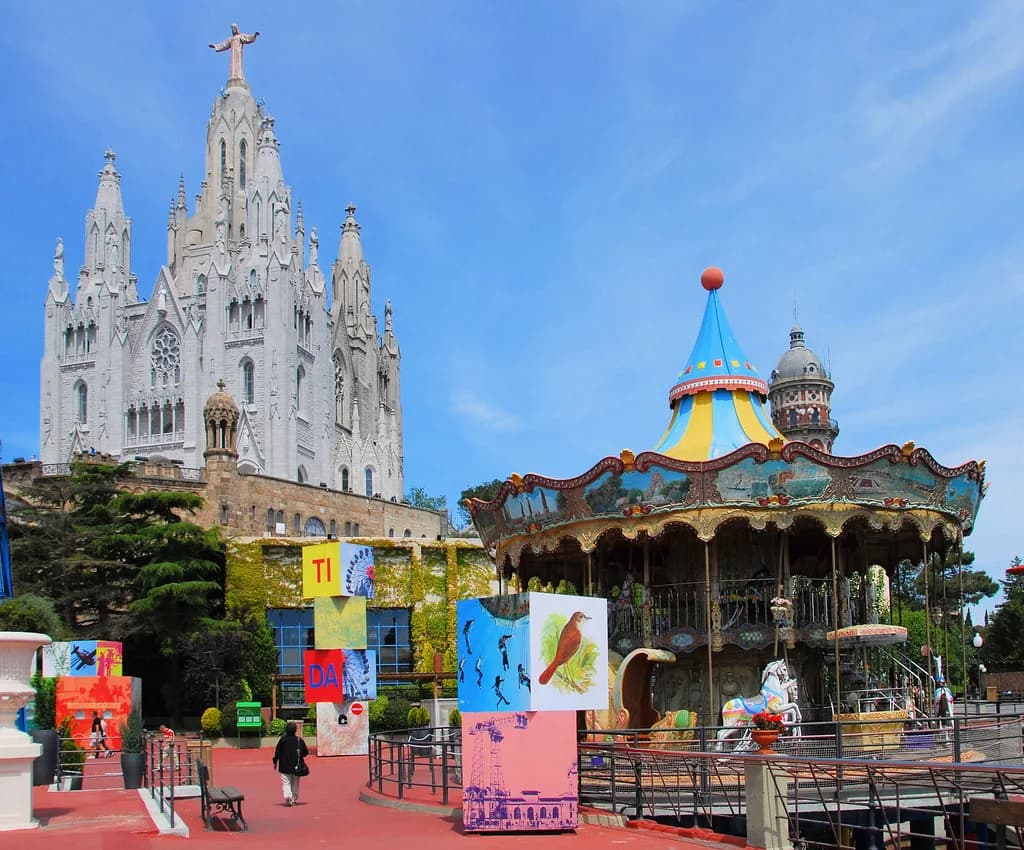
The Panoramic Area carries the gentler, older rides, which makes it the natural zone for young children. Carrusel's painted horses and vintage carriages rotate at 90 cm with an accompanying adult, Pony Rodeo runs a slow monorail loop for small riders up to 140 cm, and Rio Grande is a calm miniature train around the zone.
The Museum of Automats is indoor and quiet, with hand-cranked musicians and moving scenes that date from before digital technology. That makes it a useful reset point when younger children need a break from spinning and noise.
The Fonts Interactives splash zone has no height restriction and needs no accompaniment, with fifty fountains that fire every half hour. On a warm day it soaks children quickly, and there are no water fountains in the Panoramic Area itself, so bring drinks up with you.
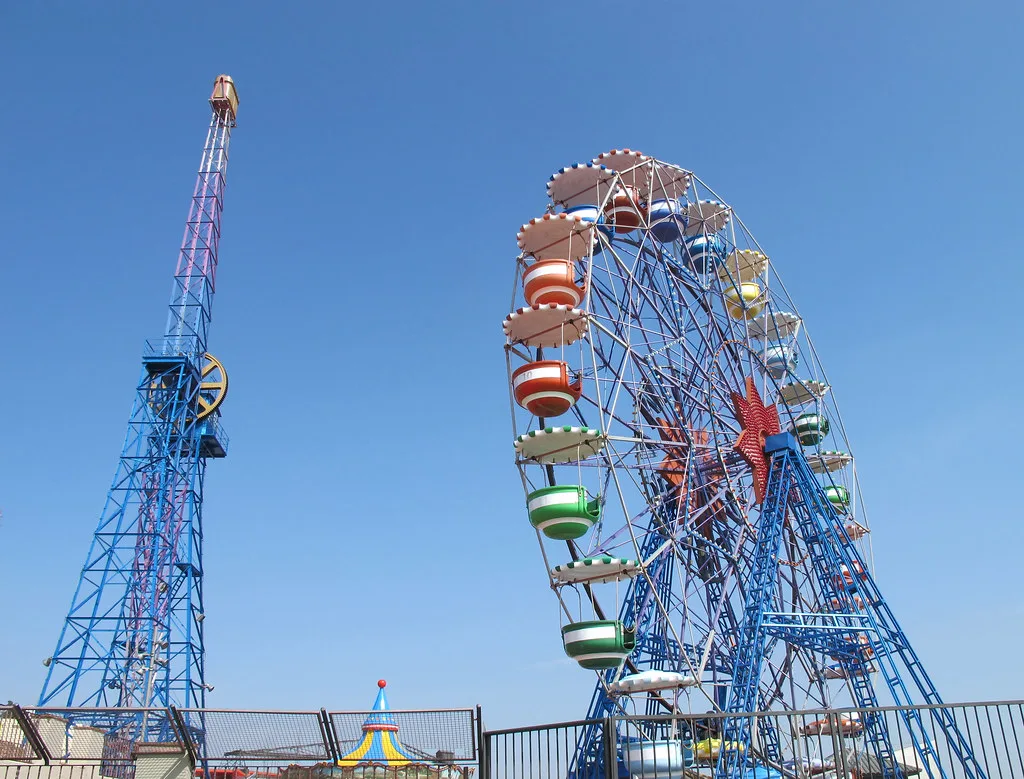
Thrill rides and height limits in the Panoramic Area
Thrill-seekers get a small but distinctive set here, and the height rules are strict. Talaia requires 120 cm with no unaccompanied access, Avió starts at 120 cm, and Beyond is 140 cm with no exceptions. Giradabo at 130 cm is a straightforward Ferris wheel rather than a thrill ride.
Accessibility varies across the same rides: Giradabo and the Museum of Automats are adapted for reduced mobility, while Talaia, Avió, Carrusel, Tasses, Pony Rodeo, Rio Grande and Beyond are not wheelchair accessible. Plan the circuit so that anyone in your group using a wheelchair has a companion covering the rest.
Tickets and passes that fit a short or long visit
The Emblematic Rides Pass gives unlimited access to the Panoramic Area's iconic rides, a round trip on the Cuca de Llum funicular and entry to the park grounds, though not the rides on the lower levels. Single ride tickets are sold on site if you only want one or two attractions.
For a short visit built around the views, free entry plus a couple of individual ride tickets is usually the sensible shape. For a longer day, the pass removes the small decisions and includes the funicular both ways, which matters if you are not driving.
Restaurants, snack bars and breaks in the Panoramic Area
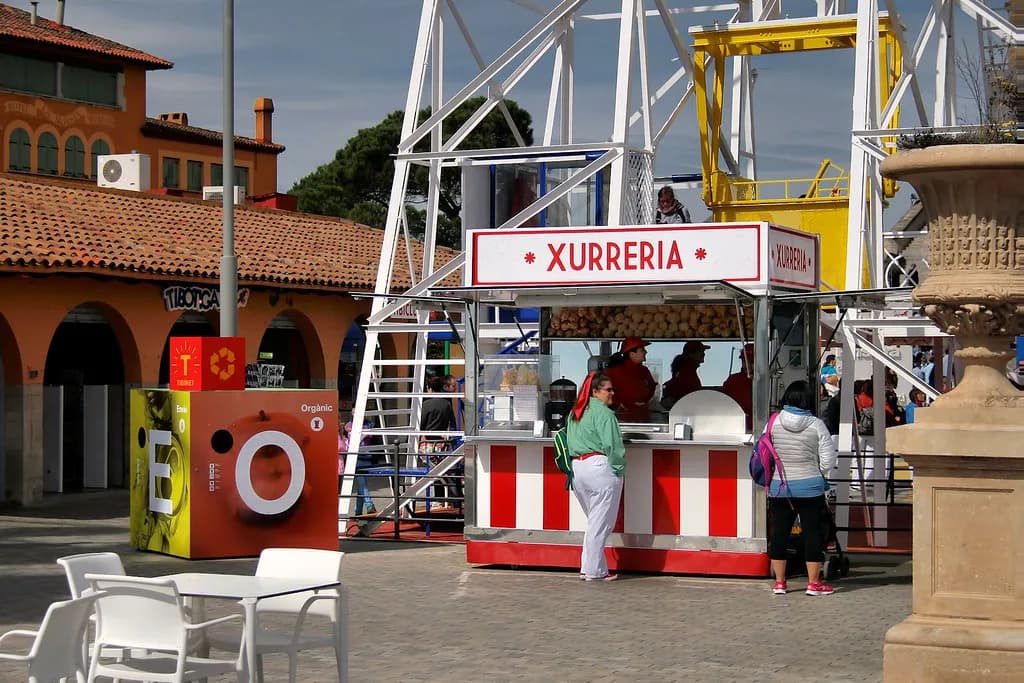
Snack bars and cafés with outdoor seating sit among the terraces, serving sandwiches, pastries, coffee and local drinks with the view built in. That makes a sit-down lunch on the mountain easy to fit around ride time rather than a separate excursion.
Because there are no water fountains in the Panoramic Area, buy or bring drinks before riding up on the Cuca de Llum. For a fuller choice of dishes with more planning detail, the Tibidabo Food Guide covers what to expect across the site.
Pairing Tibidabo with Park Güell or Bunkers del Carmel
The Panoramic Area fits neatly alongside Park Güell or Bunkers del Carmel on the same day, since a couple of hours covers the rides and the viewpoint comfortably. Park Güell is the closest headline comparison for most visitors, and both are best done in sequence rather than rushed back to back.
Arrange the order around the light and the coach traffic: take Tibidabo in the early morning or late afternoon and slot the other stop into the middle. That way the mountain gets your best hours and the city stop absorbs the busy period.
Where to Find Live Hours on the Day of Your Visit
Tibidabo's hours are set by a published calendar that changes through the year, with the free Panoramic Area open far more often than the ticketed amusement park. Plan your dates against that calendar and you avoid the common disappointment of arriving on the summit to find the rides closed.
For the wider context on zones, rides and planning a day on the mountain, the Tibidabo guide brings it together. The single page to check on the morning of your visit is the official Tibidabo site, where the calendar for that day is listed.
Explore more Tibidabo guides
Frequently Asked Questions
Is the Tibidabo Panoramic Area free to enter?
Yes. Entry to the Panoramic Area is free and you can walk the terraces, enjoy the skyline and visit the Museum of Automats without a ticket. The rides need either the Emblematic Rides Pass or individual ride tickets sold on site, and the zone has its own access independent of the main amusement park.
How do I get to Tibidabo from Barcelona?
The fastest and most scenic approach is the Cuca de Llum funicular from Plaça Doctor Andreu, which reaches the summit in a few minutes. TibiBus shuttles serve the lower funicular station: T2B from the BSM Sant Genís–Vall d'Hebron car park and T2C from Plaça Kennedy. Drivers can use the Top of Tibidabo car park on Camí de Vallvidrera al Tibidabo.
How long should I spend in the Panoramic Area?
Around one and a half to two hours covers the rides and the viewpoint comfortably, which makes the zone easy to pair with Park Güell or Bunkers del Carmel on the same day. Visiting in the first hour after opening gives thinner crowds and better photographs.
When is the quietest time to visit Tibidabo?
Weekends in February are a quieter stretch, with crisp air and low-angle light suited to photography. In most months the first hour after opening is the calmest part of the day, since tour buses tend to arrive mid-morning.
Are the Tibidabo amusement park rides open all year?
The amusement park follows a seasonal calendar, with fuller daily operation in high season and a reduced pattern in low season, while the Panoramic Area stays open for most of the year. Check the official Tibidabo calendar for the days that apply to your dates.
Are the Panoramic Area rides suitable for wheelchair users?
Some are. Giradabo and the Museum of Automats are adapted for reduced mobility, while Talaia, Avió, Carrusel, Tasses, Pony Rodeo, Rio Grande and Beyond are not wheelchair accessible. The zone itself is largely paved and flat.
Sources
Notes for your next park day
Optional updates to our park guides.
You might also like
Continue reading
More guides you'll find useful