Tibidabo Fast Track: Skip-the-Line Guide and Advice
How fast-track queue-jump works at Tibidabo, where free entry stops and ride tickets begin, and when an express pass pays off for families and thrill-seekers.
On this page
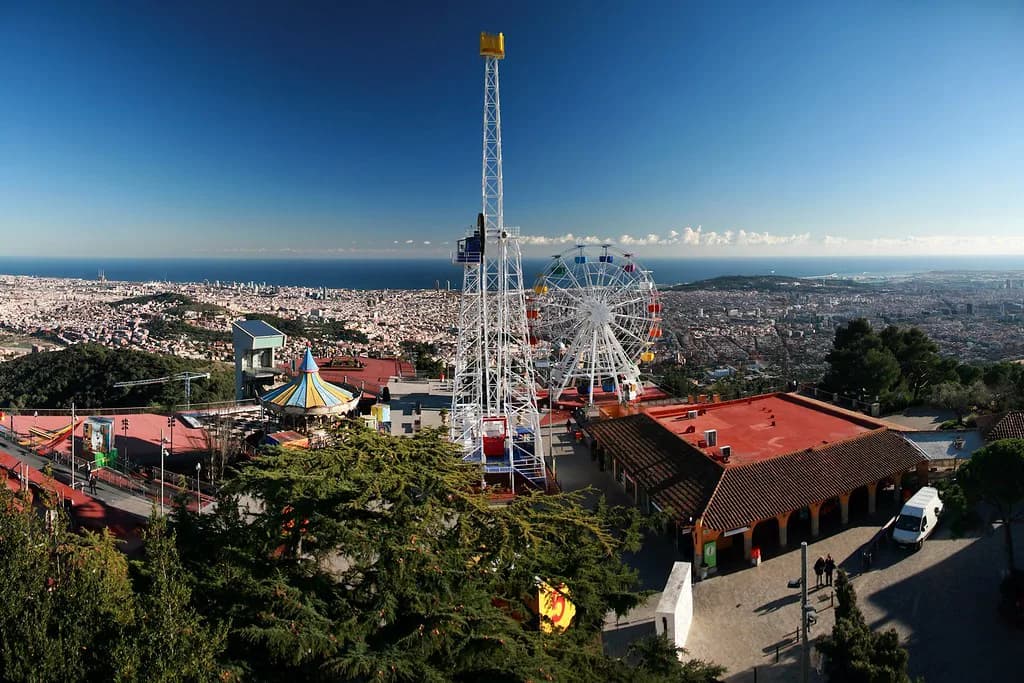
Tibidabo Amusement Park sits 512 metres up in the Collserola range above Barcelona, a century-old hilltop park where historic rides, puppet theatres and a haunted house share one of the best city views in Catalonia. It is a compact, terraced park rather than a sprawling resort, so a queue-jump purchase has to be judged against a short ride list and a day that often mixes rides with sightseeing. This guide sets out how ticketing and queue-skipping actually work here, which zones reward an add-on, and how arrival by funicular or bus changes the maths.
What fast track means at Tibidabo
At Tibidabo, the queue-jump conversation starts with a structural quirk: the park is not one gated circuit. It is arranged across six levels, five of which are open to visitors, with the third level given over to technical facilities. Because each level groups its own rides, bars and cafés by theme, you move between them rather than following a single loop, and a short queue at one level does not tell you anything about the next.
That layout matters for anyone weighing a paid queue-skip product. On a single-path park, an express pass buys you time across dozens of rides in sequence. At Tibidabo it buys time within clusters, and only on the attractions included in the product you buy. Treat any fast-track offer as a supplement to a ride ticket, not a replacement for one, and read the inclusion list ride by ride before paying.
Ticket types that include ride access versus the free Panoramic Area
The most useful distinction for budgeting is between the Panoramic Area and the paid zones. The Panoramic Area, on the park's sixth level, recreates the Tibidabo of a century ago and holds emblematic rides such as the Avió, Giradabo and Talaia. Entry to this zone is free and you can stroll it without a ticket, but riding its attractions requires payment, so a family that only wants the views and the atmosphere pays nothing at the gate.
For the rest of the park, you need a ride ticket covering the other levels, and the official Tibidabo site is where the current ticket types, dated versus flexible options and any bundled products are listed. Because admission is sold in more than one format, check what your chosen ticket includes before adding anything else, particularly if you plan to visit only for an afternoon.
Fast-track and express products: how they work on the day
Where a queue-jump product is offered, it works the way most European park express passes do: you buy it alongside or on top of admission, then use a separate entrance at participating attractions instead of joining the standard line. Its value depends entirely on the inclusion list and on how busy the park is that day, so it makes sense to look at the product description on the official site alongside the day's opening hours before deciding. For a comparison with a resort-style park where the same maths works out very differently, see how the Siam Park fast track is priced and when it pays.
Buying in advance through the park's own channels also removes the ticket-window stop. The park, the funicular and the Tramvia Blau accept contactless payment for tickets, so you can tap a card or phone at the gate, and the Tibidabo Live app shows live ride wait times alongside event schedules and weather and lets you buy tickets on your phone.
Arriving with a ticket already on your phone changes the shape of the morning: you walk straight to the first level that suits your group instead of queueing at a booth. That saved half hour at opening is often worth more than an express add-on later, especially on a half-day visit.
Which rides and zones make queue-jump worth buying for
The zone most likely to justify a queue-skip is 666 on level four, home to the haunted house Hotel 666 aimed squarely at visitors who want a scare. Thrill-seekers heading straight there at opening will find the shortest lines of the day; anyone arriving at midday should expect the longest waits in the park to be here and at the other high-demand attractions.
Level five, Somnis, and level two, Xerinola, are where families with children tend to spend their time. Somnis holds the Marionetarium puppet theatre and CreaTibi by LEGO Education, while Xerinola has the Dididado 4D cinema. Theatres and cinemas run to show times rather than queues, so a queue-jump product does little for them; plan around the next show instead.
Read any express offer ride by ride before buying. If its participating attractions are mostly on levels your group will not visit, or are gentle rides that turn over quickly, the money is better spent on a second drink at a terrace with a view.
Splitting the day by level: Somnis, 666, Xerinola and the Panoramic Area
A workable plan is to ride the paid levels in the morning and save the Panoramic Area for the middle of the day, when queues elsewhere are longest and the free zone absorbs an hour without cost. The Panoramic Area is also where the historic rides sit beside the park's best-known city views, so it doubles as a rest stop rather than a pure ride session.
If your group splits between thrill-seekers and small children, the level structure works in your favour: one adult can take older children to Hotel 666 while the other stays with younger ones at CreaTibi, then meet at a café on the same level. Queue-skip purchases should follow the same split, bought only for the people who will actually use the covered rides.
Suits whom: young children, teens and thrill-seekers
For families with under-fives, the park's own ride list is the deciding document, since height requirements determine what a child can board and therefore whether any express product is usable. Puppet shows, the LEGO space and the 4D cinema give young children plenty to do without competing for ride seats at all.
Teens usually want the haunted house and the faster attractions, which are concentrated on the mid-levels. Couples and mixed groups often get the most out of Tibidabo by treating it as a viewpoint with rides attached, buying ride access for the headline attractions and skipping the queue-jump add-on entirely.
Quieter days and times when you may not need fast track
Opening hours at Tibidabo vary through the year, and the park publishes a calendar rather than running daily year-round, so the day you choose matters more than any add-on. School holidays and weekends fill the terraces first; a midweek date in a shoulder month usually means the standard lines move quickly enough that a paid skip adds nothing.
Seasonal programming pulls its own crowds. Tibidabo runs marked Halloween and Christmas periods, and those weeks combine high demand with limited ride capacity, so they are the dates when a queue-skip product is most defensible.
The park's own app is the practical tool for the day itself: it shows live ride wait times, which tells you in real time whether the line you are looking at is a ten-minute wait or a forty-minute one. That makes it easier to decide on the spot whether to pay for a skip or simply come back later.
Getting there: Cuca de Llum funicular, FGC and Tibibus
The climb is part of the visit. The Cuca de Llum funicular runs from Plaça Doctor Andreu to the top of the mountain in about four minutes, replacing the old Tram Blau route that once carried visitors up past modernist buildings. Because the funicular is a fixed-capacity shuttle, arriving early avoids a second queue before you have even reached the gate.
By rail, take FGC line L7 from Plaça Catalunya to Avinguda Tibidabo, then continue by the historic Tramvia Blau to Plaça del Doctor Andreu, where the funicular takes over for the final climb. Alternatively the T2 Tibibus runs from Plaça Catalunya; its fare is reimbursed when you buy a park ticket, so keep the receipt if you plan to enter.
By car, the drive up the Collserola mountain road is straightforward and the views open out as you climb, though parking and access arrangements are worth fixing before you set off. The full transport chain, with journey times and ticketing for each leg, is set out in the dedicated route guide.
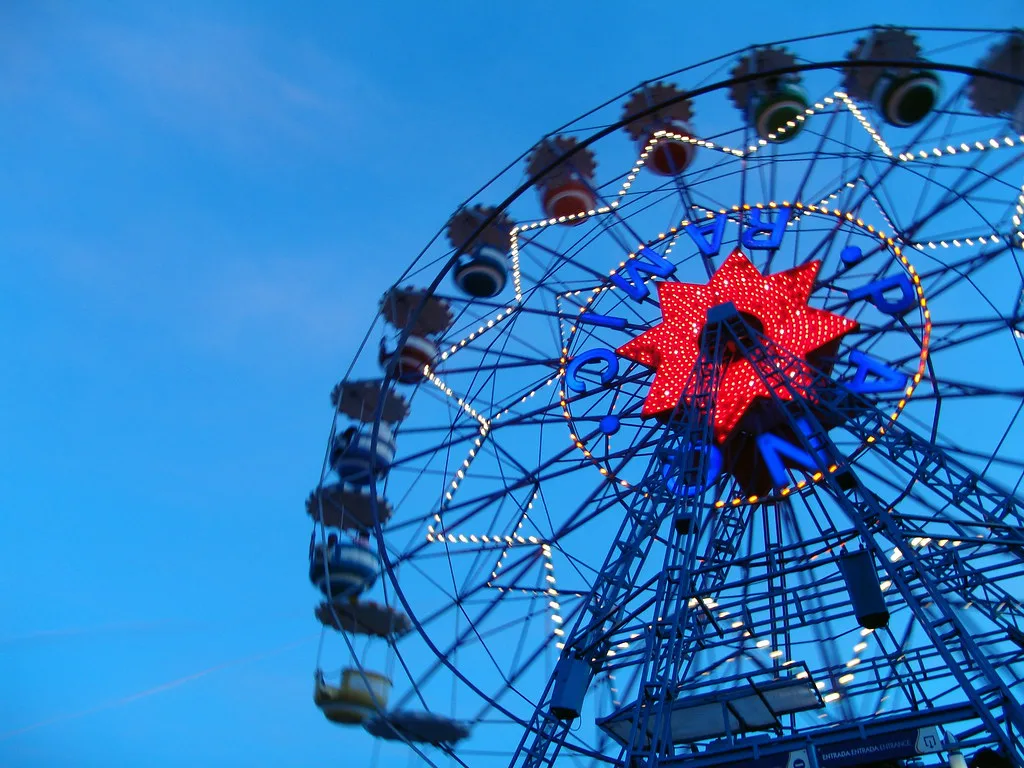
Buying tickets: contactless entry, app and official calendar
Tibidabo's ticketing has moved towards tap-and-go. Contactless payment is accepted for the park, the funicular and the Tramvia Blau, and the Tibidabo Live app lets you buy on your phone, which together remove most reasons to stand in a sales line.
Before booking, use the official Tibidabo site as your single source for the day's calendar, ticket formats and any express product currently on sale, since these change with the season. It is the only place where the inclusion list for a queue-skip product on a given date is authoritative.
Practical notes: ride access fees in the Panoramic Area and on-site food
The Panoramic Area is free to enter but its rides are not, so budget for individual ride fees there rather than assuming the free zone means a free ride session. For a family, paying per ride on the historic attractions can work out cheaper than a full ride ticket if the plan is a short stroll and one or two goes on the Avió.
Each level has its own bars and cafés, which means you can eat beside the zone you are riding rather than walking back to a central hub. Menus and restaurant options across the levels are gathered in one place if you want to plan where to stop.
If the hilltop air and the climb leave you wanting a full day in the city afterwards, staying near the FGC line or Plaça Catalunya keeps the journey simple in both directions. A quick comparison of areas and properties makes the choice easier.
Plan Your Visit
At Tibidabo, the free Panoramic Area, the five ride levels and the four-minute funicular climb make a fast-track purchase a narrower decision than at a big resort: buy it only if the participating rides match the levels your group will actually ride, and buy it for a peak date rather than a quiet one.
Sort the day in this order: pick a date from the park's calendar, choose the ride ticket that matches your group, add queue-skip only for the people heading to Hotel 666 and the faster attractions, and arrive by funicular or Tibibus ahead of the opening.
Explore more Tibidabo guides
Frequently Asked Questions
Does Tibidabo have a fast-track queue-jump ticket?
Tibidabo sells ride access for its paid levels, and queue-skip products are offered as an add-on rather than a standalone entry ticket. What each product covers, and on which dates it is sold, is set out on the official Tibidabo site, so read the inclusion list for the attractions your group will actually ride.
Can I visit Tibidabo for free?
Yes, partly. The Panoramic Area on the park's sixth level is free to enter and holds historic rides including the Avió, Giradabo and Talaia, but riding those attractions requires payment. The other open levels of the park need a ride ticket.
Which part of Tibidabo is best for teenagers?
Level four, known as 666, holds the Hotel 666 haunted house and is the obvious draw for teens and thrill-seekers. Xerinola on level two, with its 4D cinema, suits a wider age mix, while Somnis on level five is aimed at younger children.
How do you get to Tibidabo from central Barcelona?
Take FGC line L7 from Plaça Catalunya to Avinguda Tibidabo, continue on the historic Tramvia Blau to Plaça del Doctor Andreu, then ride the Cuca de Llum funicular to the top in about four minutes. The T2 Tibibus from Plaça Catalunya is a direct alternative.
Is the Tibibus fare included in a Tibidabo ticket?
The Tibibus fare is reimbursed when you buy a park entry ticket, so keep your bus receipt if you intend to go into the paid ride areas. Contactless payment works on the bus, the funicular and the park itself.
When is a queue-jump product worth buying at Tibidabo?
It makes most sense on peak dates such as school holidays and the park's Halloween and Christmas periods, and for groups who will concentrate on the haunted house and faster rides. On a quiet midweek day in a shoulder month, standard lines usually move quickly enough to skip the add-on.
Can I skip the ticket window at Tibidabo?
Yes. Contactless cards and phones are accepted for tickets at the park, the funicular and the Tramvia Blau, and the Tibidabo Live app allows buying tickets on your phone while also showing live ride wait times and the day's schedule.
Sources
Notes for your next park day
Optional updates to our park guides.
You might also like

Continue reading
More guides you'll find useful