Theme Parks in Germany: The Best Parks and Who Each Suits
Compare Germany's biggest theme parks by location, theming and ride character, from Europa-Park and Phantasialand to Heide Park, and see who each suits best.
On this page
Germany has more than 30 amusement parks, clustered particularly around Hanover, Frankfurt, Munich and Stuttgart, and most are built as full theme parks rather than plain ride fairs. That spread gives you a genuine choice: a country-themed resort in the south-west, film studios near the Ruhr, safari animals plus coasters in Lower Saxony, or an 1880s Swabian village in Baden-Württemberg. The parks below are grouped so you can pick by travel base and by who is in your group, not by hype.
Most of these parks sit outside city centres, where land is available, so plan the final leg by car, shuttle or regional train rather than assuming a city-centre location. Many have grown from day-trip destinations into short-break resorts, with themed hotels, holiday homes and campsites on or beside the park. That matters if you want two days in a park without repeating a long drive each morning.
Europa-Park in Rust: Europe in One Park
Europa-Park is Germany's largest theme park and sits in Rust in the south-west of the country, covering around 950,000 square metres with more than 100 attractions. Its core idea is a ring of 15 European-themed areas, running from Iceland to Austria, so the park works as a tour of countries rather than a single fantasy world. For a first visit, treat the national areas as your map: pick two or three that appeal and let the rest fill the gaps between rides.
Beyond the country areas, Adventure Land offers a lake setting and open scenery, while Grimm's Enchanted Forest builds walk-through scenes from tales such as Hansel and Gretel. Those two areas are useful tie-breakers for mixed groups, since they give non-riders and younger children something to explore between coaster turns. The park's scale means one day covers only part of it comfortably; a second day suits anyone who wants both headline coasters and the themed walk-throughs.
Rust is not a big-city stop, so build the journey around a car or a rail connection to the nearby towns and finish with a local bus or shuttle. Staying in Rust itself removes the daily transfer and lets you start at opening time, which matters most at a park this size. For onward comparisons, the wider round-up of the best theme parks in Europe puts Europa-Park alongside the continent's other major resorts.
Phantasialand in Brühl: Six Themed Worlds Near Cologne
Phantasialand sits in Brühl, between Cologne and Bonn, which makes it the easiest major German park to reach on a city break by train. The park is divided into six areas: Fantasy, Deep in Africa, Berlin, Mystery, Mexico and China Town. That compact set of worlds gives it a denser, more theatrical feel than the sprawling country parks, and you can move between areas on foot in minutes.
The coaster line-up includes TARON, a high-speed multi-launch coaster that opened as the fastest of its kind in the world, and RAIK, a family boomerang that held the fastest family boomerang title in 2016. Those two illustrate the park's split personality: serious launch thrills for teens and coaster fans, plus a family coaster that suits riders stepping up from children's rides. Maus Au Chocolat, a shoot-the-mice dark ride set in a cake factory, and Temple of the Night Hawk, where you ride through the black of night on a virtual hawk, cover the gentler and more atmospheric end.
Because Brühl has its own rail station on the Cologne–Bonn line, Phantasialand works as a day trip without a car, and the park's shows give you indoor options between rides. Stay in Cologne or Bonn if you want city evenings, or near the park if you want two shorter days. The Belgium border is close enough that a twin-park trip is realistic, and the theme parks in Belgium guide covers the options on that side.
Heide Park near Soltau: Coasters and Peppa Pig Land
Heide Park lies near Soltau in Lower Saxony, not far from Hanover, and spreads across distinct areas including the Land of the Forgotten, Pirate Land, Transylvania and Peppa Pig Land. That mix is the park's real selling point: one group can spend the day on big coasters while younger children stay with the character-led areas. Plan a meeting point rather than trying to keep a mixed group together all day.
Among the headline rides, Colossos is one of the steepest wooden roller coasters in the world, Octopus is described as Germany's first dive coaster and reaches speeds of around 103 km/h, and Desert Race accelerates from 0 to 100 km/h in roughly 2.4 seconds. Those three give thrill-seekers a clear route through the park, and each is a different kind of ride: wood, dive and launch. Ride order matters less than grouping them, since they sit in different areas.
Soltau is a road-first destination, with the park set in heathland outside town, so a car or a park-linked bus connection keeps the day simple. Because Peppa Pig Land and the big coasters pull in different age groups, Heide Park suits a two-family trip or a grandparents-plus-parents group especially well. If you are weighing German parks against British ones, the Best Theme Parks in the UK guide gives a comparable view of Alton Towers Resort and its neighbours.
Movie Park Germany in Bottrop-Kirchhellen: Film Sets and Family Routes
Movie Park Germany is built around film and television, and its location in Bottrop-Kirchhellen puts it in western Germany within easy reach of the Ruhr cities. The park is organised into themed sets such as the Hollywood Street Set and Santa Monica Pier, with attractions including the Bermuda Triangle ride and the Crazy Surfer coaster. Areas built as film sets give the park a walk-through quality that suits families who like scenery between rides.
Nickelodeon characters anchor the family side: a Bikini Bottom area, a water slide with Dora the Explorer and Jimmy Neutron's Atomic Flyer coaster. The park also lays out routes aimed at adrenaline-seekers alongside family routes, which is useful for splitting a group at the gate rather than mid-afternoon. Water rides make it a strong warm-weather choice, and the Ruhr's rail network means you can base yourself in Essen or Dortmund and travel out.
LEGOLAND Deutschland Resort in Günzburg: Built for Younger Children
LEGOLAND Deutschland Resort sits in Günzburg, between Stuttgart and Munich, and offers 63 attractions across 10 themed areas. The concept gives children the roles usually reserved for adults: a driving test, a jousting tournament and hands-on building challenges. MINILAND recreates famous German and international buildings in brick, which works as a slower, shaded break between rides.
LEGO X-TREME adds action rides and the chance to programme a LEGO robot, which appeals to older children who have outgrown the brick-building areas. Because the whole park is pitched at families with children, it is the least stressful option for a group dominated by under-tens, but teens may find it limited compared with Heide Park or Phantasialand. Spreading the day across two visits is realistic here, and the on-site holiday village exists for exactly that.
Günzburg has its own rail station on the Stuttgart–Augsburg line, with local links onward to the resort, so a car is not essential. If you are combining countries, LEGOLAND Billund Resort in Denmark offers a similar brick-built formula and is covered in the theme parks in Denmark guide.
Belantis in Leipzig: Eight Theme Worlds
Belantis sits in Leipzig, Saxony, and divides into eight theme worlds with exotic names such as Island of the Knights, Coast of the Discoverers, Land of the Counts and Valley of the Pharaohs. Across those areas the park packs around 60 attractions, which puts it in the same bracket as the bigger names without the same crowds of international visitors. That makes it a strong pick if you are basing a trip on Leipzig or Dresden.
Headline rides include Huracan, a coaster with five loops, and Curse of the Pharaoh, a boat slide down the side of a 31-metre pyramid. Both give thrill-seekers a reason to choose Leipzig over a longer drive west, while the Labyrinth of Avalon maze and a forest nature trail give non-riders something to do. The park's mix of myth-themed worlds and green space suits families who want a less intense day.
Holiday Park in Haßloch: Free Fall and Sky Scream
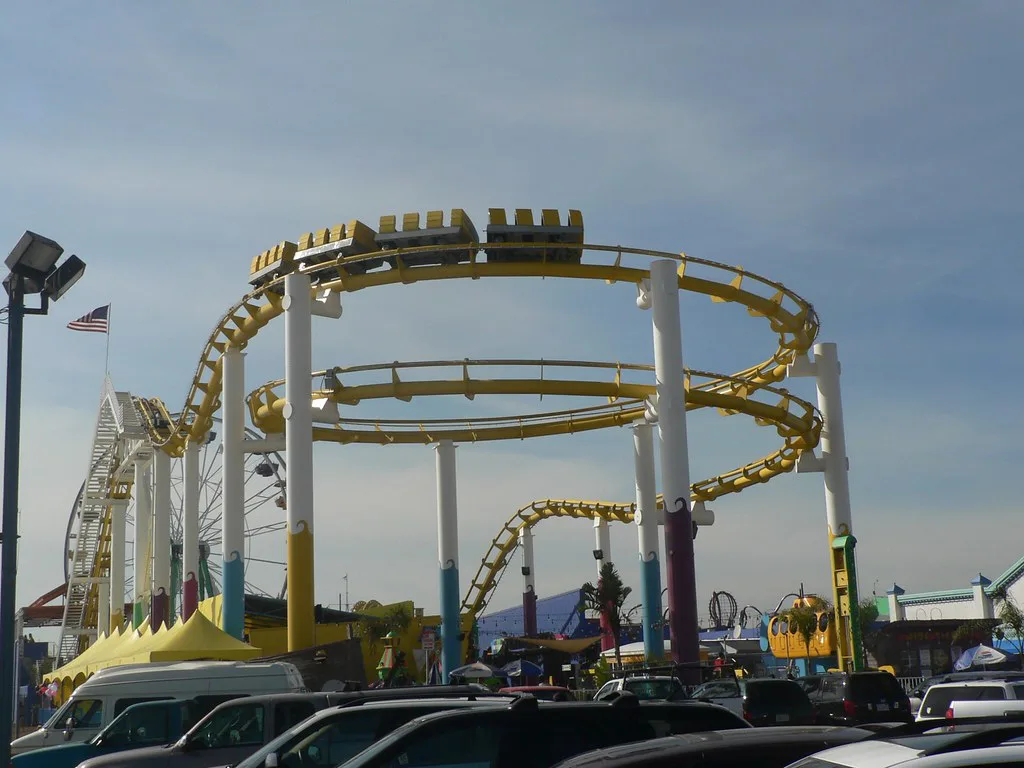
Holiday Park in Haßloch, Rhineland-Palatinate, is part woodland and part traditional park, and it holds the first free-fall tower built in Europe, still one of its best-known attractions. Sky Scream adds a launched coaster that reaches speeds of around 100 km/h and includes a twisting inversion with descending and ascending twists. The combination gives the park a compact, high-impact feel for thrill-seekers.
Water rides spread through the park make it a good family choice in summer, since groups can alternate between big coasters and splash rides. Haßloch sits in the wine country south of Ludwigshafen, so a car makes the most of the surrounding region. Pair it with Phantasialand or Europa-Park only if you have several days, as the drives between them are long.
Adventure Park Tripsdrill in Cleebronn: Swabia in the 1880s
Adventure Park Tripsdrill in Cleebronn is the oldest amusement park in Germany, and it marked its 90th anniversary in 2019. Rather than dividing into many worlds, it commits to a single theme: Swabia in the 1880s. That gives the park a distinctive, folkloric character that appeals to families who want something other than film sets or country pavilions.
Its wooden coaster Mammoth is one of the largest wooden roller coasters in Germany, built with around 1,000 cubic metres of wood plus millions of nails and screws. Beyond it, the park holds more than 100 attractions, including water slides, further coasters and a petting zoo. A wildlife area with over 50 species, where sika deer can be petted and fed, makes Tripsdrill a strong tie-breaker for mixed-age groups who want animals alongside rides.
Serengeti Park in Hodenhagen: Safari Animals Plus Rides
Serengeti Park in Hodenhagen, Lower Saxony, combines a safari with a theme park and sits within reach of both Bremen and Hanover. Two of its areas are dedicated to animals, home to around 1,500 wild and exotic animals, while a third mixes animals with attractions such as a wild water run past swans, geese and ducks. The fourth area is given over entirely to rides and attractions.
An island area houses more than 200 primates, with five walk-in compounds where you can get closer without cage barriers. The Adventure Safari area adds over 40 rides, including a roller coaster and a Ferris wheel, so the park genuinely serves both animal lovers and coaster riders. For a family with one child who wants thrill rides and another who wants animals, this is the most efficient single stop in the country.
Hodenhagen sits between Bremen and Hanover on the road network, and the park's split between drive-through animal areas and walk-in ride areas shapes the day: do the safari first, then park the car for the rides. Base yourself in Hanover or Bremen for an easy overnight.
Allgäu Skyline Park in Rammingen: Three Zones, One Choice
Allgäu Skyline Park in Rammingen sits between Munich and Lake Constance in mountain scenery, with over 60 attractions split into three themes: pure adrenaline, family fun and children's hits. That explicit zoning makes it one of the easiest parks to plan around a mixed group, because each member picks a zone and the day self-organises. The mountain setting also makes the drive part of the trip rather than dead time.
Headline rides include the Sky Dragster, described as the most powerful motorbike coaster in the world and one you drive yourself, Zero Gravity, where the floor drops away beneath you, and a wild water ride with a 30-metre waterfall. Those three cover self-driven, free-fall and water experiences, so thrill-seekers get variety without leaving the adrenaline zone. Families can stay in the family and children's zones and still meet for lunch.
Smaller and Regional Parks Worth a Detour
Germany's park map extends well beyond the headline names, and several regional parks make sense when you are already in the area. Baden-Württemberg has Schwaben Park in Kaisersbach and Traumland in Sonnenbühl; Bavaria has Bayern Park in Reisbach, Churpfalz Park in Traitsching, Märchenwald im Isartal near Wolfratshausen, Playmobil Fun Park in Zirndorf and Schloss Thurn in Heroldsbach. Choose by base rather than by reputation.
Hesse offers Freizeitpark Lochmühle in Wehrheim, Steinau Amusement Park and Taunus Wunderland in Schlangenbad, all practicable from Frankfurt. Lower Saxony adds Erse Park in Uetze, Jaderpark in Jade, Rasti-Land in Salzhemmendorf and Tier- und Freizeitpark Thüle near Friesoythe. In North Rhine-Westphalia, Fort Fun Abenteuerland in Bestwig, Panopark in Kirchhundem, Potts Park in Minden and Schloß Beck in Bottrop give you options around the Ruhr and Sauerland.
Rhineland-Palatinate has Eifelpark in Gondorf and Kurpfalz Park in Wachenheim, while Schleswig-Holstein has Hansa-Park in Sierksdorf and Tolk-Schau in Tolk. Hansa-Park is the most substantial of these and works well as a northern coastal stop. On a longer continental circuit, the theme parks in the Netherlands are close enough to combine with the western German parks around the Ruhr.
Indoor and Bad-Weather Options
Germany's park sector includes indoor entertainment venues among its leading attractions, alongside classic parks, zoo and safari parks, movie parks and brand parks. That means a wet day does not have to be a lost day, especially in the cities, where indoor venues sit within the urban transport network. Check the specific venue's own site for what is open on your date.
For parks with large indoor dark rides and shows, such as Phantasialand, poor weather changes the shape of the day rather than cancelling it: plan indoor attractions for the middle hours and outdoor coasters for the edges. Christmas markets and seasonal events in German cities also give you a fallback if you are travelling in winter, and Christmas at theme parks covers the seasonal park offering across Europe.
Which German Park to Pick for Your Group
For families dominated by younger children, LEGOLAND Deutschland and Serengeti Park are the safest choices: the first is built entirely around children's roles and brick building, the second combines animals with a ride area so nobody is stuck. Tripsdrill adds a petting zoo and wildlife area for the same reason. If your group includes a coaster fan as well, Heide Park's Peppa Pig Land keeps the youngest occupied while the others ride Colossos and Octopus.
For teens and thrill-seekers, Phantasialand's launch coasters, Heide Park's dive and wooden coasters, Holiday Park's free-fall tower and Sky Scream, and Allgäu Skyline Park's adrenaline zone each deliver a full day. Europa-Park sits in between: its coaster line-up is substantial, but the country areas and Adventure Land mean non-riders are never waiting long with nothing to do. Belantis covers the same ground for anyone based in Saxony. If you want the same thriller-plus-family balance outside Germany, the Alton Towers guide shows how one British resort splits its coaster and family appeal.
For short breaks, most German parks now offer overnight packages, with four-star themed hotels, holiday homes, block houses, campsites, tipi villages, traditional inns, shepherd's wagons and even tree houses, often with a wellness programme. That turns a park day into a two-day resort stay and suits grandparents travelling with families. Check each park's own accommodation page for what a package includes before booking.
Tickets, Passes and Planning Around the Calendar
German parks generally sell an all-inclusive admission price, so individual attractions inside the gates are not charged separately. That simplifies budgeting compared with parks that upsell rides, though it also means a short afternoon visit costs the same as a full day. Prices vary by park and by date, and each operator publishes its own ticket tiers and any multi-day or season-pass options on its booking page.
Opening seasons and daily hours differ sharply between parks, and the official park calendar is the only reliable source for the date you plan to visit. Use it to confirm which days in your window the park operates and whether any rides are scheduled out of service, then book dated tickets once the dates are fixed. If you are weighing a British park instead, the Merlin annual pass guide explains how one multi-park pass works across a group of attractions.
Halloween and Christmas seasons extend the calendar at many European parks, with separately ticketed events that sell out earlier than ordinary days. If a seasonal event is the reason for your trip, book accommodation at the same time as the event ticket. Halloween at theme parks in Europe tracks which parks run these seasons and when they typically fall.
Plan Your German Park Trip
Start with where you are sleeping: Rust for Europa-Park, Cologne or Bonn for Phantasialand, Hanover or Bremen for Heide Park and Serengeti Park, Munich or Lake Constance for Allgäu Skyline Park. Then match the park to your group's weakest link, whether that is a five-year-old, a non-rider or a coaster fan, because every park on this list serves at least one of those better than the others.
Two days in one park usually beats one day in each of two parks when the drive between them is long, and the parks with on-site accommodation make that easy to arrange. Confirm live opening hours and any scheduled ride closures on the official park calendar before you book dated tickets or a hotel package. For a wider view of how these parks sit alongside the continent's biggest resorts, compare them in the best theme parks in Europe guide.
Explore more Europe guides
Frequently Asked Questions
Which theme park in Germany is best for families with young children?
LEGOLAND Deutschland Resort in Günzburg is the most focused option, with 63 attractions across 10 areas built around children's roles such as a driving test and a jousting tournament. Serengeti Park and Adventure Park Tripsdrill are strong alternatives because both combine rides with animals, giving younger children a change of pace through the day.
Is there a Disney park in Germany?
No. Germany's major parks are independently operated, including Europa-Park, Phantasialand, Heide Park, Movie Park Germany, LEGOLAND Deutschland, Belantis, Holiday Park, Tripsdrill, Serengeti Park and Allgäu Skyline Park. Europa-Park's country-themed areas are its own concept, not a Disney-style park.
Which German theme park has the most roller coasters?
Europa-Park has more than 100 attractions in total, and Phantasialand and Heide Park each hold several headline coasters, but no operator publishes a straight coaster count that makes a fair comparison. Check each park's official ride list and filter by coaster type if that is your deciding factor.
Where is Europa-Park and how do you get there?
Europa-Park is in Rust in south-west Germany, covering around 950,000 square metres. It is not a city-centre park, so plan a car journey or a rail connection to nearby towns followed by a local bus or shuttle, and consider staying in Rust to avoid daily transfers.
Which German theme parks have on-site hotels?
Many German parks offer overnight packages with themed four-star hotels, holiday homes, campsites, tipi villages, shepherd's wagons and tree houses, often with a wellness programme. LEGOLAND Deutschland has its own holiday village, and Europa-Park and Heide Park both operate resort accommodation. Confirm what each package includes on the park's own accommodation page.
Are there indoor theme parks in Germany?
Germany's park sector includes indoor entertainment venues alongside classic parks, movie parks, brand parks and zoo or safari parks. These are useful on wet days and in cities, and the specific venue's own site lists what is open on your date.
When is the best time to visit a theme park in Germany?
Opening seasons vary by park, and many run Halloween and Christmas seasons that extend the calendar into autumn and winter. Pick your dates from the official park calendar first, then book dated tickets and accommodation together, especially if a seasonal event is the reason for the trip.
How many days do you need at Europa-Park?
Two days suits most visitors, because the park covers around 950,000 square metres with more than 100 attractions across 15 European-themed areas plus Adventure Land and Grimm's Enchanted Forest. A single day covers only part of it comfortably, so staying in Rust is the practical way to spread the visit.
Sources
Notes for your next park day
Optional updates to our park guides.
You might also like
Continue reading
More guides you'll find useful