Gardaland Accessibility: Passes and Wheelchair Access
How Gardaland handles accessibility for disabled visitors and carers, from free or reduced tickets at the Welcome Desk to accessible-ride maps and rider swap.
On this page
Gardaland gives disabled visitors and their companions a straightforward route into the park: free or reduced tickets are arranged at the Welcome Desk by the main entrance, where you show medical documentation and collect a map marking which attractions work for motor, sensory and cognitive needs. The same desk is where day-to-day problems get solved, which matters more than any pre-trip form because ride access is decided at each attraction by the crew. Use the wider Gardaland guide to line up dates and tickets before you turn to the access details below. If you are weighing this park against a larger resort, the Prater guide covers the same access-planning questions for Vienna.
What Gardaland offers disabled visitors and their companions
The park's accessibility offer has two separate halves. Entry is handled through free or reduced tickets for disabled people and their companions, and you must present medical documentation at the Welcome Desk at the main entrance to use them. Ride access is a different matter: the park states that entry to Gardaland is open to everyone, but individual attractions may refuse boarding or apply special procedures when a visitor has certain physical conditions or illnesses.
A detailed map showing attractions accessible to people with motor, sensory and cognitive limitations is handed out at the same Welcome Desk. Pick it up before you walk into the park rather than relying on signs inside, because the categories on that map are what tell you which rides are realistic for your group. The park also runs a second information office in the Villaggio West area, useful once you are inside and need to re-check a route or a ride.
Who can get free or reduced tickets and what to bring
Free or reduced entry is available for disabled persons and their companions, and it is not granted on trust: you must present medical documentation at the Welcome Desk. Bring the paperwork in a form the desk can read, and keep it with you for the day rather than packed in the car. The exact reduction is set by the park, so budget from the current Gardaland tickets page and treat the desk as the place where the disabled rate is applied.
Companions are covered in the same scheme, which is the practical reason to sort this out on arrival as a group rather than splitting up at the ticket windows. The Welcome Desk sits in the ticket-office area, so you pass it before the turnstiles and can deal with documentation, tickets and the accessible map in one stop. If you are combining the park with the aquarium or the water park, ask at the same point how the companion arrangement applies across the resort.
Where to register: the Welcome Desk at the main entrance
Registration happens at the Welcome Desk in the ticket-office area, not at the individual rides. That is where documentation is checked, where the accessible-rides map comes from, and where staff can point you toward the right entrance for a specific attraction. Arriving early gives you time to complete this before the first wave of day visitors builds at the gate.
Once inside, the information office in Villaggio West is the second port of call for the same questions, which saves walking back to the entrance if something changes during the day. Both points are staffed, so a route problem or a query about boarding procedures can be resolved in person. For the layout that connects them, the Gardaland map is worth reading before you go so you know which side of the park you are heading for.
The accessible-rides map and what the categories mean
The map groups attractions by whether they suit visitors with motor, sensory or cognitive limitations, so it works as a filter for your group rather than a complete ride list. Cross-reference it with the park's height rules, because Gardaland sets ride access by height and not by age, with thresholds at 80, 100, 110, 120, 130 and 140 cm and a handful of maximum-height limits. A disabled child's plan therefore depends on both the map category and the height chart for each ride.
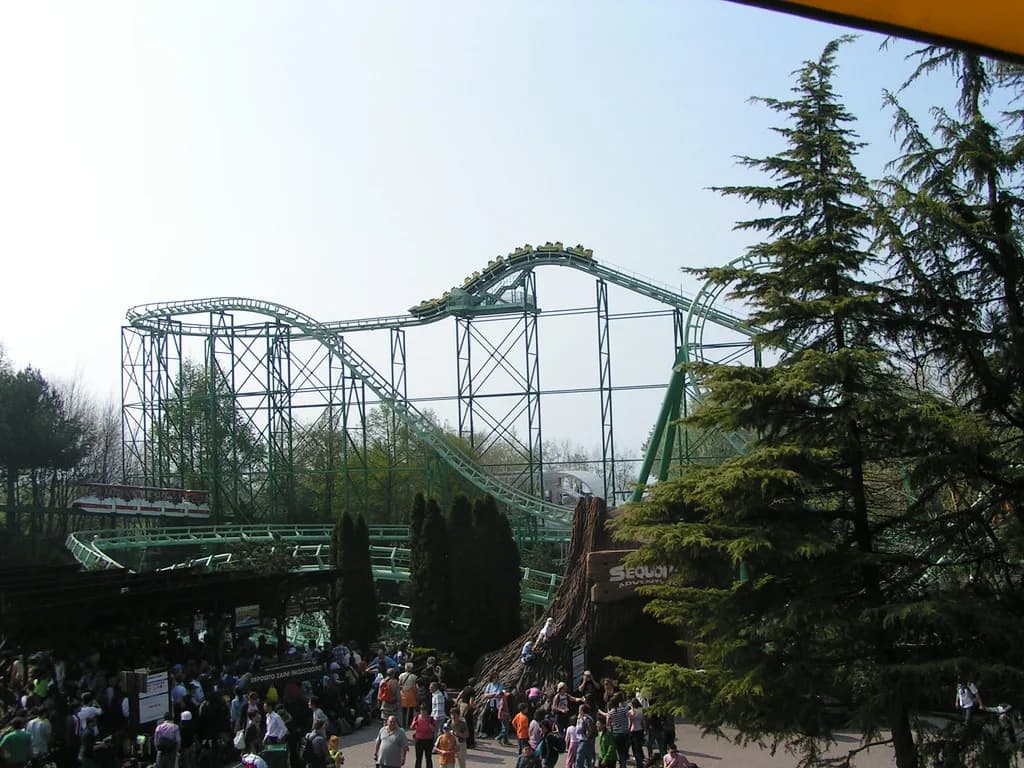
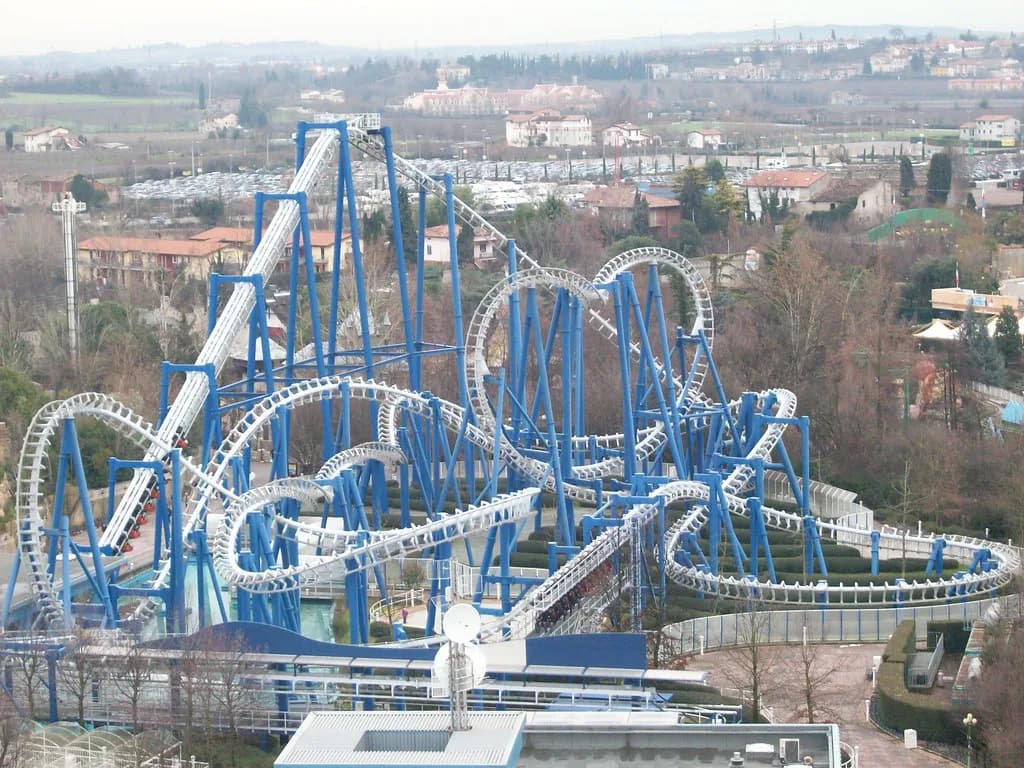
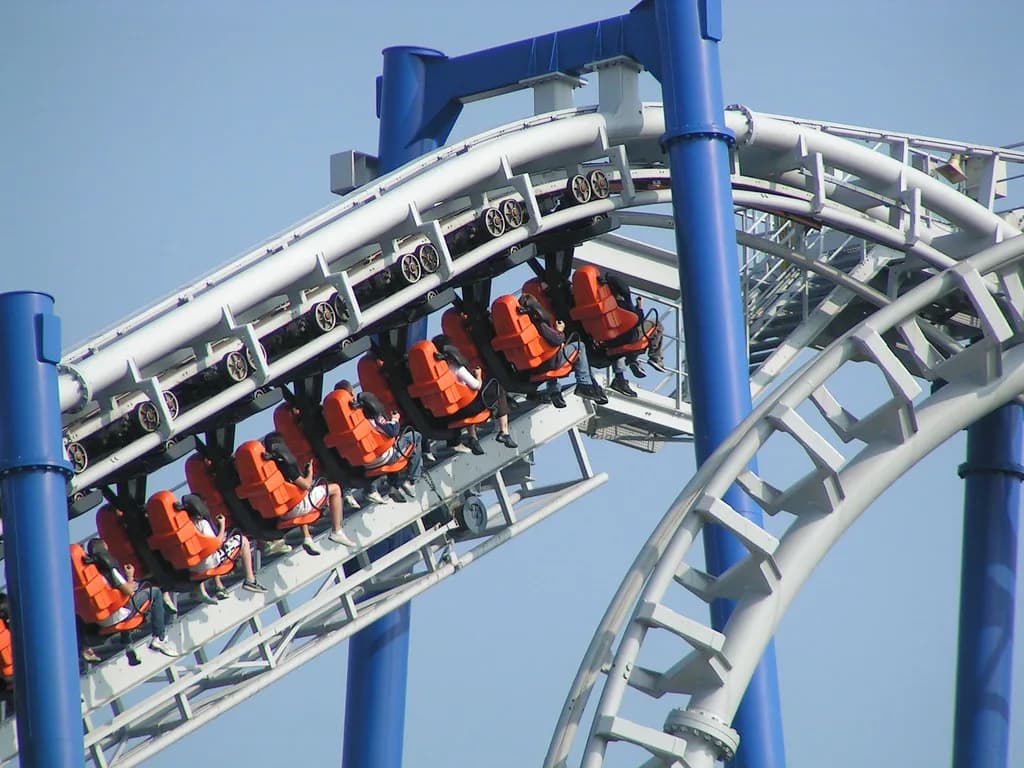
For an example of how strict the top end gets, Oblivion, Blue Tornado and Raptor require a minimum height of 140 cm, and Space Vertigo sits 10 cm lower at 130 cm. Those thresholds tell you where the big coasters fall for a shorter teenager or a small adult in your party. The full Gardaland rides list is the place to build a shortlist before you cross it against the accessible map at the desk.
Rides that deny access on medical grounds
Some attractions are not open to everyone. Gardaland states that certain rides are forbidden to heart patients, people subject to epileptic seizures and people with reduced mobility, and that boarding may be refused or handled under specific procedures for other conditions. Treat this as a safety framework rather than a bureaucratic hurdle: the restriction is applied ride by ride, and the accessible map marks which attractions fall on which side of the line.
Because the decision is made at the attraction, the useful preparation is a shortlist: note the rides your group most wants and check each against the map and the posted warning at the entrance before queuing. Doing that at the Welcome Desk at the start avoids a wasted walk across a park that covers more than 400,000 square metres. Ride crews, not the ticket desk, have the final say on boarding.
Ride access procedures and waiting with a companion
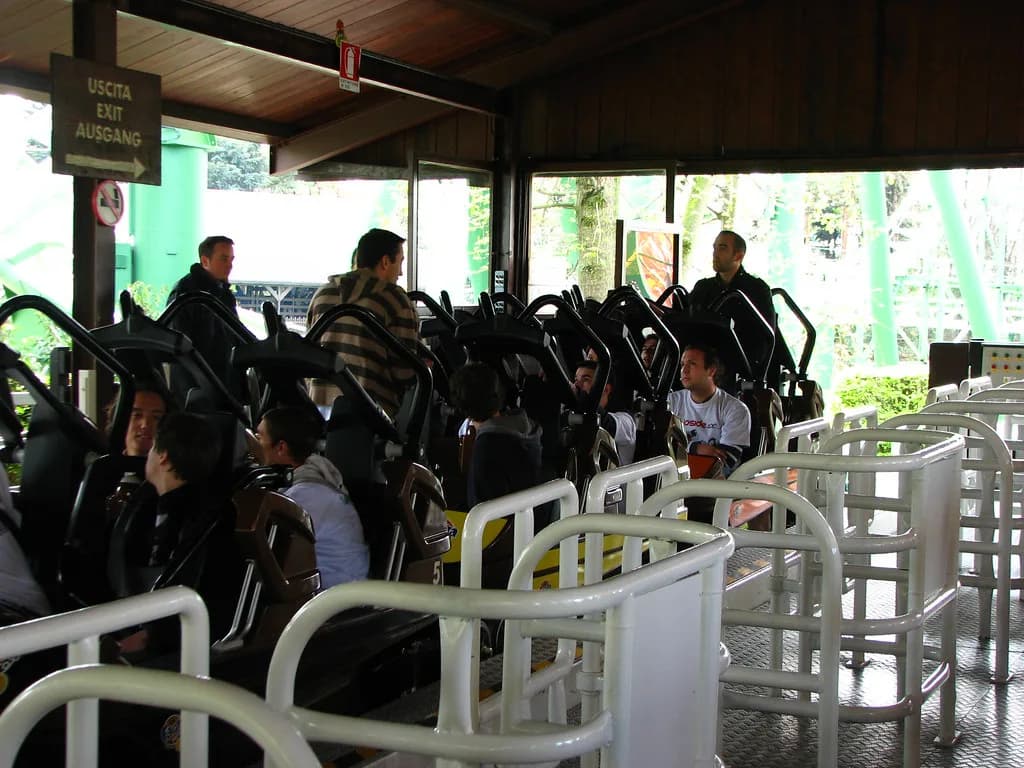
Where a child cannot ride because of a height rule, Gardaland runs a baby switch: parents take turns on the attraction while keeping their place in the queue, so the adult waiting with the child does not have to re-queue when the other returns. That same turn-taking logic is what makes a mixed group work when one member cannot board a particular ride. Ask the attendant at the entrance how they want to handle it, since the procedure is applied at each attraction.
Queue standing is the part of a Gardaland day that wears people down, so date selection does real work for disabled visitors. The park is open from March to December, with every day in summer and selected days around Magic Halloween in October and Magic Winter in December, and the guidance is to avoid summer crowds and aim for spring outside Easter and long weekends, September, or a Sunday rather than a Saturday.
If waiting is the main constraint, Gardaland Express is a paid add-on sold only inside the park, in single-ride and multi-attraction packages, and it is bought on top of the entrance ticket. It is not sold online, so budget for it on the day if a shorter wait would make the difference for your group. Check current Gardaland opening times before fixing a date, since hours shift with the season and with evening events.
Wheelchair and reduced-mobility routes around the park
Reduced mobility is one of the conditions the park names when it describes rides that may be closed to certain visitors, so plan routes around the accessible map instead of zig-zagging. The park's themed areas mix fantasy, adventure and adrenaline attractions in different corners, which means a sensible route groups the rides you can use rather than covering ground twice. The Villaggio West information office is a useful mid-park reset point if a route stops working.
The park provides a stamped pass so you can leave and re-enter within the same day, which helps if you need to return to the car or take a break outside the gates. A guarded luggage room takes the weight off carrying bags around the paths. Both services sit alongside other facilities such as wi-fi, phone charging and first aid, some free and some chargeable, so ask at the desk what applies to what you need.
Baby care, rider swap and family logistics
The nursery area covers changing and feeding for very small children, with a changing table, bottle warmers and nappy dispensers, and pram hire is available in the park. For families worried about separation in a large crowd, the information office issues an anti-lost bracelet you can write a child's name and a contact number on. These are the services that make a long day manageable when one adult is managing a disability as well as children.
The easy Shopping service sends purchases made inside the park to the parking area, so you are not carrying bags between rides. First aid is on site, and staff at the two information points can direct you to it. Combining these with the baby switch and the re-entry pass gives a family a workable loop: ride in turns, keep bags light, and reset at a known desk when something needs sorting.
Parking, arrival and the ticket-office area
The car park is very large, and the guide's own caution is to note where you parked because visitors regularly lose their cars at the end of the day. That matters more if you are managing mobility aids or tired children, so mark the zone on your phone or photograph the nearest sign before you walk to the gate. The ticket-office area, with the Welcome Desk, is your first stop for documentation and the accessible map.
The park sits at Via Derna 4 in Castelnuovo del Garda, and the official directions page is the reliable place to confirm the approach roads and entrances for your mode of transport. If you are arriving by train, Peschiera del Garda is the most convenient base on the lake, with the most amenities and accommodation for tourists, while Lazise is an alternative to the north.
Hotels and short breaks if you need step-free accommodation
The three official hotels, Gardaland Hotel, Gardaland Adventure Hotel and Gardaland Magic Hotel, sit about 800 metres from the park and are linked by free shuttle buses, which keeps the door-to-gate leg short. They are four-star properties with standard and themed rooms, bars and restaurants, and in summer guests can use the Blue Lagoon pool area. Ask the hotel directly about step-free rooms and bathroom layouts, since that detail varies by room type.
For a single night after a full park day, a cheap guesthouse or a two- to three-star hotel near the park keeps the drive short, while a longer Lake Garda holiday opens up more choice in Peschiera del Garda and Lazise. The Gardaland Hotels comparison sets out the three on-site options side by side if you want the shuttle and the early start. Book the room type you actually need rather than the cheapest, because themed rooms are the most expensive but also the most popular with children.
Food, seating and rest points during a long day
There are more than 16 refreshment points inside the park, from pizzerias and self-service restaurants to bars, kiosks and ice cream parlours, with vegetarian and gluten-free options among the dishes. There is no dedicated picnic area, but benches are scattered throughout the park and some sit in shade, which is the practical fallback for a packed lunch. Rest points matter on an access-focused day, so note the shaded benches near the areas you plan to spend time in.
Food queues can be long at peak times, so eating slightly before or after the rush keeps the day moving. The Gardaland food guide covers the restaurant styles in more detail if you want to plan meals around a particular area. Carrying water is worth the weight, especially in summer when the sun on exposed queue lines is the main discomfort.
Halloween and winter events: what changes for access
Gardaland runs Magic Halloween in October and Magic Winter in December, and the park describes both as periods when opening days and hours differ from the summer pattern. If you are planning an access-focused visit around either event, check the event calendar for your date instead of planning on the standard 10:00 to 18:00 day. Evening openings typically fall on summer weekends and around Halloween, and some attractions open an hour or two after the park gates.
Seasonal events add crowds and change the atmosphere, which is a consideration if sensory load is a factor for your group. Choosing a quieter date in spring or September usually gives a calmer park than an event night. The official calendar is the one page to check for the hours on the date you pick.
Plan Your Visit
Build the day around the Welcome Desk: bring medical documentation, collect the accessible-rides map, and settle tickets and companion entry before you go through the turnstiles. From there, the map and the height chart together tell you which rides are realistic, and the baby switch and re-entry pass handle the logistics once you are inside. A spring, September or Sunday date reduces the standing that causes the most strain.
The Castelnuovo del Garda location works well for a short break, with the official hotels a free shuttle ride from the gate and Peschiera del Garda a convenient base if you are arriving by train. Sort tickets and any Express add-on as part of the same planning step, and check the official calendar once you have a date in mind.
Explore more Gardaland guides
Frequently Asked Questions
How do disabled visitors get free or reduced entry at Gardaland?
Free or reduced tickets are arranged at the Welcome Desk at the main entrance, and you must present medical documentation to use them. The desk sits in the ticket-office area, so it is the first stop before the turnstiles. The exact reduction is applied there, so plan your budget around the standard ticket and let the desk adjust it.
Do carers get in free at Gardaland?
Companions are included in the park's free or reduced ticket scheme for disabled visitors. Register both people together at the Welcome Desk with the medical documentation so the companion rate is applied in the same transaction. Ask at the desk how the arrangement works if you are also visiting the aquarium or water park.
Can wheelchair users go on Gardaland's rides?
Not all of them. Gardaland states that some attractions are forbidden to people with reduced mobility, and boarding can be refused or handled under specific procedures for certain conditions. The map issued at the Welcome Desk marks which attractions are accessible for motor, sensory and cognitive limitations, so collect it before planning a route.
Where do you register for accessibility at Gardaland?
Register at the Welcome Desk in the ticket-office area by the main entrance, where documentation is checked and the accessible-rides map is handed out. A second information office in the Villaggio West area handles queries once you are inside the park.
Which Gardaland rides are unsuitable for people with heart conditions or epilepsy?
The park states that certain attractions are forbidden to heart patients and to people subject to epileptic seizures, and individual rides post their own warnings at the entrance. The accessible-rides map shows which attractions fall into which category. Check each ride on your shortlist against the map and the posted sign before joining the queue, since the ride crew makes the final call.
Is there a quiet space at Gardaland?
The park publishes no dedicated quiet room. The gardens, shaded benches and the two information points are the calmest places to reset, and choosing a spring, September or Sunday date reduces the crowd load. If sensory quiet is essential, plan breaks around the Villaggio West information office rather than expecting a designated space.
How does rider swap work at Gardaland?
Gardaland runs a baby switch on rides with height restrictions: parents take turns riding while keeping their place in the queue, so the adult who waited with the child does not have to re-queue. Tell the attendant at the ride entrance that you want to use it.
Can you hire a pram or wheelchair at Gardaland?
Pram hire is available inside the park, and the nursery area has changing and feeding facilities. The park does not publish wheelchair hire, so ask at the Welcome Desk on arrival if you need one, and bring your own mobility aid if it is essential to your day.
Sources
Notes for your next park day
Optional updates to our park guides.
You might also like
Continue reading
More guides you'll find useful