Colossus at Thorpe Park: Ride Guide, Stats and Tips
Colossus at Thorpe Park turns riders through ten inversions above the lake. See how the ride runs, who can board and how to slot it into your day.
On this page
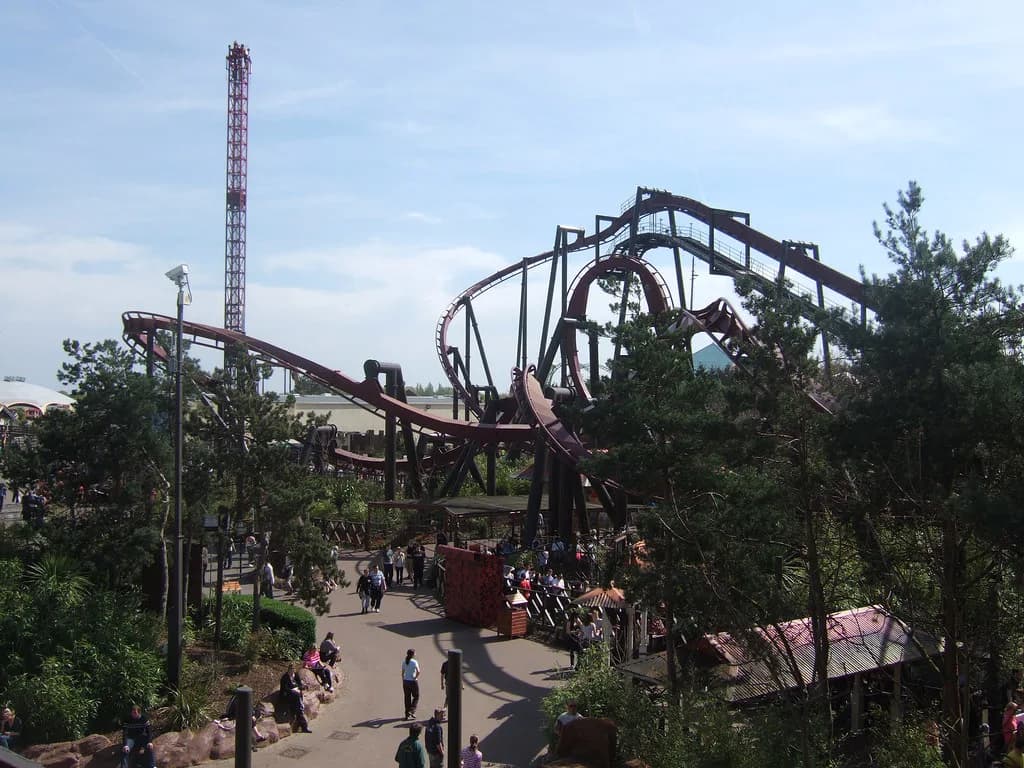
Colossus throws riders through ten inversions on an Intamin track that loops out over Thorpe Park's central lake, and it has been one of the park's signature multi-loop coasters since it opened in 2002. It suits confident thrill-seekers who have already ridden a looping coaster and want sustained intensity rather than a single big drop, while families with smaller children are better off riding it through rider swap.
What Colossus is and where it sits in the park
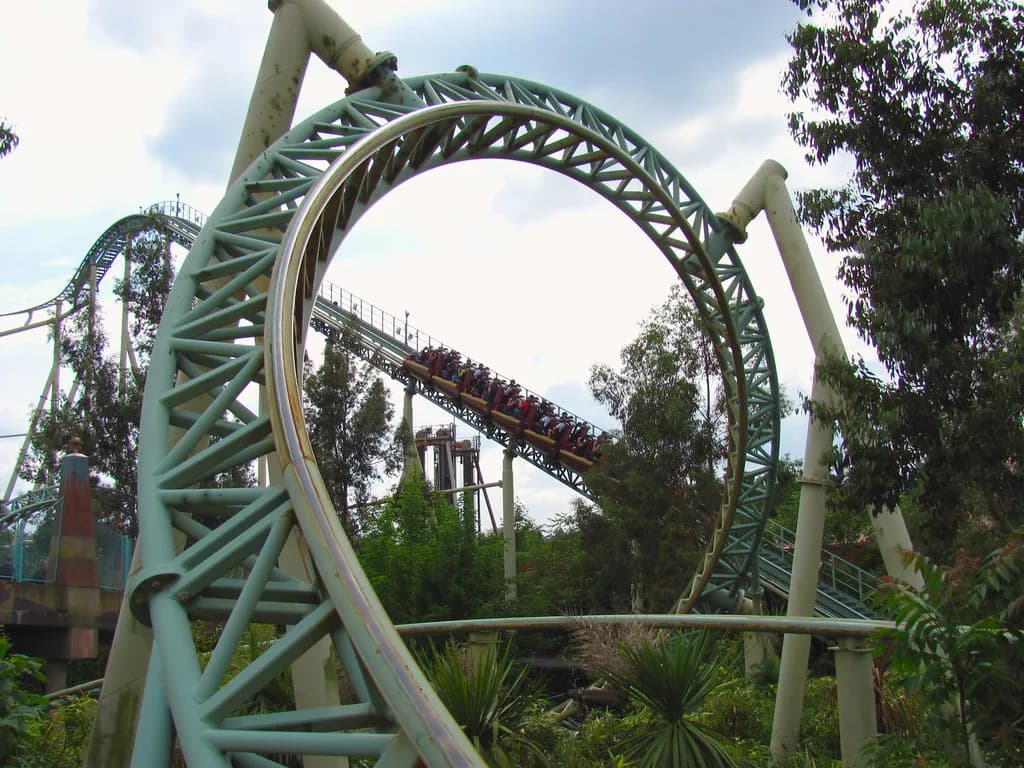
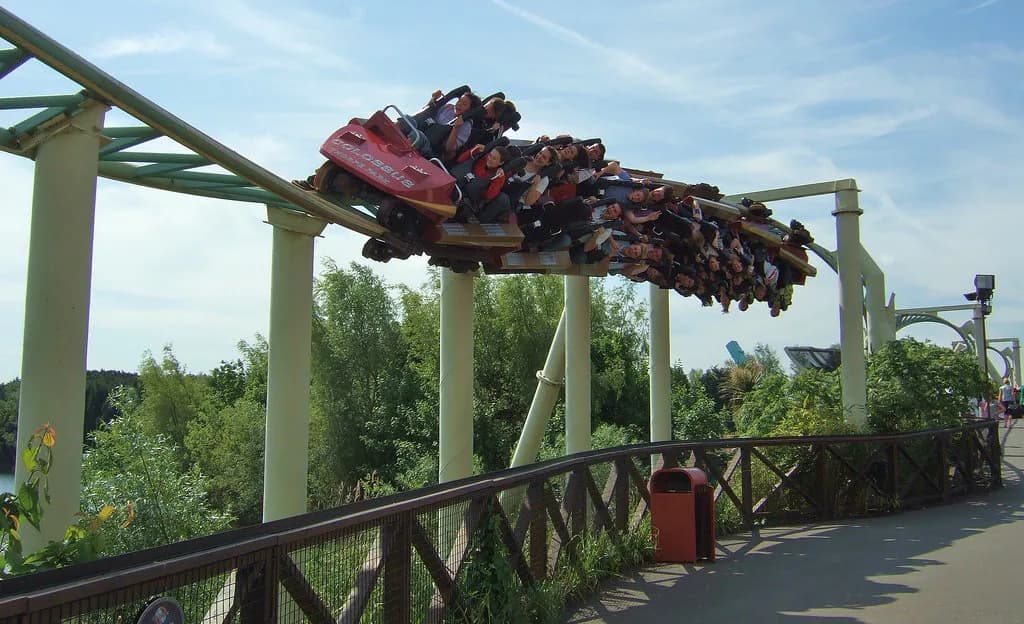
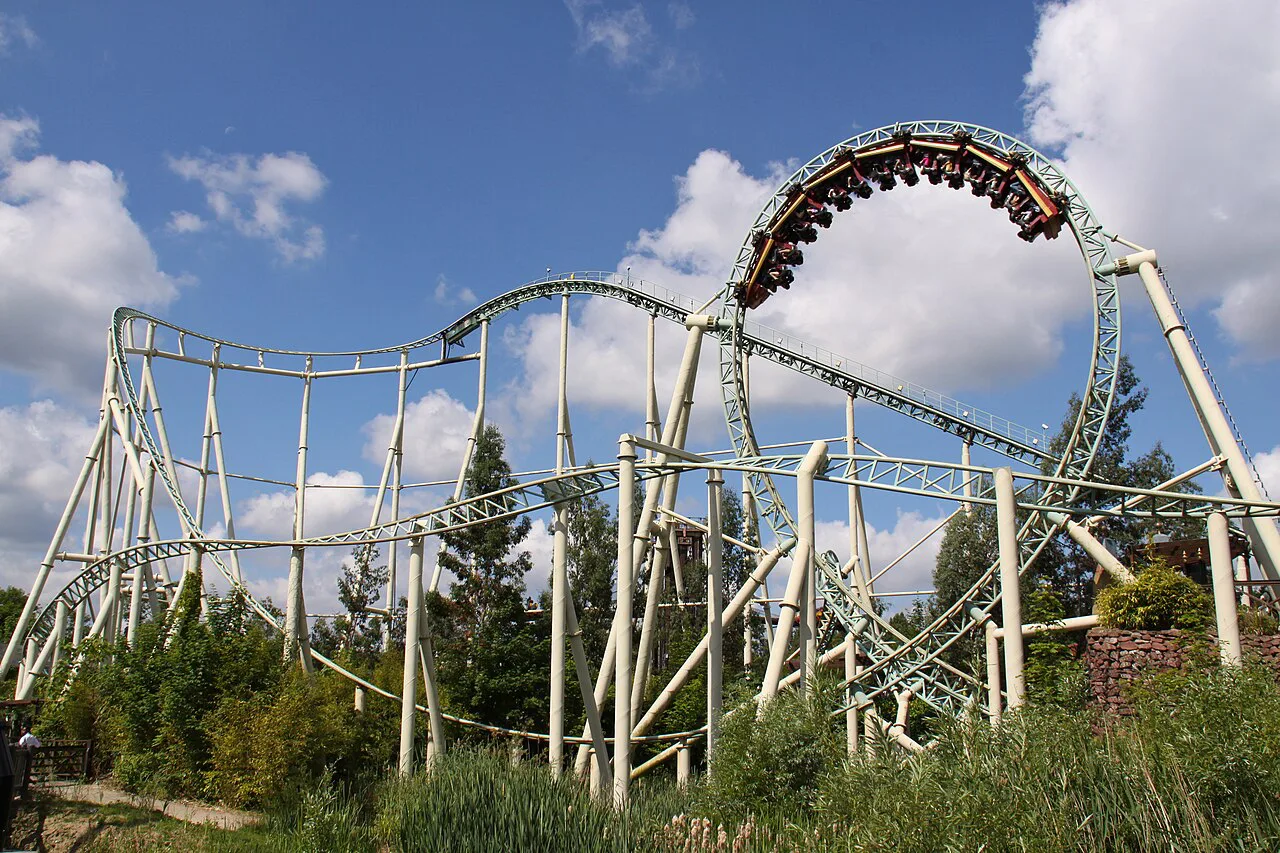
Colossus is an Intamin multi-inversion coaster designed by Werner Stengel, and it opened at Thorpe Park on 22 March 2002. Trains carry 28 riders, and the ride occupies the Lost City area in the southeast of the park, with its track running above the central lake. That lakeside placement matters when you plan a circuit of the park: Lost City sits at one edge of the main ride cluster, so pairing Colossus with the neighbouring coasters before crossing the park usually beats criss-crossing back and forth.
Key ride stats at a glance
The lift hill climbs to 30 m (98.4 ft), the train reaches 72 km/h (44.7 mph), and the full circuit covers 850 m of track in roughly 92 seconds. Riders pull around 4.2g through the loop and the rolls, which is the number that explains why the ride feels more forceful than its modest top speed suggests. Nothing about those figures is a secret: the ride page carries the manufacturer, designer and opening date alongside them, so you know exactly what you are queueing for.
Inversion by inversion: how the layout runs
After the chain lift, the train drops into a vertical loop, then a cobra roll that counts as two inversions, then a double corkscrew, putting five inversions behind you before the mid-course. The finale is the part riders remember: four consecutive heartline rolls taken at low speed along a straight stretch of track barely ten feet above the ground, followed by a single counter-rotating heartline roll that snaps the train toward the brakes. Knowing that the last third is a run of slow, ground-hugging rolls rather than another drop helps you decide whether to push for a front-row seat, where the roll sequence reads more clearly, or a back-row one for a livelier first drop.
Height requirement and restraints
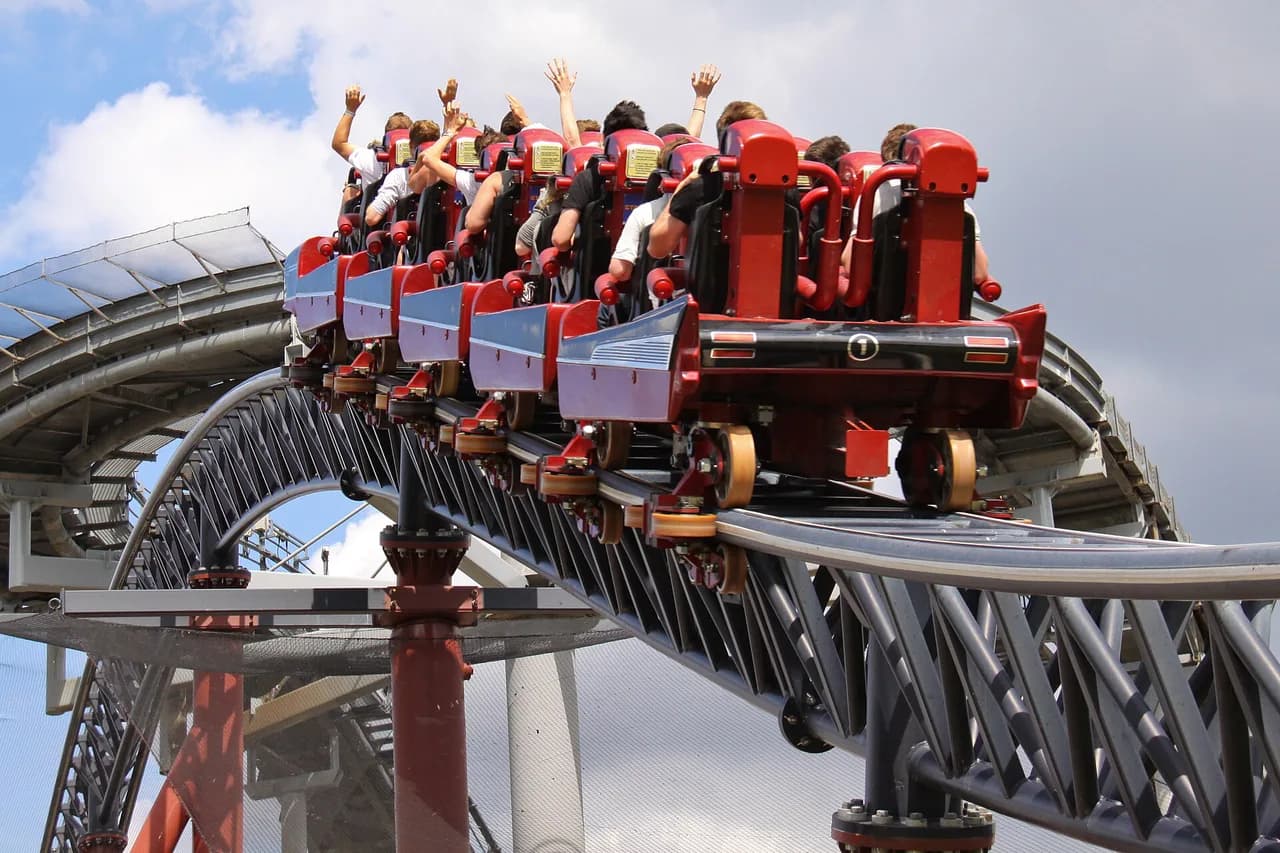
Colossus uses over-the-shoulder restraints rather than a simple lap bar, and that shapes a height window with both a floor and a ceiling: riders must be between 1.4 m (about 4 ft 7 in) and 1.96 m (about 6 ft 5 in) tall. If someone in your group sits near either edge of that range, settle it before you join the queue rather than at the boarding gate. The published ride information sets out the height limit and restraint type together, so it is the page to open when you are sizing up the ride for a taller teenager or a child who has just cleared the minimum.
Accessibility and boarding for non-ambulant riders
Non-ambulant riders need full upper body strength, including head and neck control, to board Colossus, and riders with limb differences need a minimum of three full limbs. An evacuation chair is available for guests who cannot use the exit stairs, which is the detail to raise with the accessibility team before your visit day so boarding can be arranged smoothly. These conditions are stricter than the basic height check, so read them against your own circumstances first and treat rider swap as the sensible plan where they do not fit.
The record Colossus set and lost
When Colossus opened it became the first roller coaster anywhere to turn riders upside down ten times in a single circuit, taking the record from Dragon Khan at PortAventura. It held that mark until The Smiler opened at Alton Towers in May 2013 with fourteen inversions, a record that still stands. Colossus remains tied for second place worldwide alongside the handful of parks running copies of its exact layout, so its place in coaster history is secure even without the crown. If The Smiler's record is what you want to chase next, our Alton Towers guide covers the ride and the rest of the park.
Where Colossus fits in a Thorpe Park day
Lost City groups Colossus with the park's other large coasters, which makes a ride order around the lake the efficient way to work the thrill side of the park before queues build. Big-name rides draw the longest lines soon after opening, so heading for the headline coaster you most want first and letting Colossus follow on a second pass often works better than trying to take everything in one sweep. If you are building a full plan across the park's coasters, the wider ride line-up is worth reading alongside this one.
Colossus sits comfortably in the same half-day as Stealth at Thorpe Park, whose launch delivers a very different kind of thrill, and the two make a natural pairing for anyone chasing intensity. The Swarm at Thorpe Park adds a wing-coaster experience with a tamer profile than Colossus's inversion count, which helps when your group spans different nerve levels. Plan the order so the most intimidating ride comes after a warm-up rather than as the first thing in the morning.
How busy Colossus gets
Queue data logged for Colossus shows an average wait of about 34 minutes with a recorded high of 150 minutes, which gives you a realistic sense of how the line behaves across a season. That range means the difference between a midweek visit and a peak school-holiday day is measured in hours, not minutes. The park publishes live queue times in its app, so a quick look before you commit to a direction at rope drop tells you whether Colossus or a neighbour is the better first target that morning.
Seat choice changes the ride more than it does on many coasters: the back row amplifies the first drop, while the front row makes the heartline roll sequence easier to follow. If the queue splits into separate rows, decide before you get to the station rather than holding up the line. A single-rider queue, where the park operates one, usually moves faster than the main line on busy afternoons.
Tickets and queue-jump decisions
Admission is priced by date, with online advance booking generally cheaper than turning up at the gate, so fixing your day early usually saves money as well as queue time. Thorpe Park tickets come in dated and flexible forms, and the flexible version trades a higher price for the freedom to move your visit. If you plan more than one trip in a year, compare the cost of a season pass against buying individual days before you commit.
Queue-jump products work as a paid add-on that gives access to a faster line on selected rides, and they are most worth buying on peak dates when Colossus can run to a two-hour wait. Buy them in advance for the same day as your admission rather than deciding at the gate, because availability is limited and sells out on the busiest days. On quieter weekdays the standard queue is usually short enough that the add-on adds little.
Opening season and winter closure
Thorpe Park operates a main season with a winter shutdown, during which Colossus closes for scheduled maintenance, typically across January to March. The park's calendar sets the actual dates each year, and they shift with events and ride work, so the official calendar is the place to look before booking travel. Outside the closed period the ride can still go down for weather or technical reasons on any given day, and coasters generally stop in high winds or lightning.
Who Colossus suits and who should skip it
Colossus rewards riders who are comfortable being inverted repeatedly and who do not mind sustained g-force, so it is a strong pick for teenagers and adults who have already enjoyed a looping coaster elsewhere. Anyone prone to motion sickness, or riding for the first time, is better served by a gentler introduction such as Nemesis Inferno at Thorpe Park before stepping up. Families with children below the 1.4 m minimum height should use rider swap so the adults still get their turn without splitting the group for long.
If the inversion count itself is what puts you off, Hyperia at Thorpe Park offers a different proposition built around height and airtime rather than a long roll sequence. Reading both ride guides side by side makes the choice between them straightforward for a group with mixed appetites.
Plan Your Visit
Colossus earns its place as a headline ride: ten inversions, a lakeside layout and a finale of slow heartline rolls that stays with you longer than the stats suggest. Build your day around Lost City, ride it once early and once later when the queue thins, and use rider swap where the height window rules someone out. Thorpe Park opening times and the live calendar on the park's own site confirm the day's hours and whether Colossus is running before you travel.
Explore more Thorpe Park guides
Frequently Asked Questions
How many inversions does Colossus at Thorpe Park have?
Colossus turns riders upside down ten times: a vertical loop, a cobra roll counting as two, a double corkscrew, four consecutive heartline rolls and one final counter-rotating heartline roll. It was the first coaster anywhere to reach double figures when it opened in March 2002.
How tall do you need to be to ride Colossus?
Riders must be at least 1.4 m and no taller than 1.96 m, because the over-the-shoulder restraints are sized for that range. Check anyone near either limit before joining the queue.
How fast and how tall is Colossus?
The lift hill reaches 30 m and the train tops out at 72 km/h across 850 m of track in roughly 92 seconds, with forces around 4.2g. The layout spends its speed on inversions rather than a single giant drop.
Is Colossus rough?
It is an intense ride rather than a smooth, floating one: the four heartline rolls at the end are taken slowly and close to the ground, and riders feel up to 4.2g through the loop and rolls. Anyone sensitive to being inverted repeatedly should try a gentler looping coaster first.
Where is Colossus located at Thorpe Park?
Colossus stands in the Lost City area in the southeast of the park, with its track running above the central lake. That puts it in the same cluster as several of the park's other large coasters, so plan a route around the lake rather than crossing the park repeatedly.
Does Colossus still hold the inversion record?
No. It set the record as the first coaster with ten inversions in 2002 and held it until The Smiler opened at Alton Towers in May 2013 with fourteen, a mark that still stands. Colossus remains tied for second place worldwide.
Can non-ambulant riders board Colossus?
Yes, provided they have full upper body strength including head and neck control, and riders with limb differences need at least three full limbs. An evacuation chair is available for guests who cannot use the exit stairs, and it is worth arranging support with the accessibility team before your visit.
Sources
Notes for your next park day
Optional updates to our park guides.
You might also like
Continue reading
More guides you'll find useful