Prater Map: How the Wurstelprater Is Laid Out
Use the Prater map to see how the Wurstelprater is laid out, where the headline rides and food cluster, and how to plan a route from Praterstern.
On this page
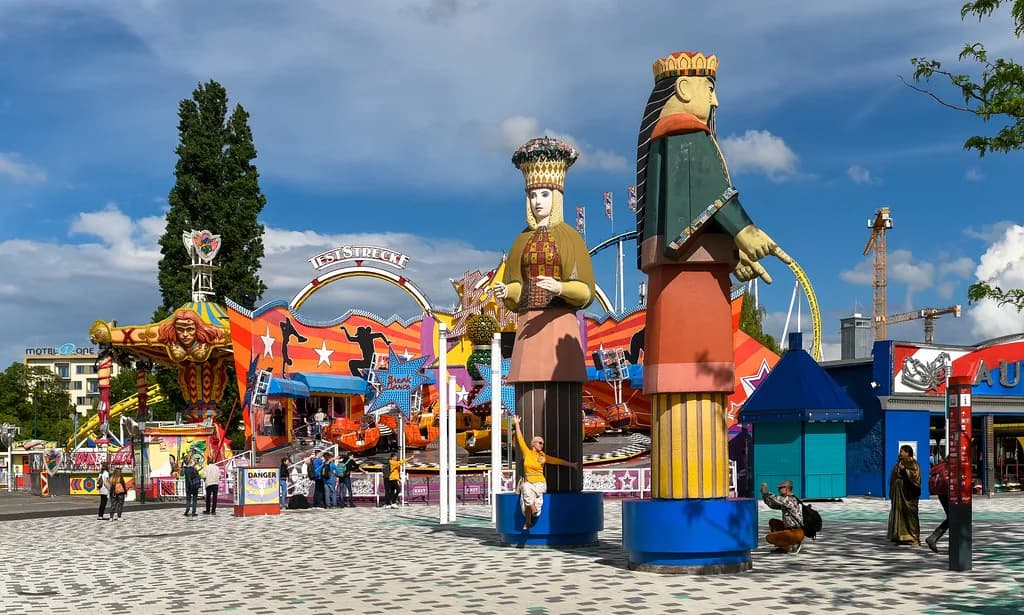
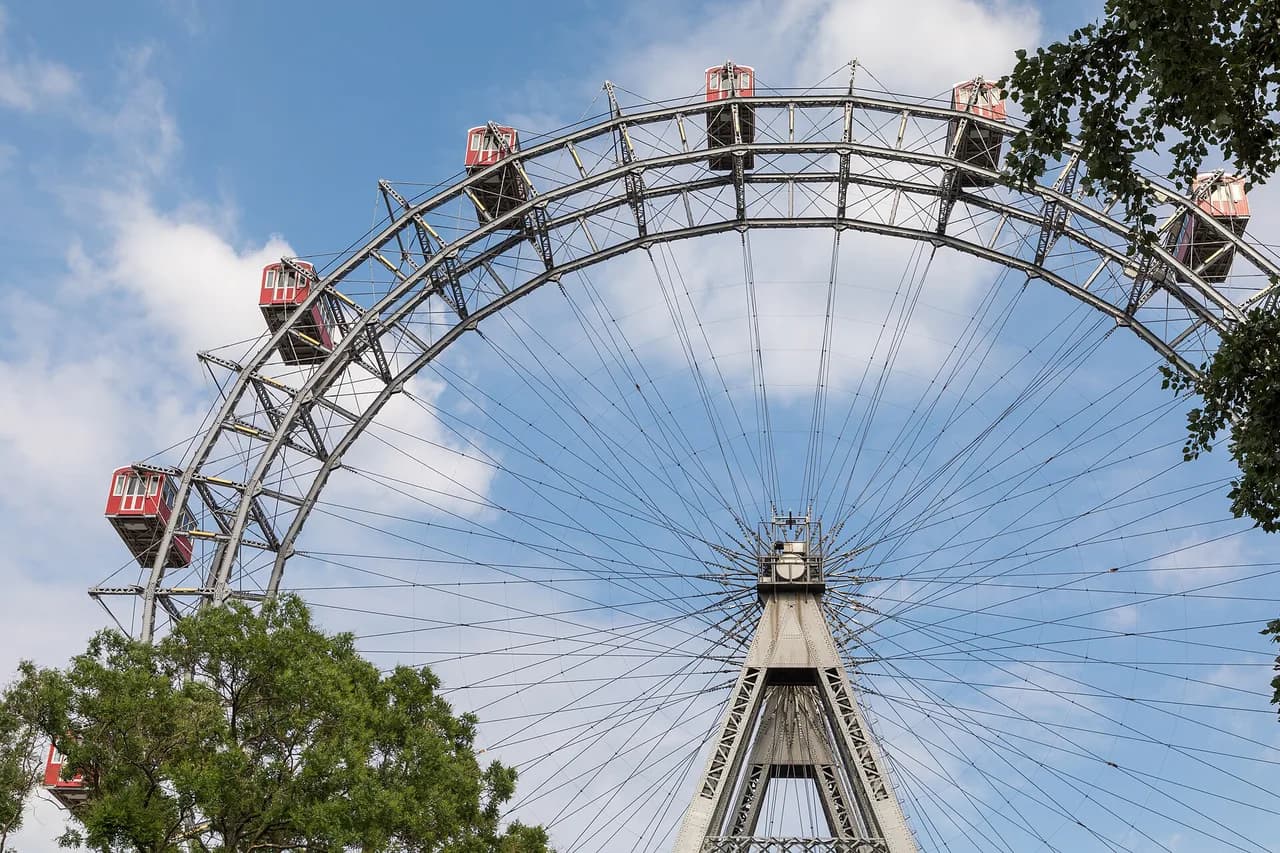
The Wurstelprater is a permanent fairground rather than a gated theme park, and its map reads differently from a Disney-style park plan: there are no themed lands, just paths lined with independently run rides, food stalls and gardens. Admission to the area is free and you pay per attraction, so the map is really a tool for choosing which rides to walk to and in what order. The Wiener Riesenrad, the giant Ferris wheel at the main entrance, anchors the whole layout as the one landmark you can navigate by.
A Prater map works best when you treat it as a walking order, not a checklist. Most visitors arrive at Praterstern, pass the Riesenrad, and then drift deeper into the fairground where the coasters and the bigger flat rides sit.
What the Prater map actually covers
The map covers the Wurstelprater, the fairground section inside the much larger green Prater park. Admission to the Wurstelprater is free and it is open every day of the year, but individual rides and businesses keep their own hours. That distinction matters when you read a map: the paths are always walkable, while the attractions along them may be boarded up or closed depending on the season and the weather.
Beyond the fairground, the green Prater stretches out along the Hauptallee and the Danube canal, so a map of the whole Prater district looks enormous compared with the compact strip of rides. For planning purposes, concentrate on the Wurstelprater itself and treat the green park as a separate walk. Our prater guide sets out the wider park and its context if you want that background.
The main entrance at Praterstern and the other ways in
The main entrance is normally via Praterstern, the transport hub where the U-Bahn, S-Bahn and trams converge. Because the Wurstelprater is open ground rather than a walled park, you can also join it from Hauptallee, Ausstellungsstraße or Freudplatz, which matters if you are arriving from the exhibition halls or walking in from the green Prater.
Walking in from Praterstern puts you at the Riesenrad end, which is the busiest and most photographed corner. Coming in from the Hauptallee side instead drops you closer to the open park and the longer avenues, a quieter approach if you want to build up to the fairground rather than start in the middle of it.
How the Wurstelprater is laid out
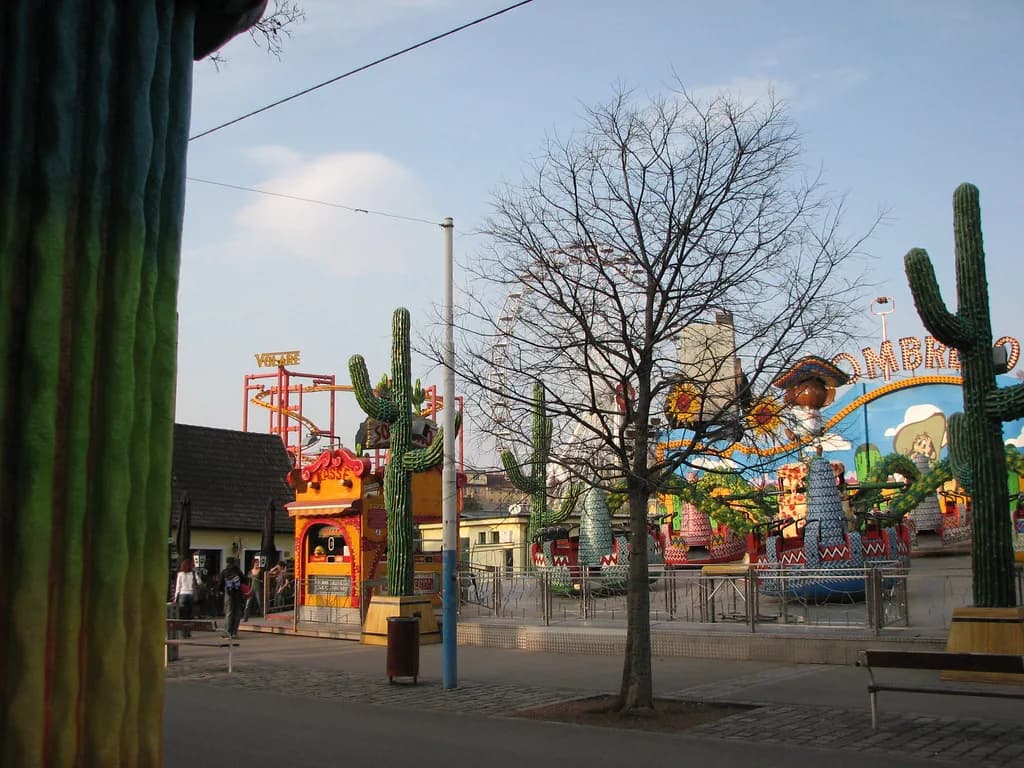
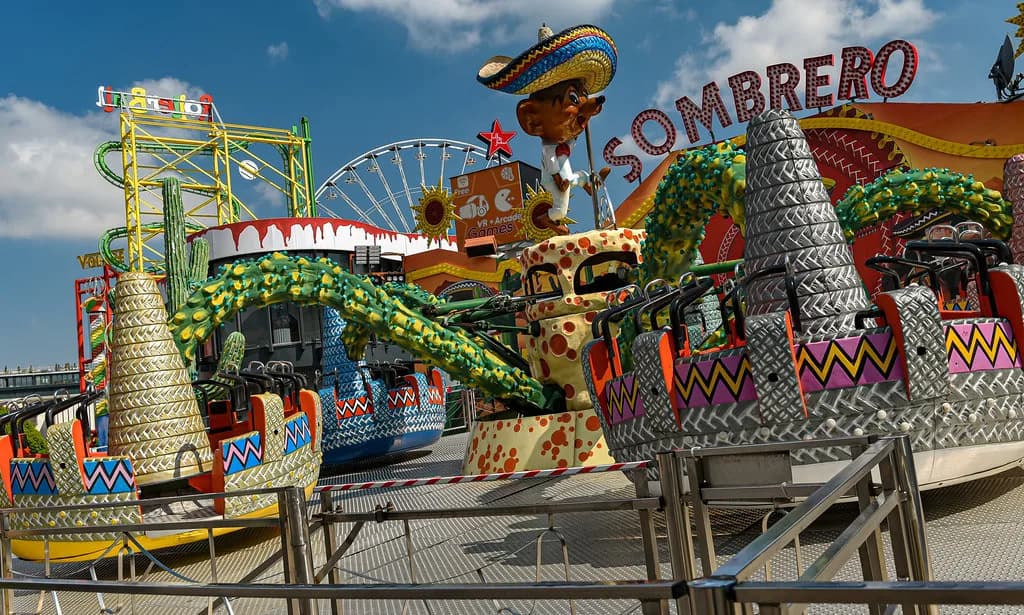
Think of the Wurstelprater as a long, loose grid of paths rather than a ring of themed lands. Individual operators run their own rides, which is why you find several wild mouse coasters, multiple haunted houses and more than one bumper car track within a short walk of each other. The result is a map with clusters rather than zones, and repetition is normal.
The practical consequence is that you rarely need to cross the whole site to reach a headline ride. Most of the big attractions sit within a few minutes of the Riesenrad and the main path, with the smaller family rides and food stands filling the spaces between.
The Wiener Riesenrad and the classics near the main entrance
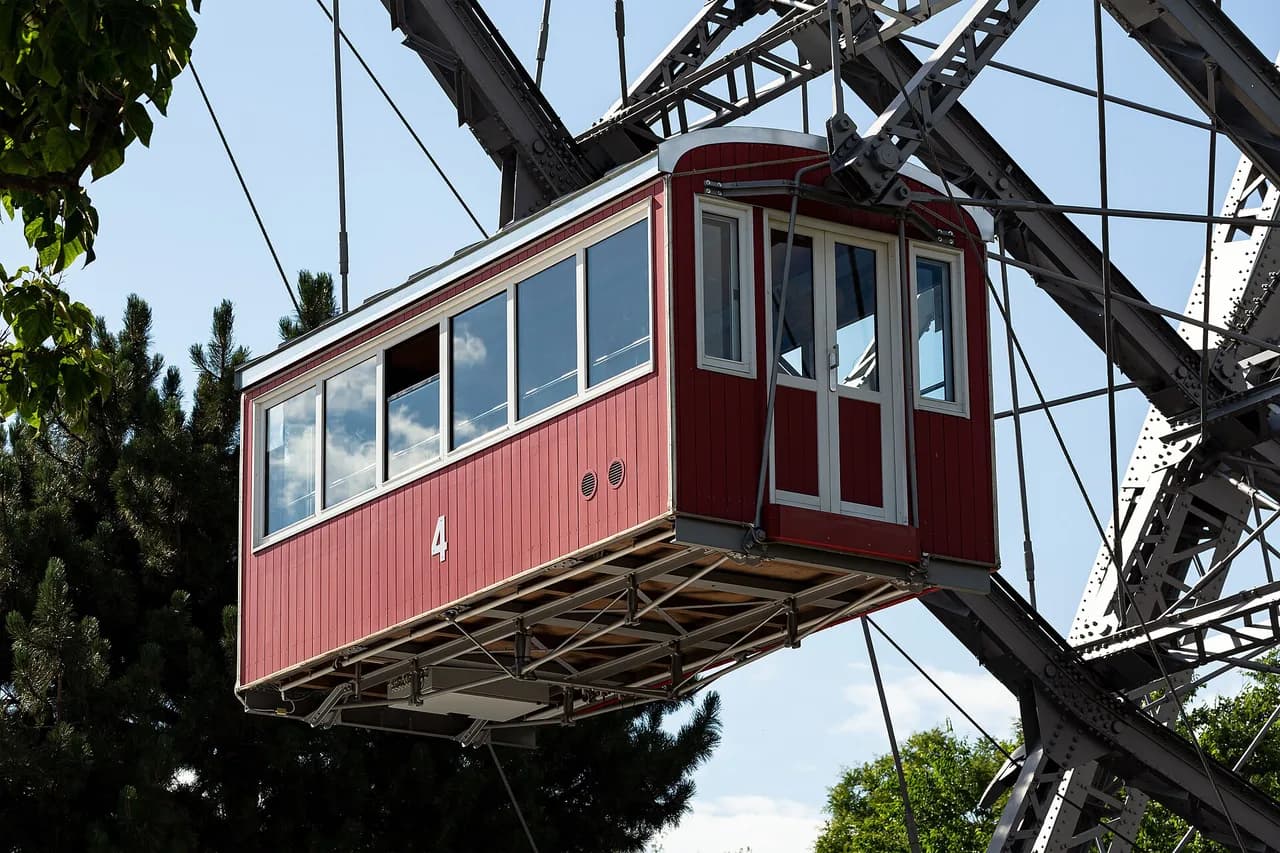
The Wiener Riesenrad is the first thing you meet at the main entrance and the easiest fixed point on any map. Its gondolas climb to roughly 65 metres with views over the city, and the attraction draws a queue through the afternoon; it opened in 1897. If the wheel is the icon you came for, ride it early in the day before the line builds.
Around the wheel you find the classic fairground furniture: the old scenic railway, walk-through attractions and the first of the food venues. The Rollercoaster Restaurant sits near the main entrance, next to the Madame Tussauds building, which makes it a sensible first or last stop on a walking route.
Where the big coasters sit
The headline coasters are spread along the main fairground strip rather than grouped in one coaster zone. Olympia Looping, the huge transportable looping coaster, is the most striking structure when it is on site, while Gesengte Sau, Megablitz and Insider sit among the permanent rides nearby. Budget per-ride prices accordingly: each ride is a separate payment, and individual attractions run from around 4 to 10 euros.
The wild mouse variants are the most scattered group: Die Wilde Maus, Dizzy Mouse, Maskerade and Roller Ball all deliver different versions of the same family-friendly layout. If you are choosing a route with children, pick one of these rather than trying to ride them all. The Prater rides page compares the individual attractions so you can decide which are worth the walk. Readers weighing a similar family-coaster shortlist may find our Legoland Deutschland guide a useful comparison.
Family and young-child rides on the map
Family rides are not tucked into a separate children's area; they are mixed in among the thrill rides along the same paths. Roller Ball is a good example, taking riders up about 27 metres for a vertical, family-grade coaster experience with a view over the fairground. Look for the gentler flat rides and carousels on the map near the food clusters, where families tend to settle.
A simple rule for a family day is to work the map from the Riesenrad end inwards, taking in the calmer rides first and leaving the coasters as an option once the children have found their feet.
Water rides and walk-through attractions
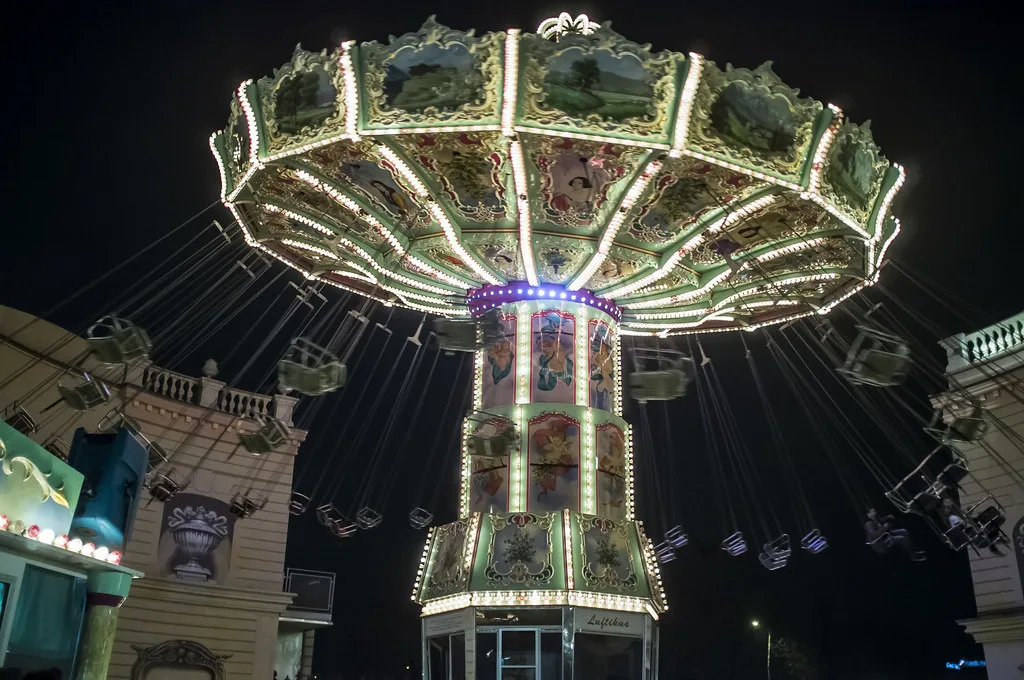
The water rides sit within the same fairground strip and are easy to spot on a map because of the splash zones and the queues in warm weather. Aquagaudi is a log flume with three descents, and Wildalpenbahn is a 30-metre tall water slide with a vertical lift. Both cost 4.50 euros per person, so check the posted price at the entrance before committing the whole group.
The walk-through attractions, including the haunted houses and mirror mazes, fill the gaps between the ride clusters and are useful as a break from queuing outdoors.
Food and drink clusters
Eating on the Prater map is a matter of following the density of stands rather than finding a single food court. Near the main entrance the Rollercoaster Restaurant and the surrounding venues serve visitors arriving off the U-Bahn, while deeper into the fairground you find the beer gardens and the Schweizerhaus-style classics. Plan a lunch stop roughly halfway around your route rather than at the end.
Several of the Prater's food businesses have changed hands or reopened in recent years, with new barbecue, burger and ice cream offerings appearing alongside the traditional restaurants.
Toilets, accessible toilets and practical stops
Toilets are spread across the fairground, including accessible facilities that open with a Euro Key. Many attractions are already equipped for barrier-free access, though some rides cannot accommodate disabled guests for safety reasons. Ask at each attraction on arrival, because staff can advise on the day.
Attractions and restaurants must be paid at the point of use, and many also take card. You can load between 10 and 250 euros onto a Pratercard online and use it at participating rides and restaurants, which saves handling coins across a long walking route.
A sample half-day walking route
Start at Praterstern, walk to the Riesenrad for the view, then follow the main path past the classic rides and the first food stands. Loop back through the family rides and the walk-through attractions, finishing with lunch near the entrance. This route keeps the walking short, suits mixed-age groups and leaves the coaster cluster as an optional detour.
If you have only an afternoon, that loop is enough to see the layout and decide where you would return.
A sample route for thrill-seekers
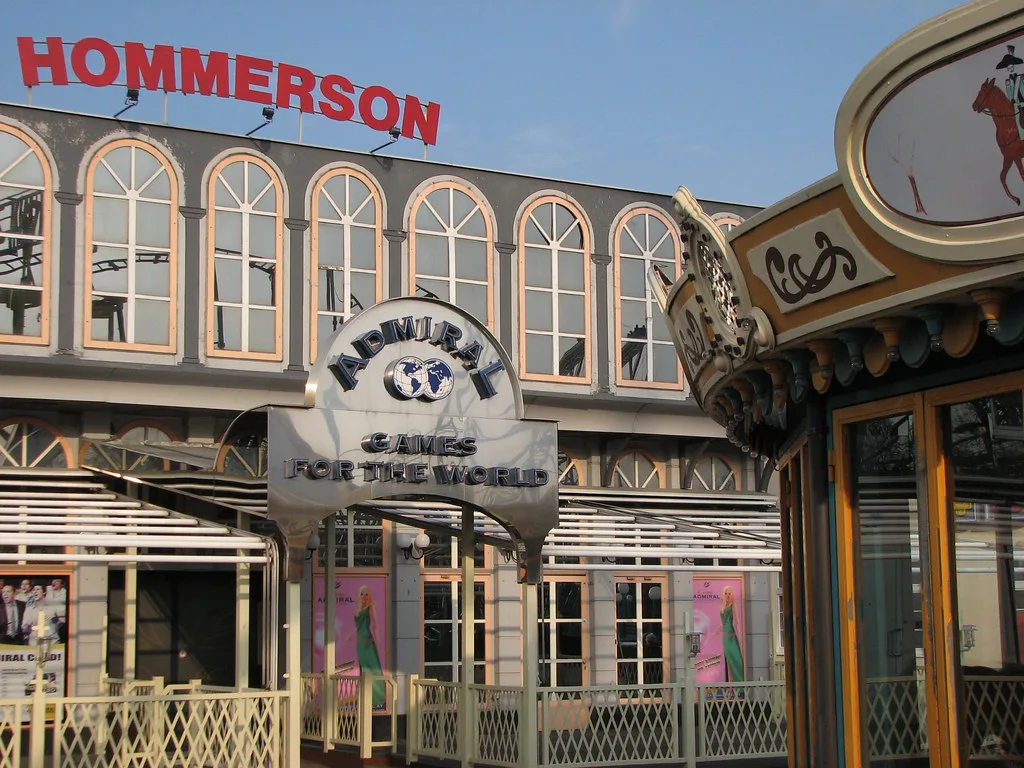
Coaster-focused visitors should head straight past the Riesenrad and work the strip of major rides before the queues build. Olympia Looping, Gesengte Sau, Megablitz and Insider make a tight circuit, with the wild mouse variants as fillers between them. Pay-per-ride pricing means you can skip the rides that do not appeal and spend the budget on the big ones.
On a windy or wet day the major rides close first, so a coaster route is best kept flexible. The map still works, but check the posted status at each ride before walking its way.
Getting there by U-Bahn, S-Bahn, tram and bus
Praterstern is the simplest arrival point and is served by the U1 and U2 underground lines, the S1, S2, S3, S5, S6, S7 and S15 suburban trains, tram lines 0 and 5, and bus 80a. That makes the fairground one of the easiest city attractions in Vienna to reach without a car.
From the station it is a short walk to the main entrance and the Riesenrad, so there is no need for a connecting bus or taxi once you arrive.
Arriving by car and where to park
Vienna operates a short-term parking zone in the district from Monday to Friday between 9am and 10pm, with a maximum stay of two hours. Parking is free on Saturdays, Sundays and public holidays, and residents' spaces are off limits.
If you drive, use a listed car park in the second district and pay via a short-term parking ticket or an app rather than hunting for kerbside space.
Opening hours across the summer and winter seasons
The Wurstelprater is open daily and free to enter all year, but the attractions keep their own hours. In the summer season from 15 March to 31 October, most rides open from noon to 10pm on weekdays and from 11am until midnight or later at weekends and on public holidays. In winter, from 1 November to 14 March, the site operates on a limited basis and not every business opens.
Weather matters: in heavy rain or strong wind, most rides close even in summer, so a map-based walking route works best with a wet-weather backup plan. Check the official calendar on the day for ride-level opening times rather than relying on the site-wide hours.
Plan Your Visit
The Prater map is easiest to use once you accept that the Wurstelprater is a free-entry fairground with independent operators, not a gated park. Read it as a walking order from the Riesenrad outwards, group your rides by cluster, and keep an eye on the weather.
For the wider park and its history, see the prater guide, and for detailed ride comparisons see our prater rides page.
Explore more Prater guides
Frequently Asked Questions
Is Prater Vienna worth it?
If you want an icon like the Wiener Riesenrad, a cluster of coasters and a stroll through a historic fairground, yes. Go in with the right expectation: this is a pay-per-ride fairground with free entry, not a gated theme park.
How much do the rides at Prater Vienna cost?
Each ride is priced separately by its operator, and the Prater Card lets you pay at participating attractions. Check the posted price at each ride before boarding.
What is the name of the fairground in Vienna?
The fairground is the Wurstelprater, the amusement section inside the wider Prater park. The famous Ferris wheel, the Wiener Riesenrad, stands at its main entrance.
How do you get to the Prater in Vienna?
Take the U1 or U2 to Praterstern, the S-Bahn or tram lines 0 and 5, or bus 80a. The main entrance is a short walk from the station.
Where is the main entrance to the Wurstelprater?
The main entrance is normally via Praterstern. The site is open ground, so you can also arrive from Hauptallee, Ausstellungsstraße or Freudplatz.
Sources
Notes for your next park day
Optional updates to our park guides.
You might also like
Continue reading
More guides you'll find useful